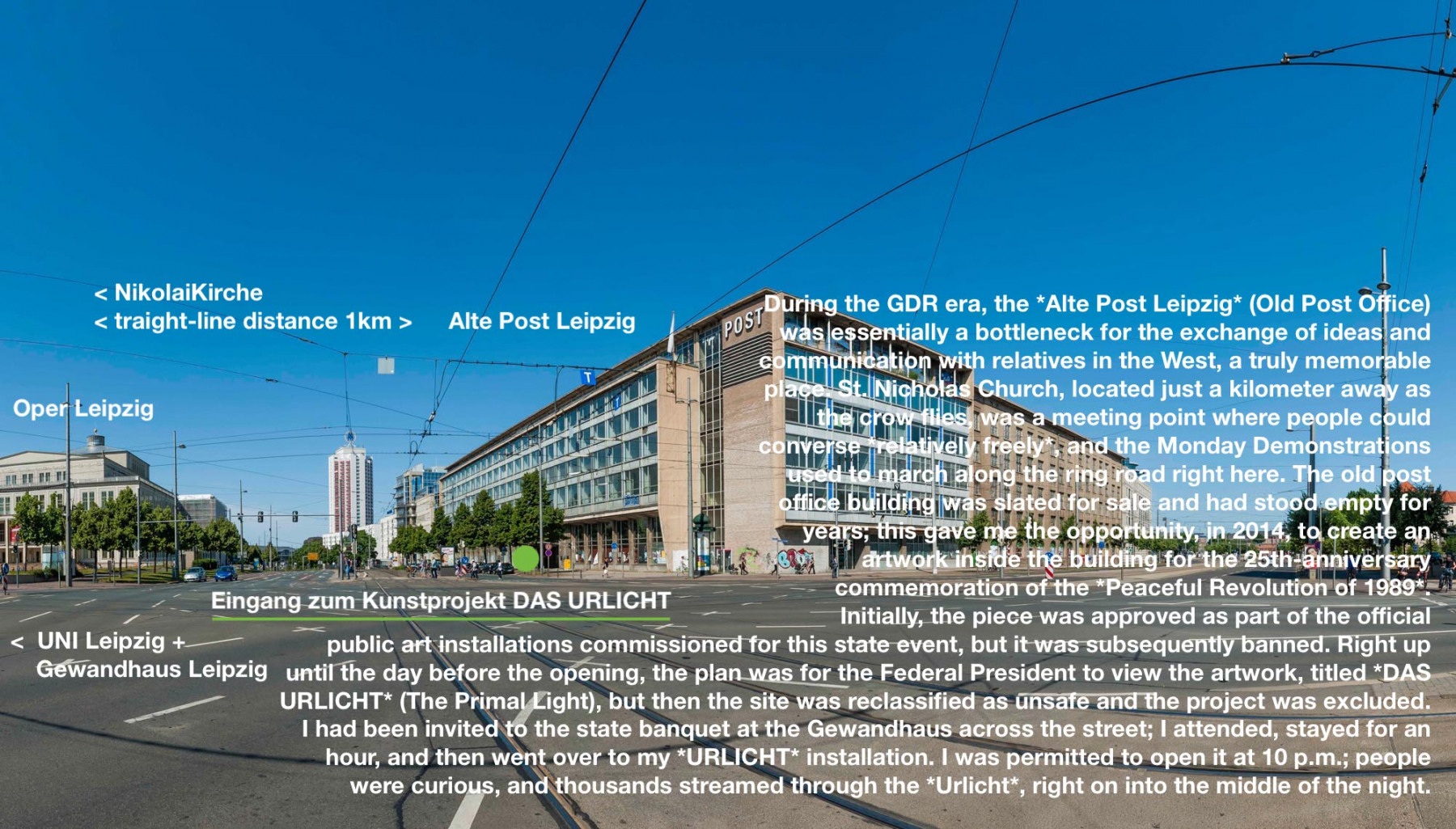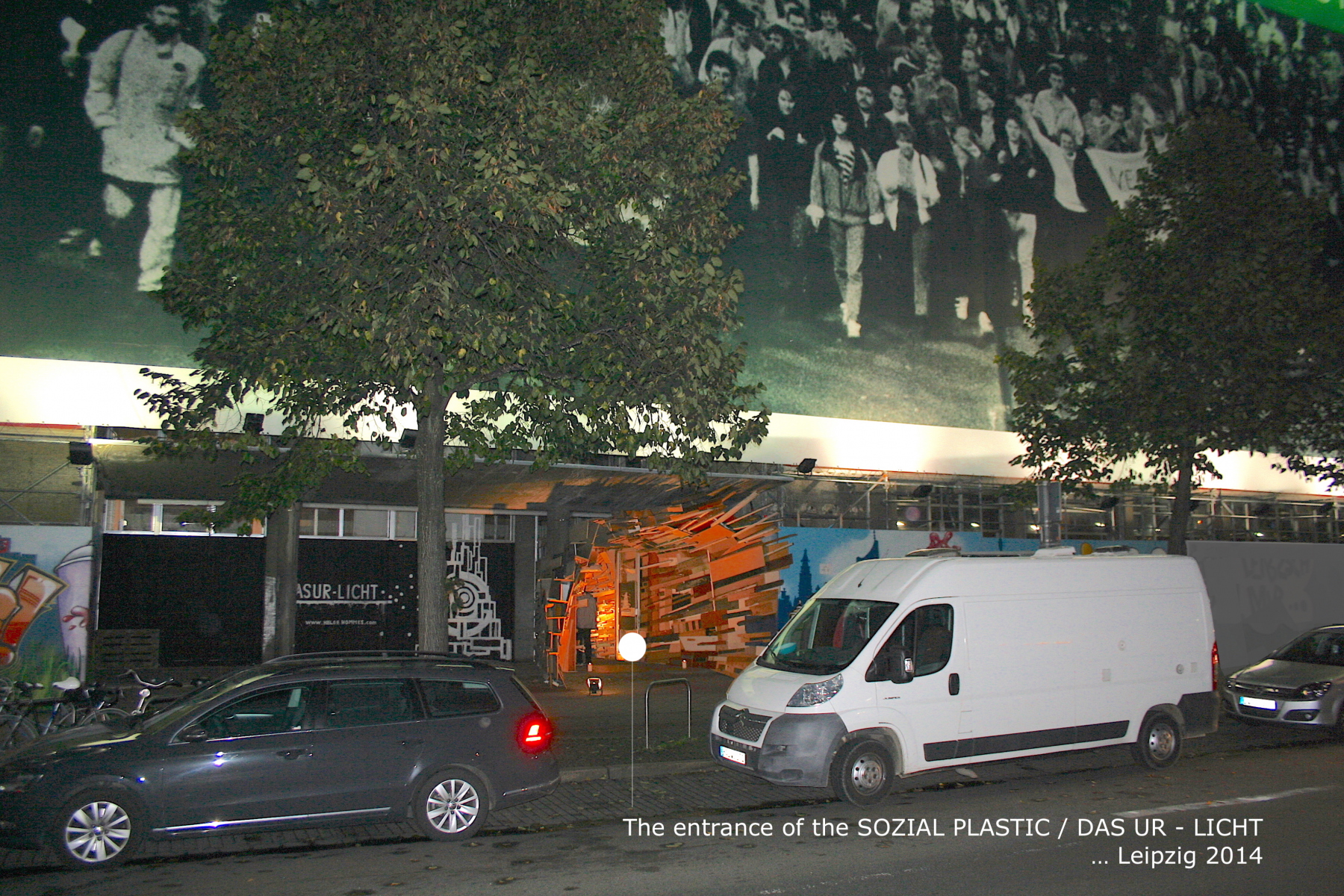
In the autumn of 2014, Leipzig marked the 25th anniversary of the Peaceful Revolution
of 1989, on a grand scale, complete with a state ceremony. More than thirty heads of
government from around the world visited Leipzig for the occasion. A state banquet
was held at the Gewandhaus. Artists who were accompanying the commemoration
with their work at various historically significant sites related to the event were also
guests at this stately, civic gathering. I decided to attend for an hour; after all, I had
been invited, and the Federal President had intended to view my contribution, though
that never came to pass. Security concerns were raised. Furthermore, my contribution,
DAS URLICHT (The Primal Light), was cut from the official program; to this day, I do
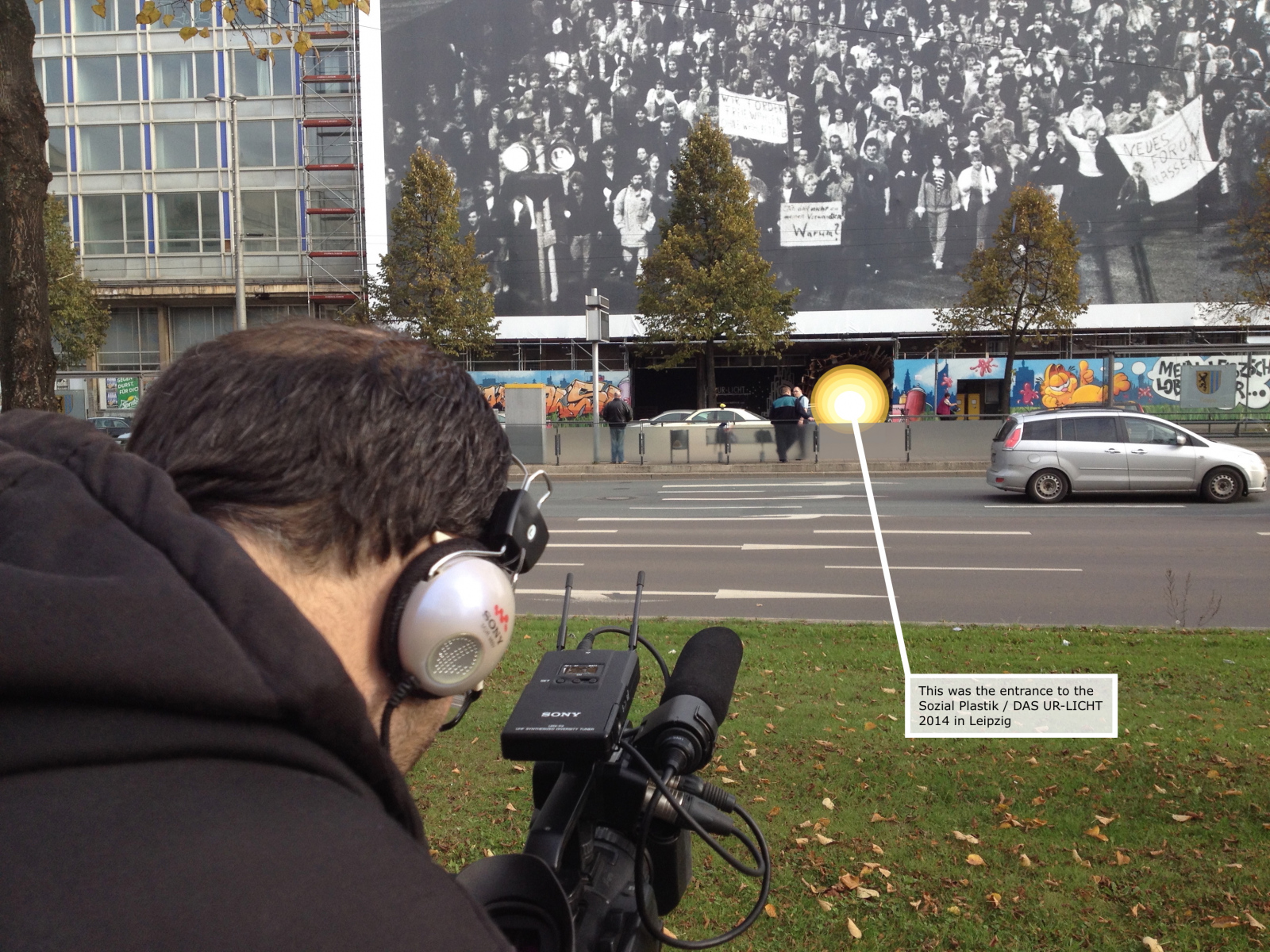
not know why. I was only permitted to make my artwork accessible to the public from
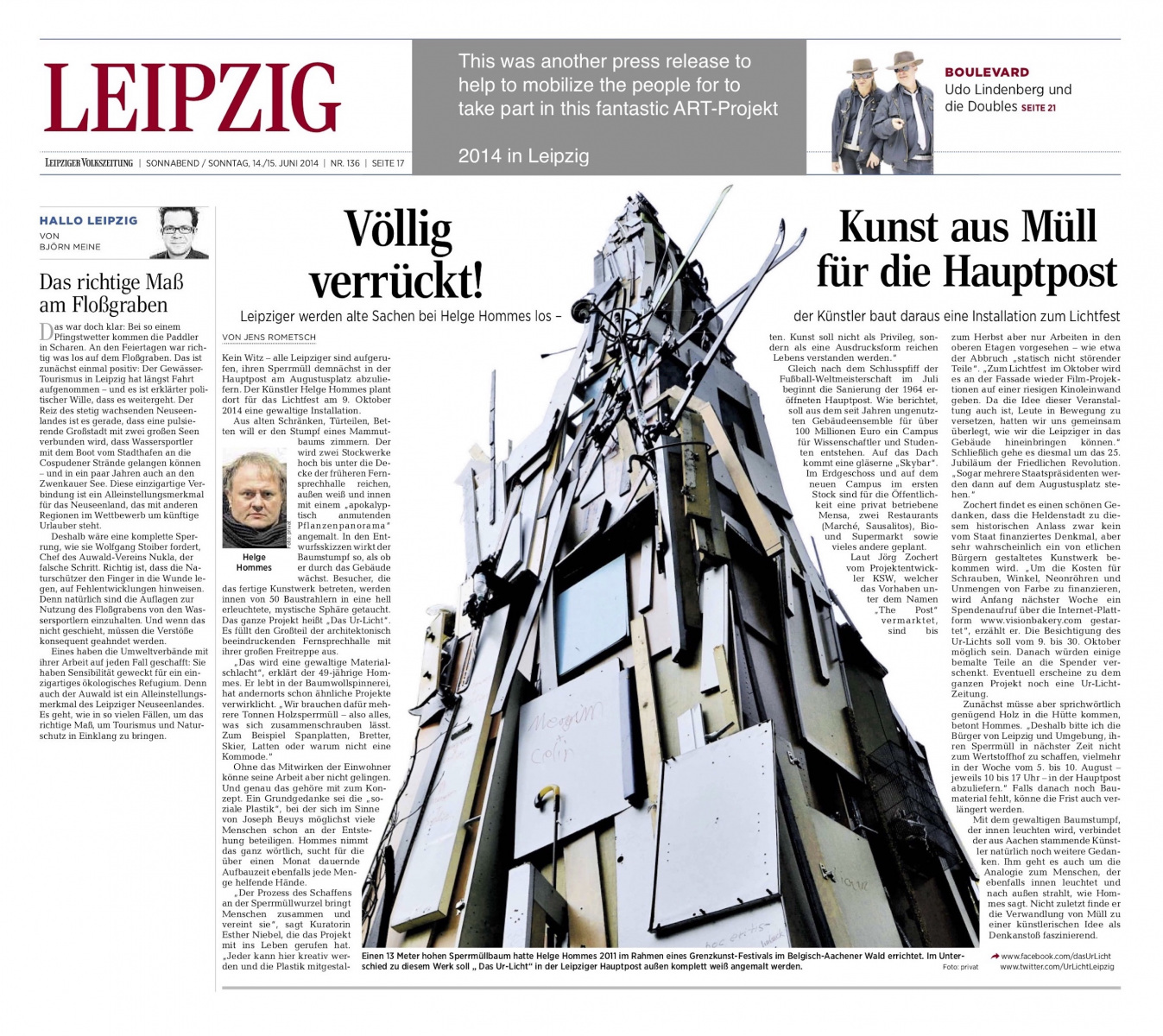
10 p.m. onwards. However, because the URLICHT project had already generated
such a stir in the media, in newspapers and on television, during the nearly three
months of its installation (it was truly spectacular), people could hardly wait to finally
see what was arguably the most elaborate artistic contribution to the commemoration.
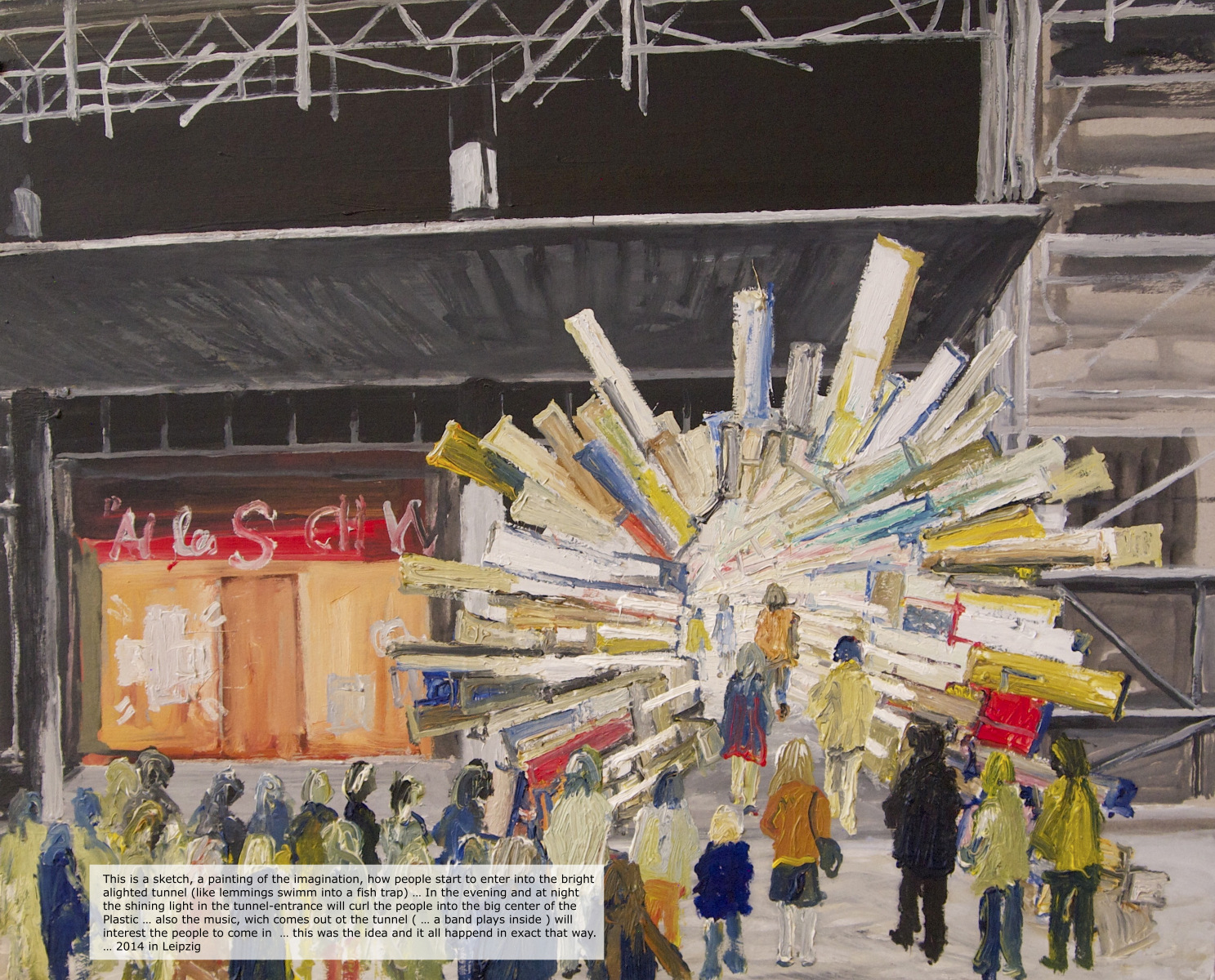
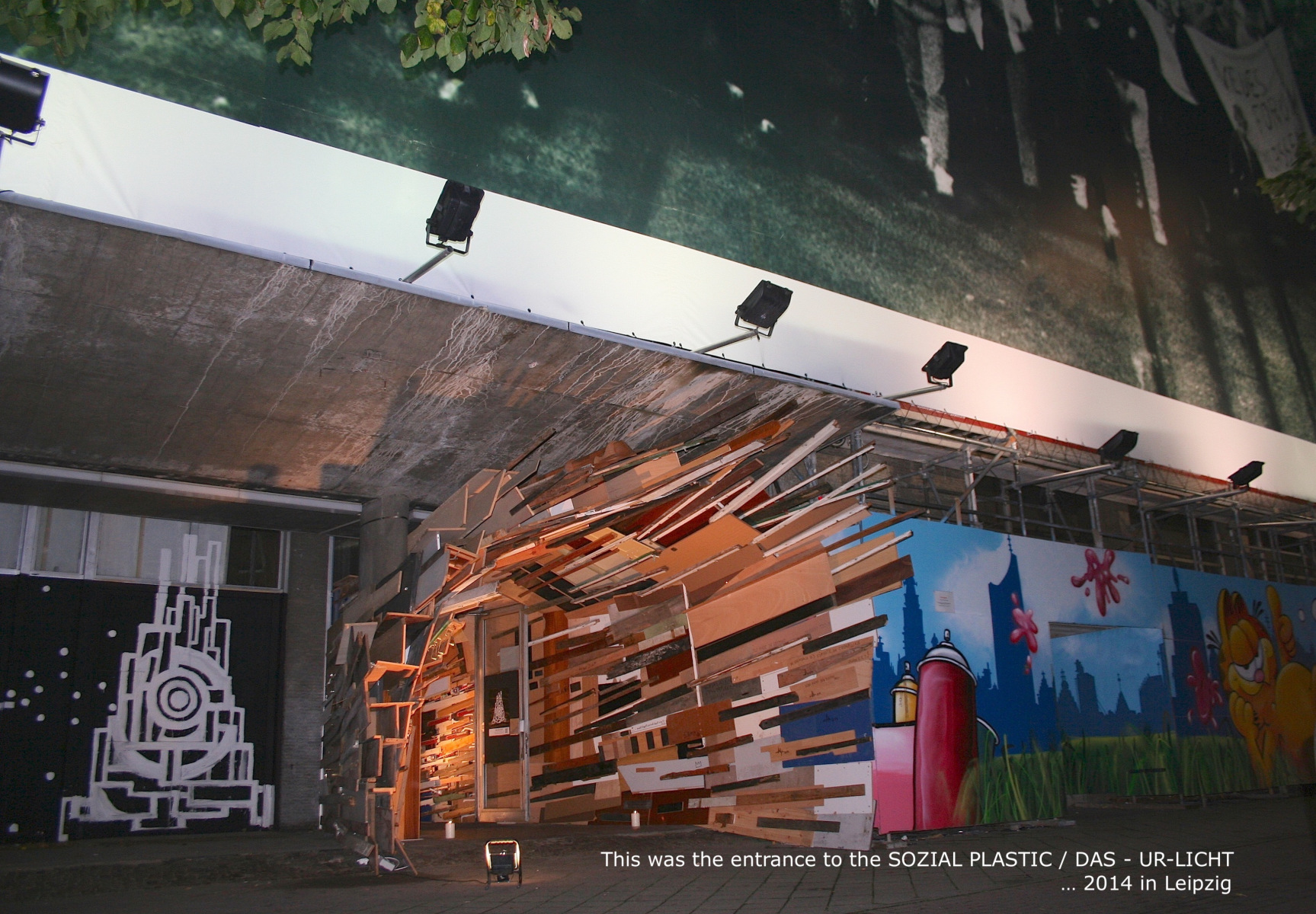
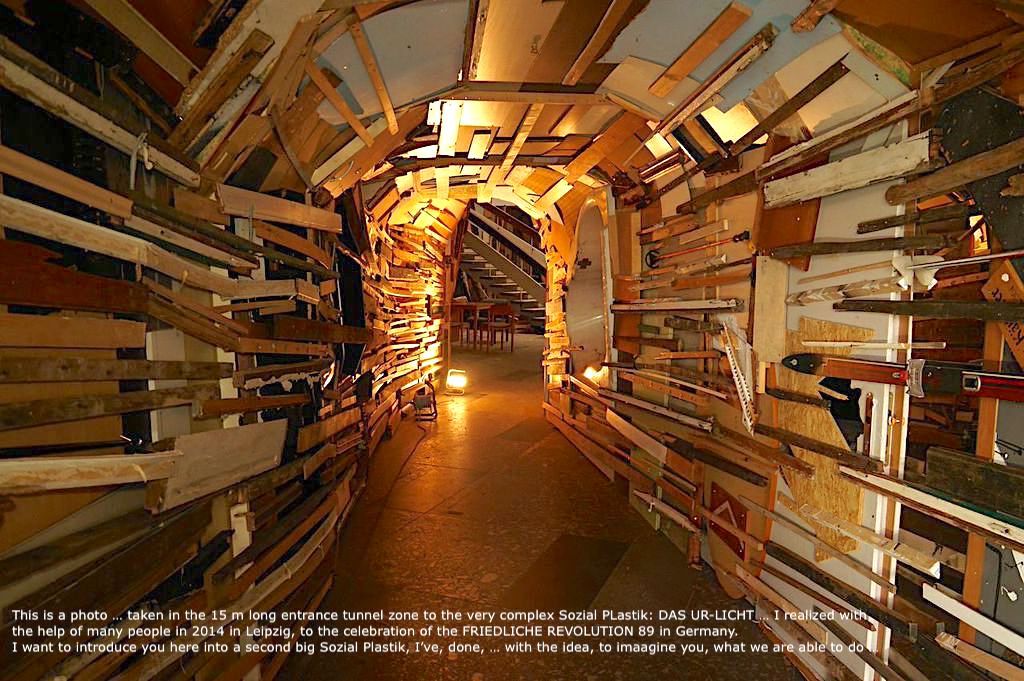
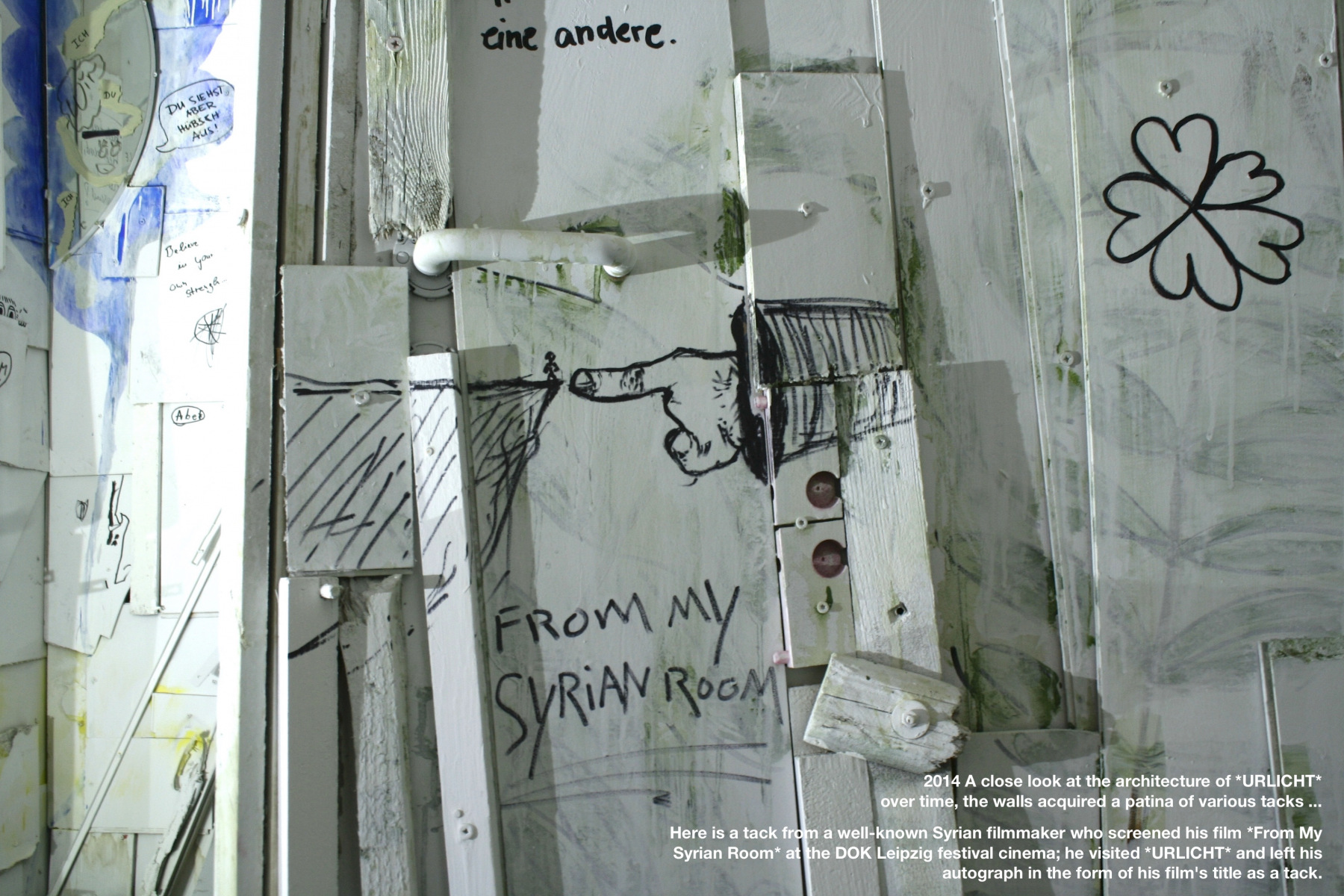
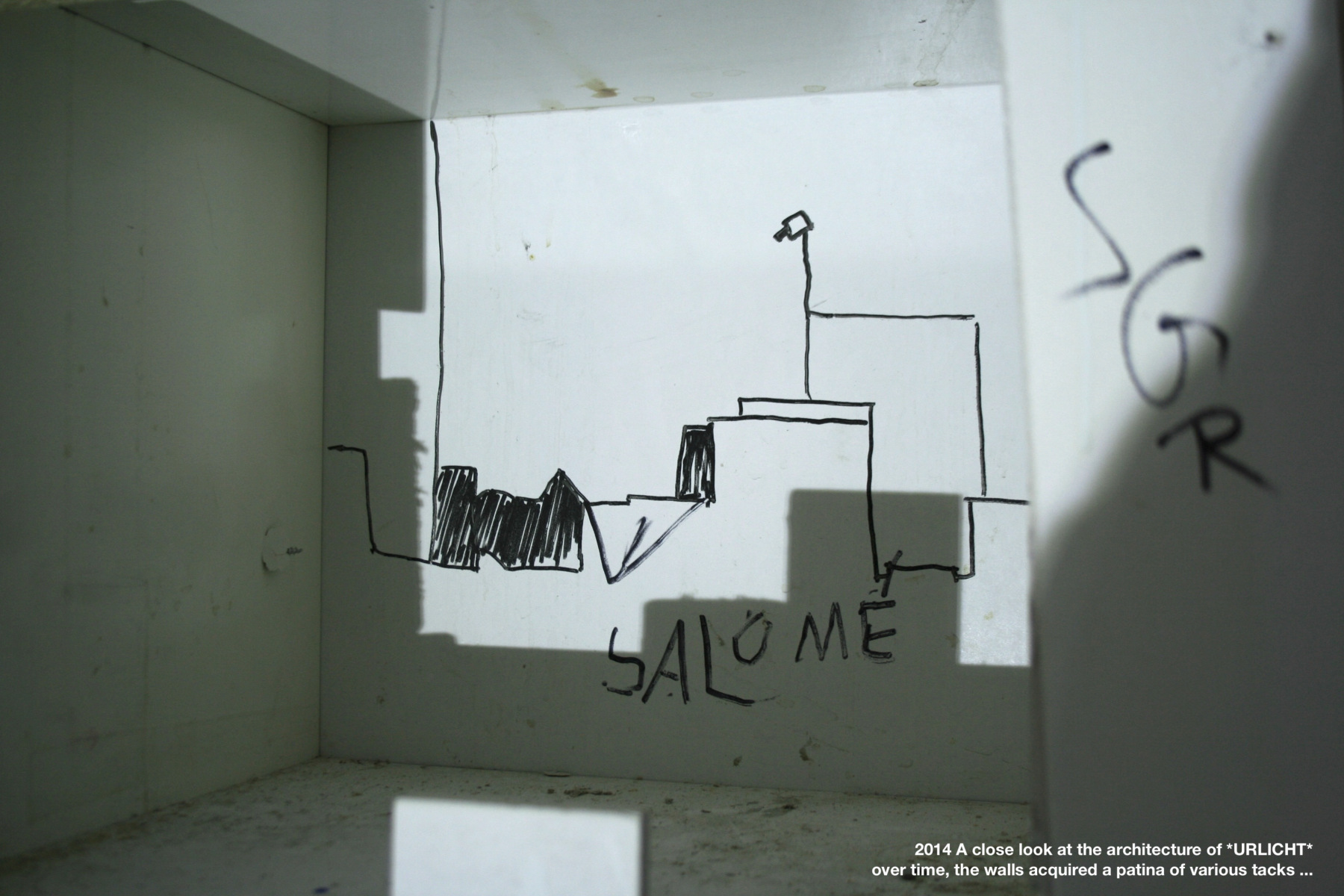
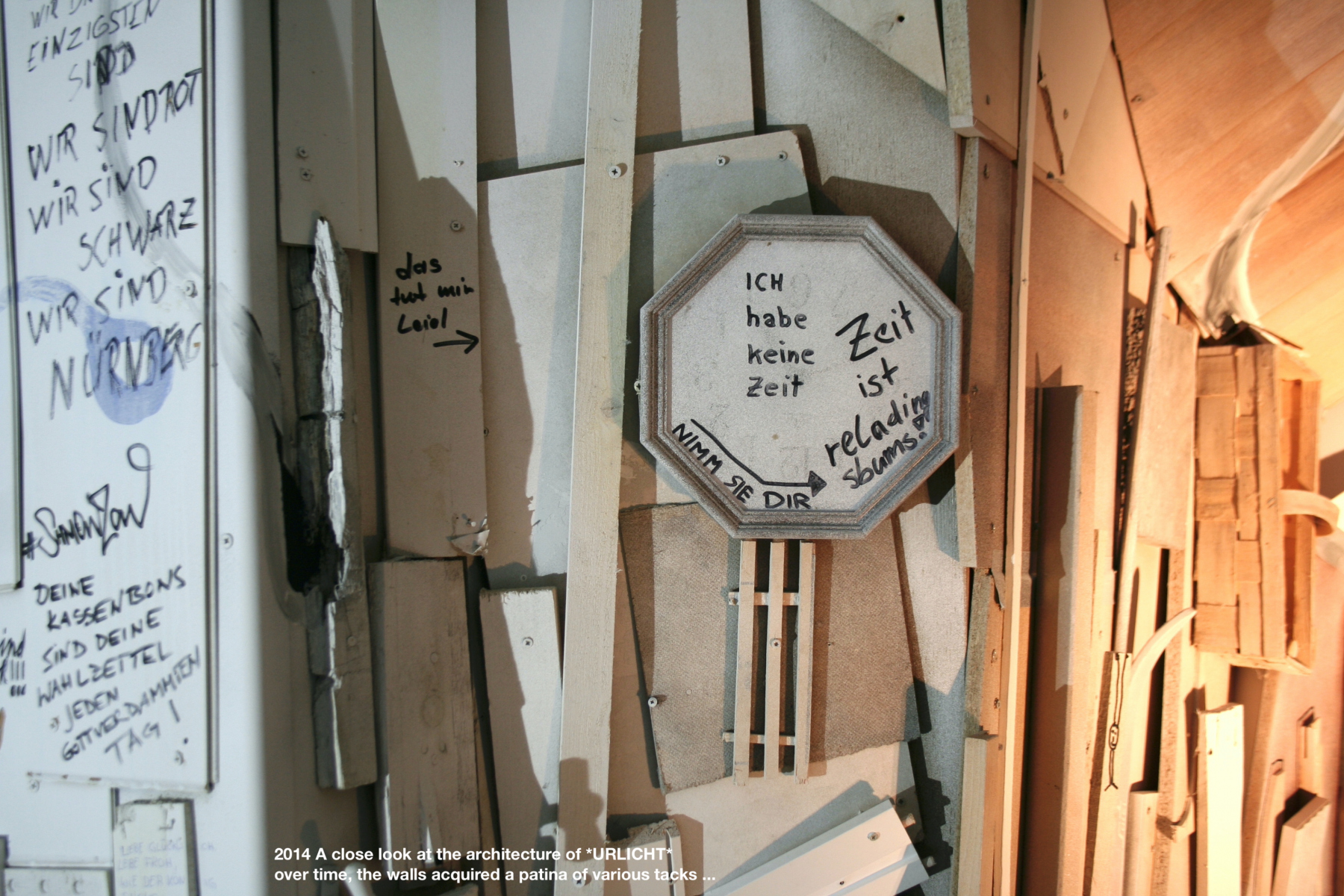
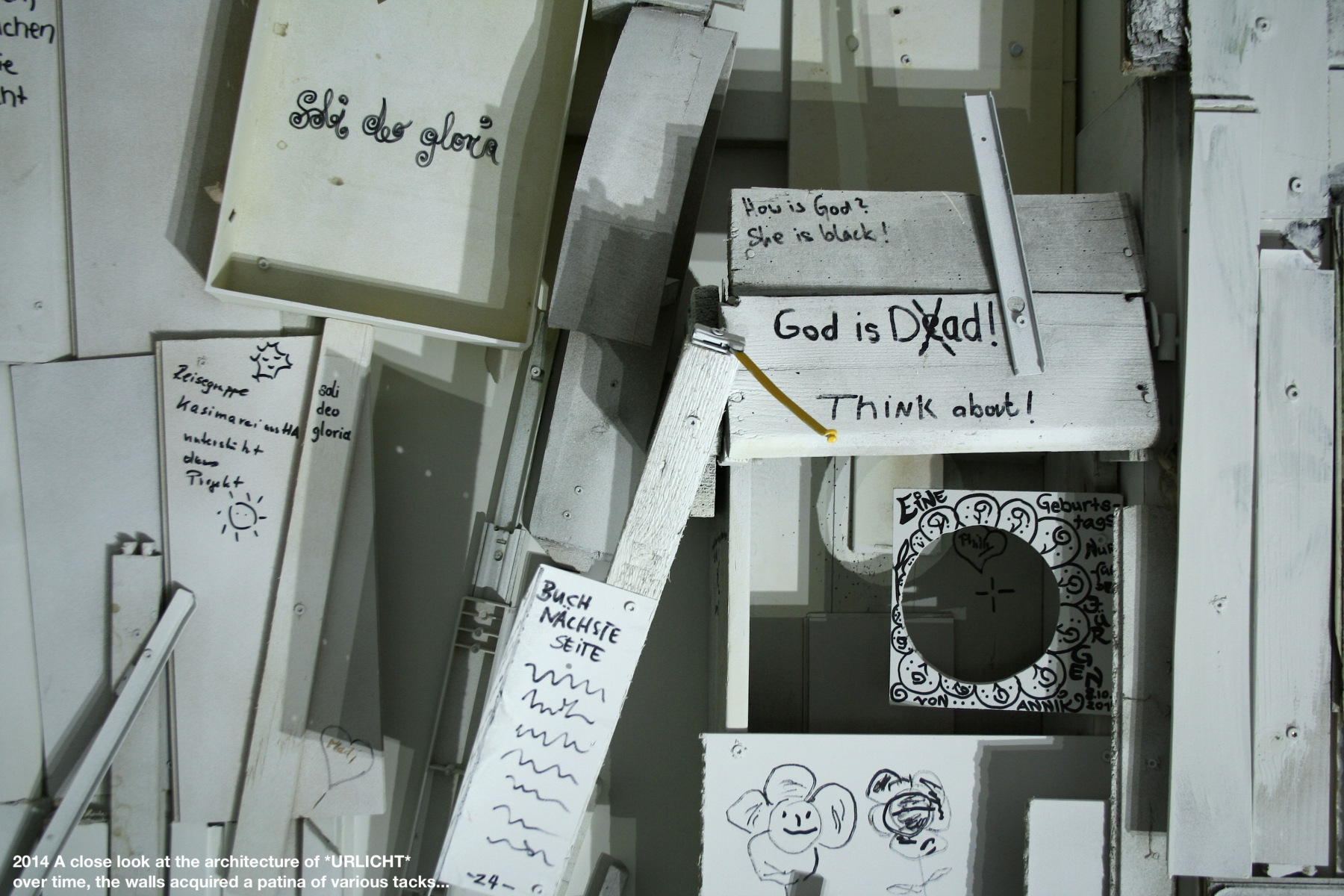
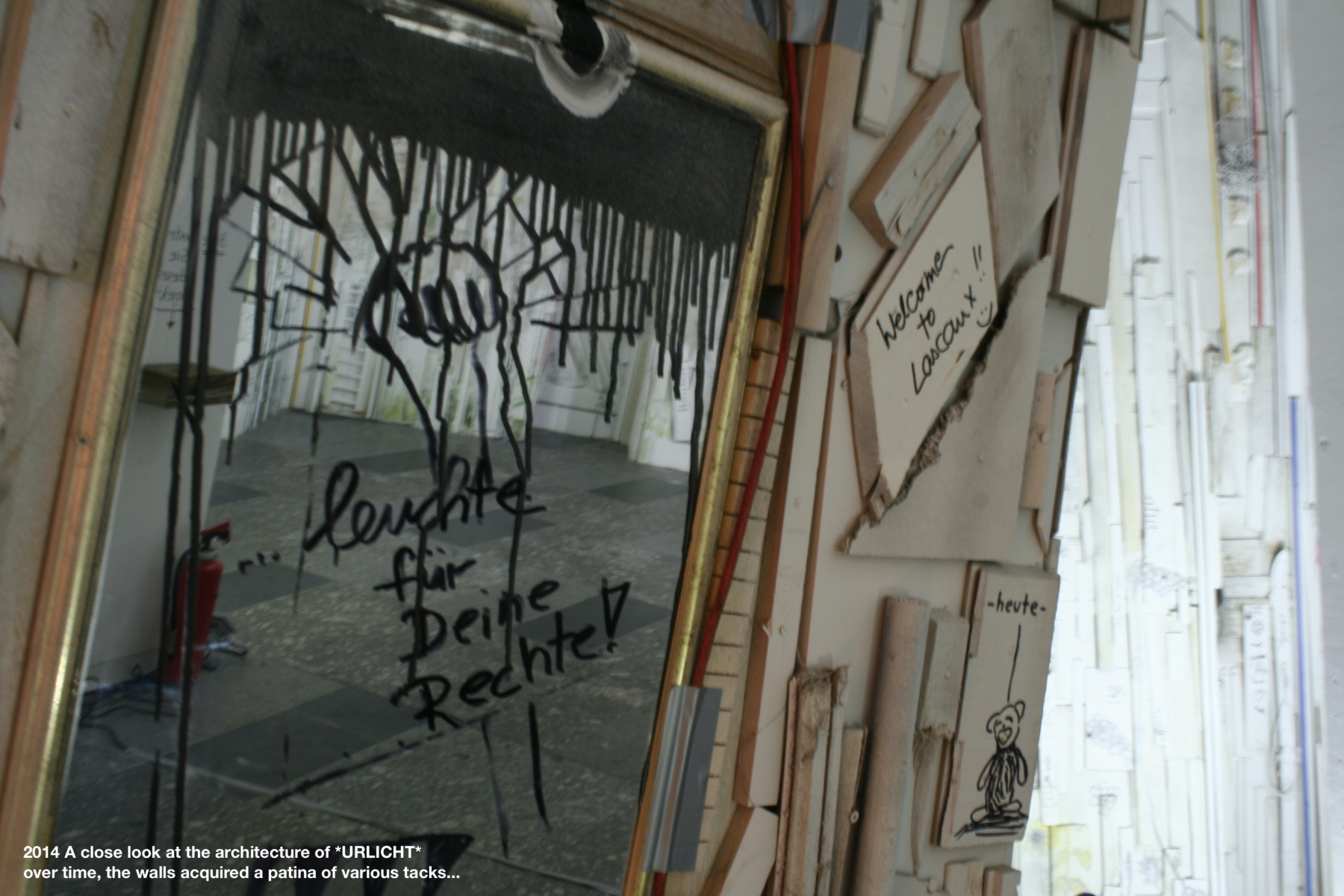
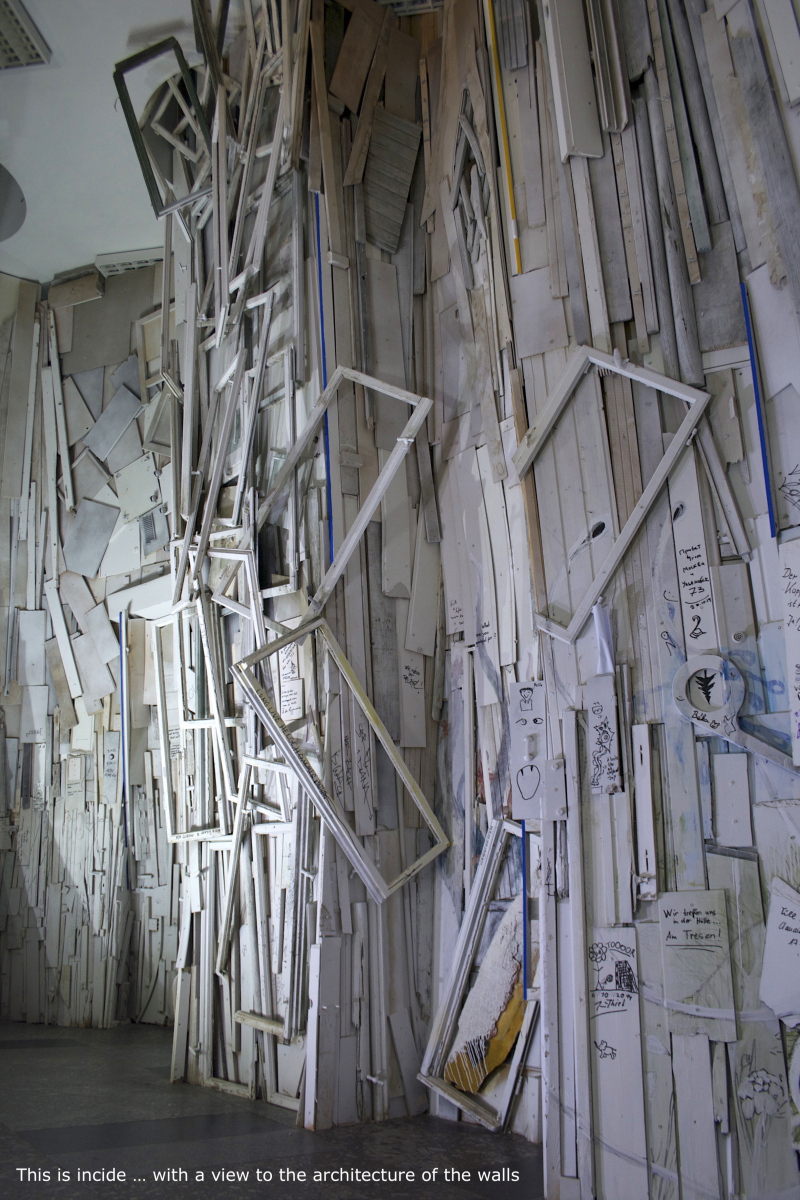
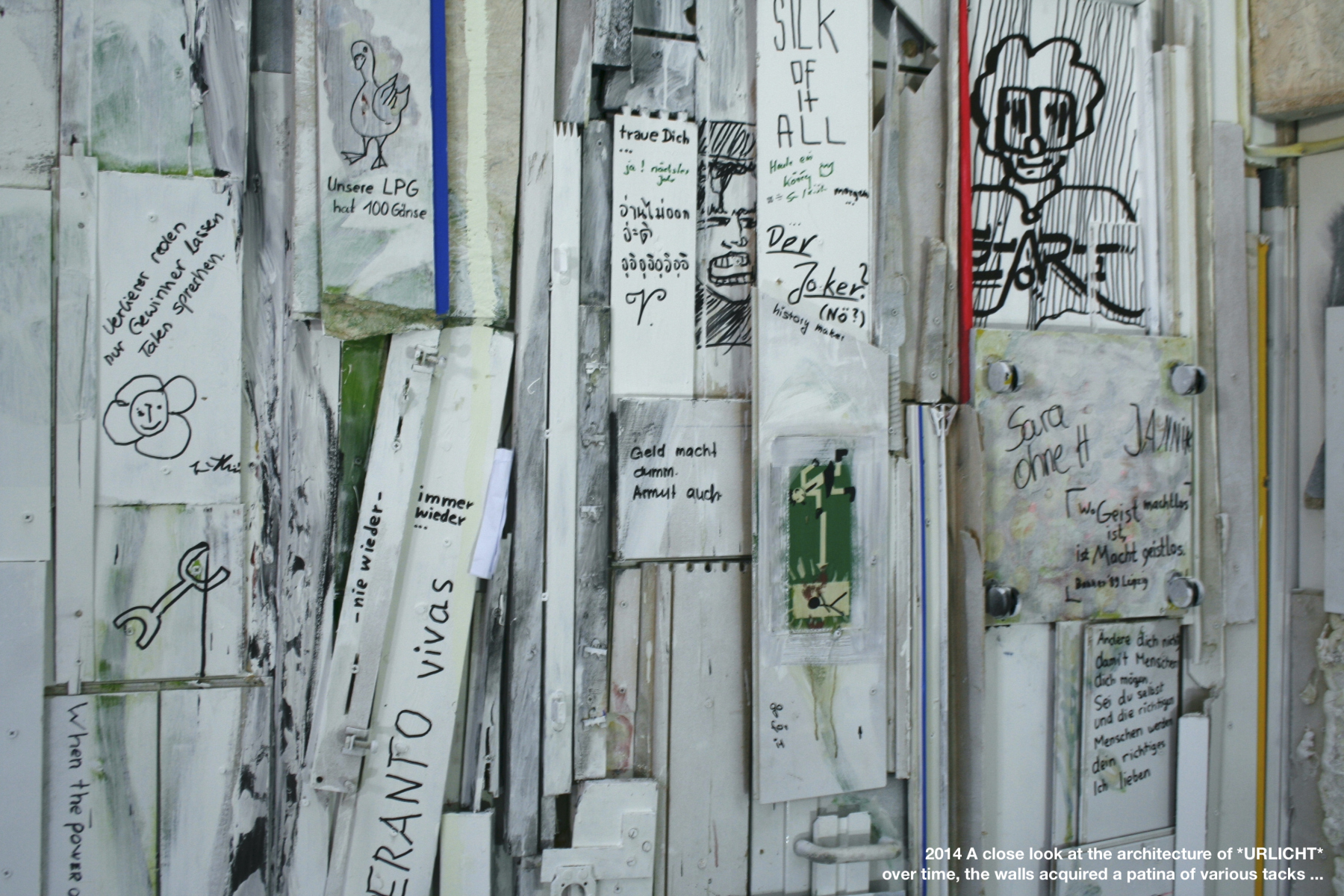
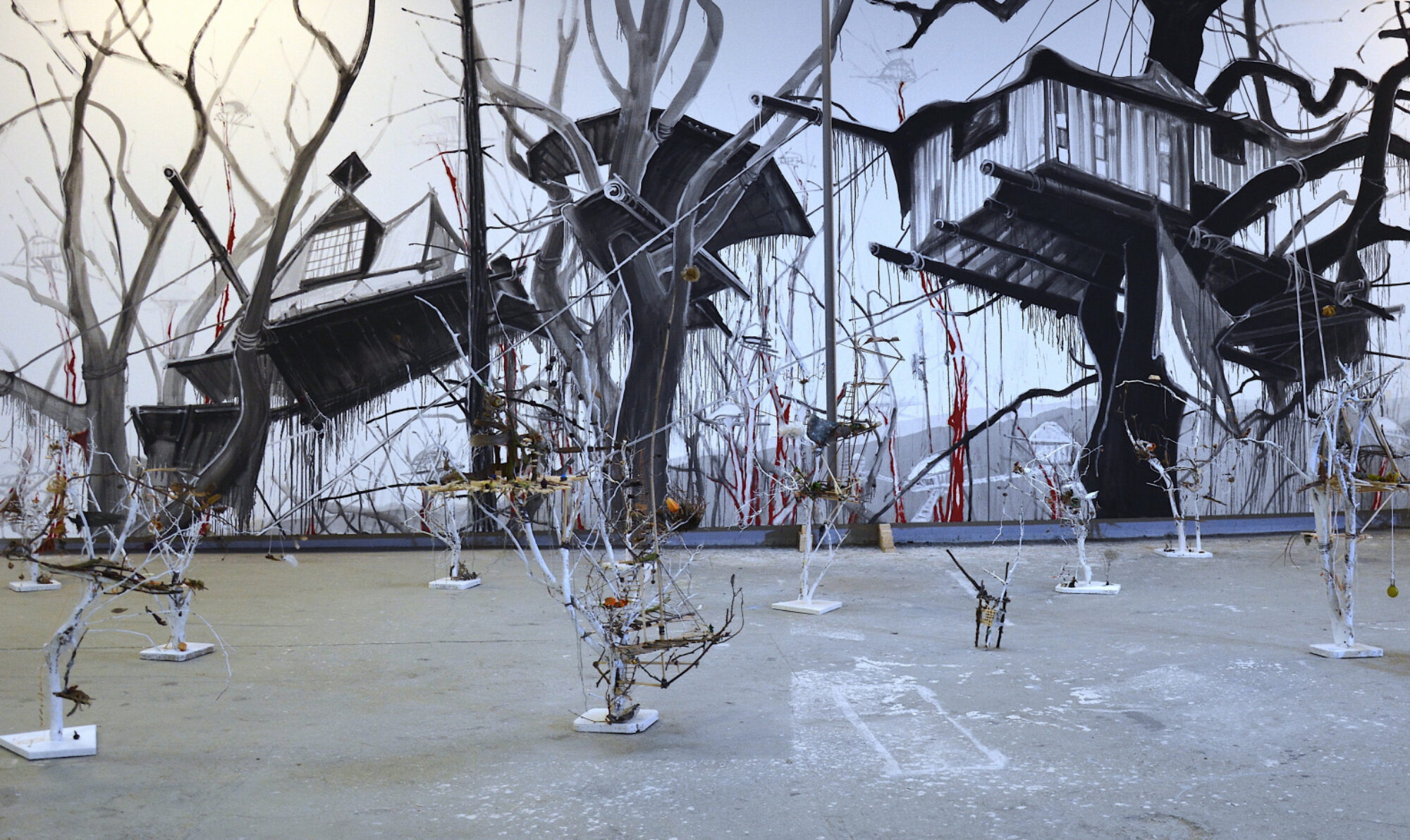
What is DAS URLICHT? It is a complex, interdisciplinary, participatory,
and multi-layered work of art, a contemporary, concrete evolution of Joseph Beuys’s
concept of Social Sculpture. It is composed of a massive physical structure; the active
involvement of many people in its construction and their participation during visits and
at various events, music, theater, and discussions on contemporary issues; and a
connection, inherent in all of this, to the building’s troubled history (including a look into
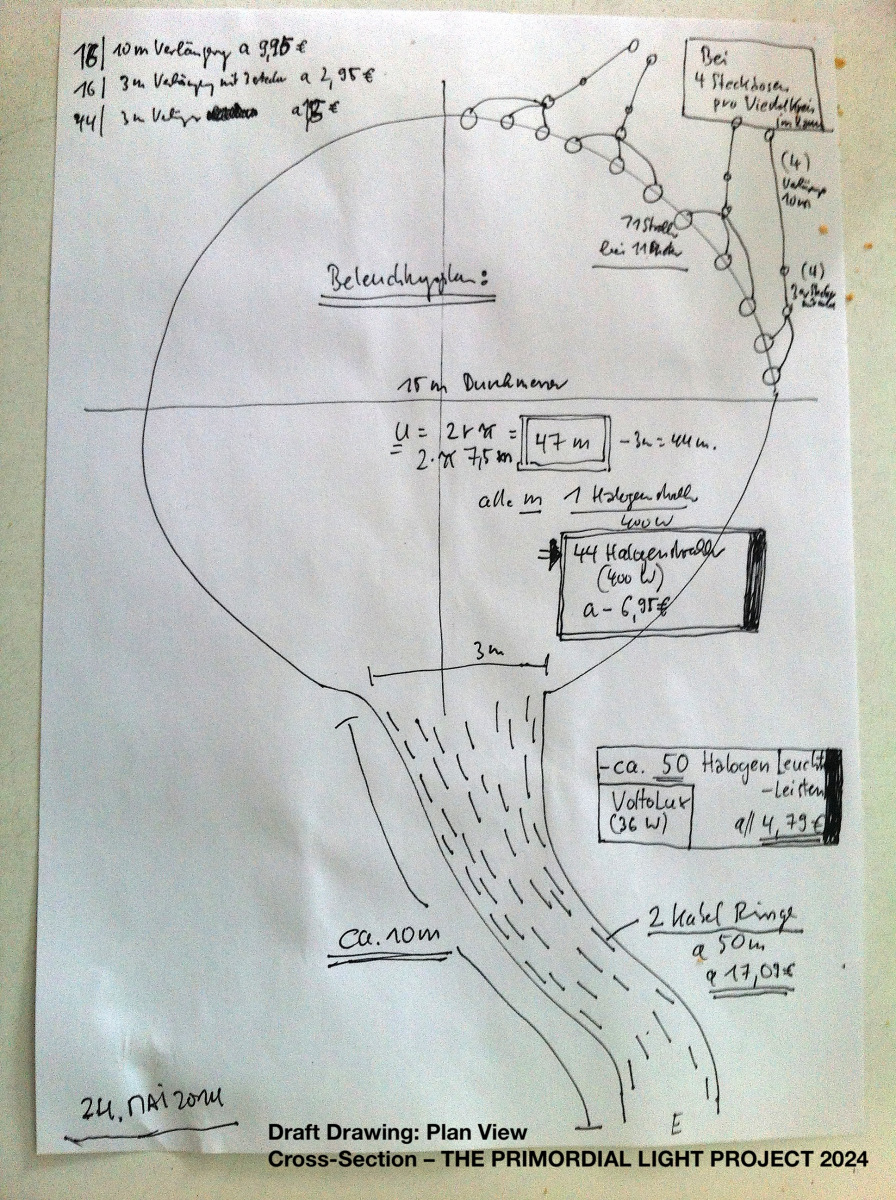
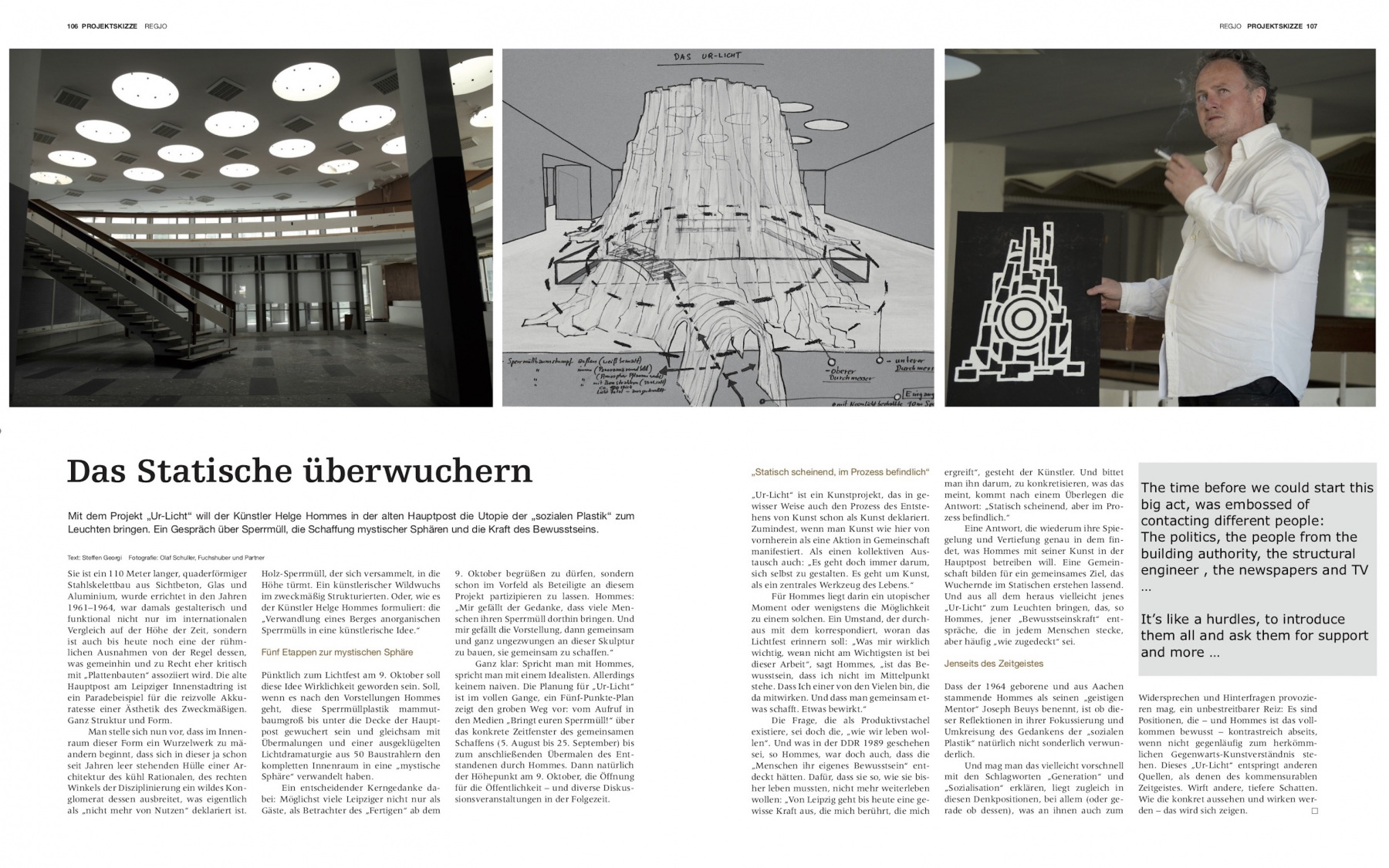
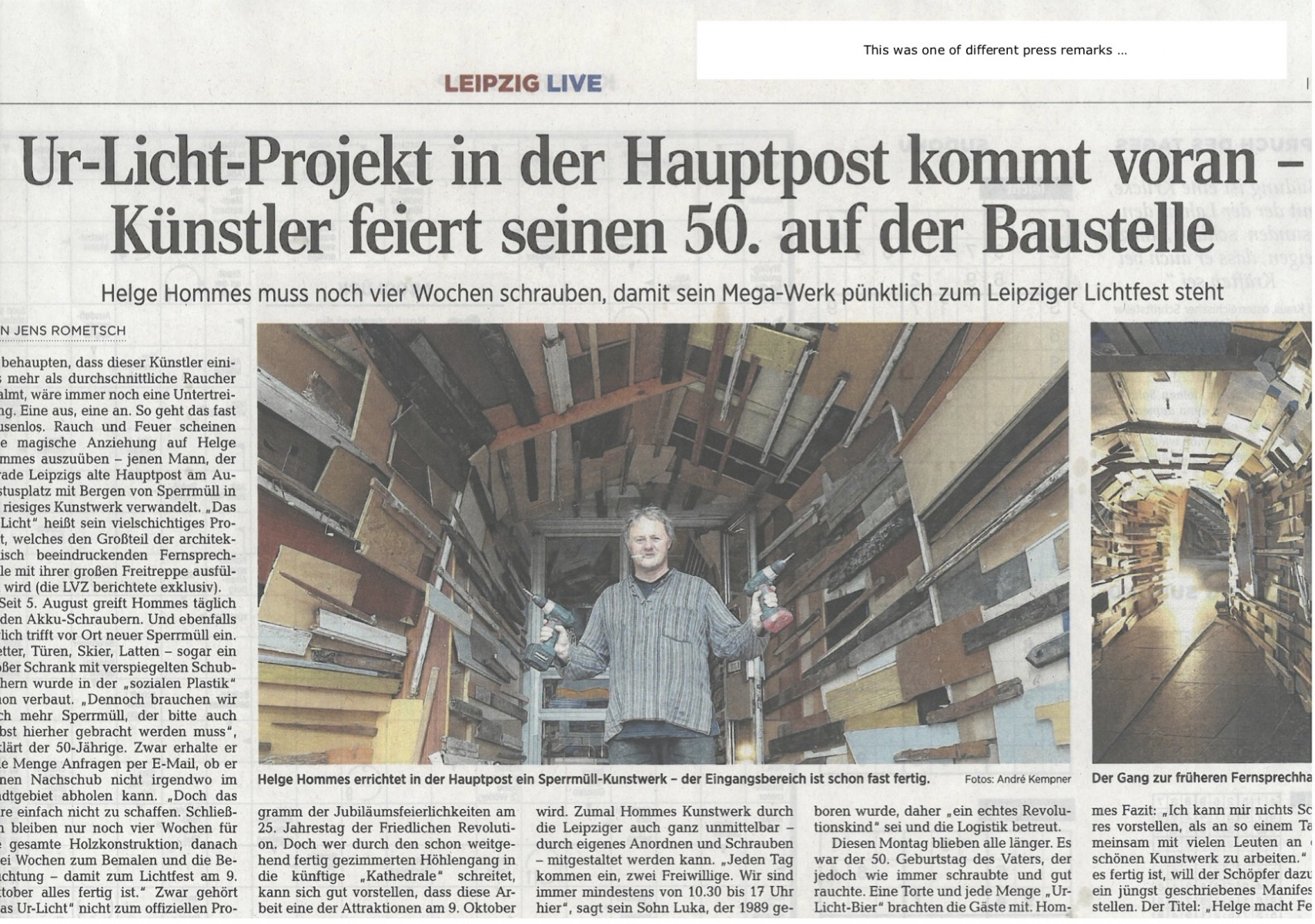
the future: how do we want to live?). I called upon the people of Leipzig, via newspaper
and radio, to bring bulky waste to the Main Post Office and help me use that material to
erect a cathedral of refuse inside the Alte Hauptpost, a cathedral that engaged in a
and radio, to bring bulky waste to the Main Post Office and help me use that material to
erect a cathedral of refuse inside the Alte Hauptpost, a cathedral that engaged in a
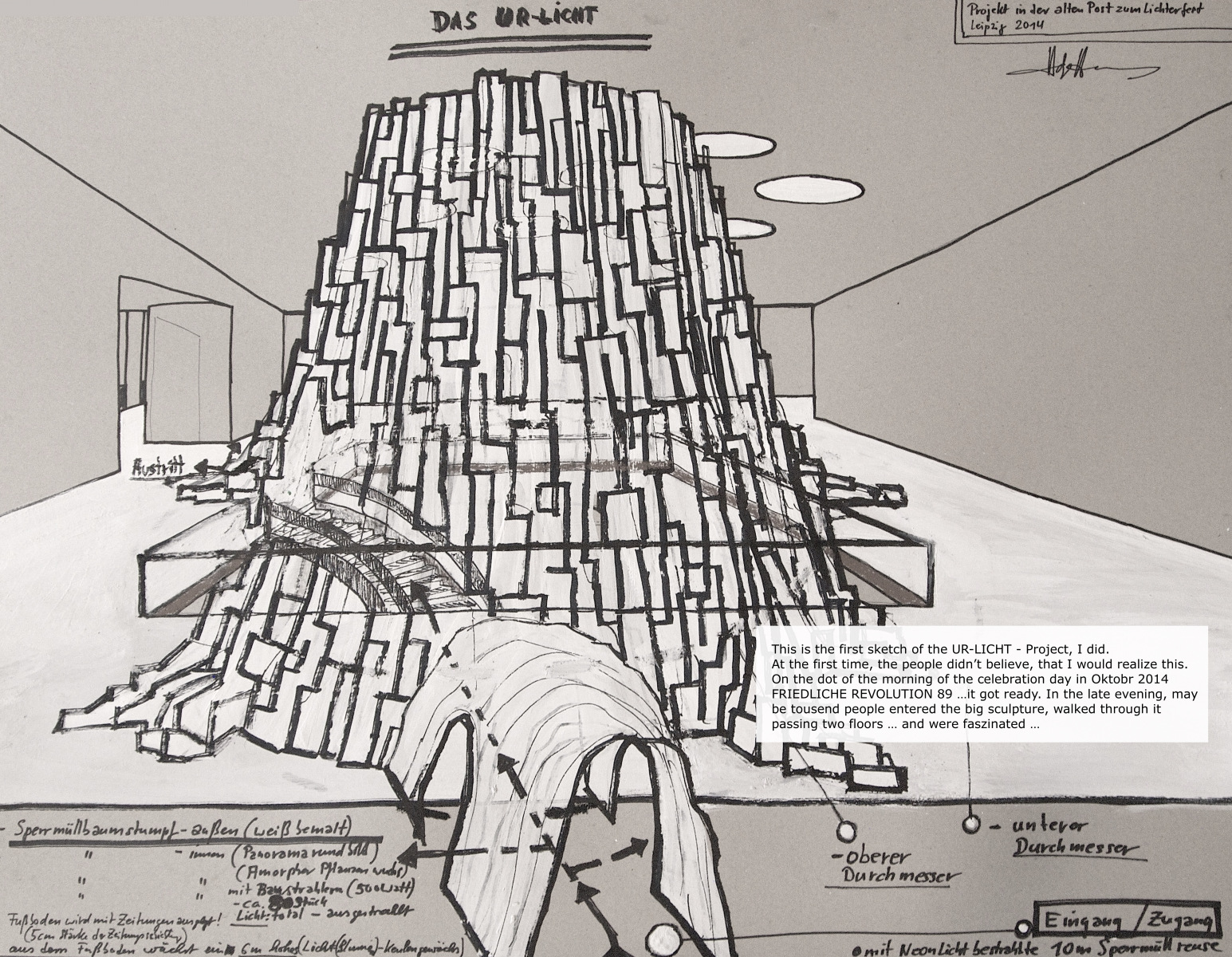
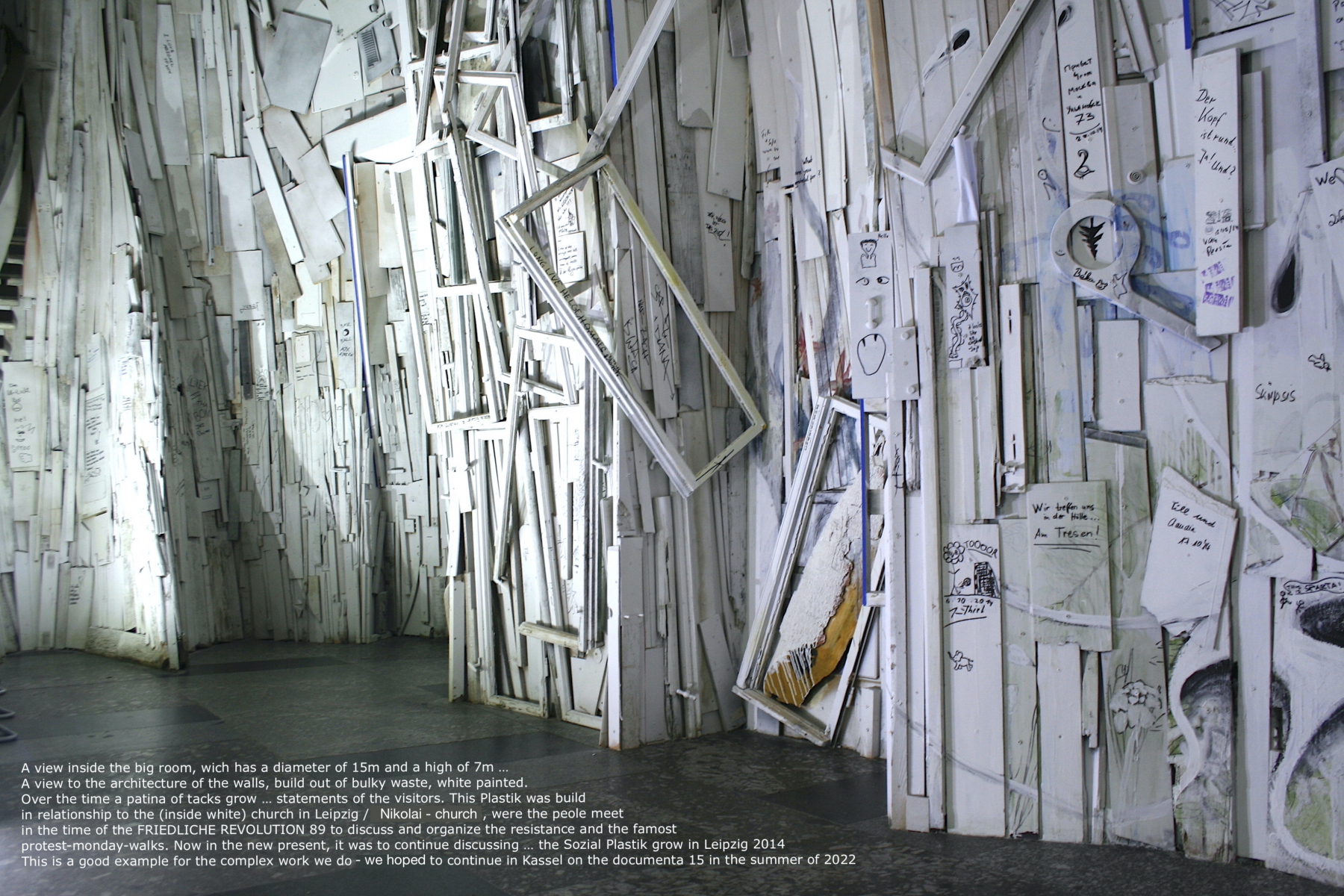
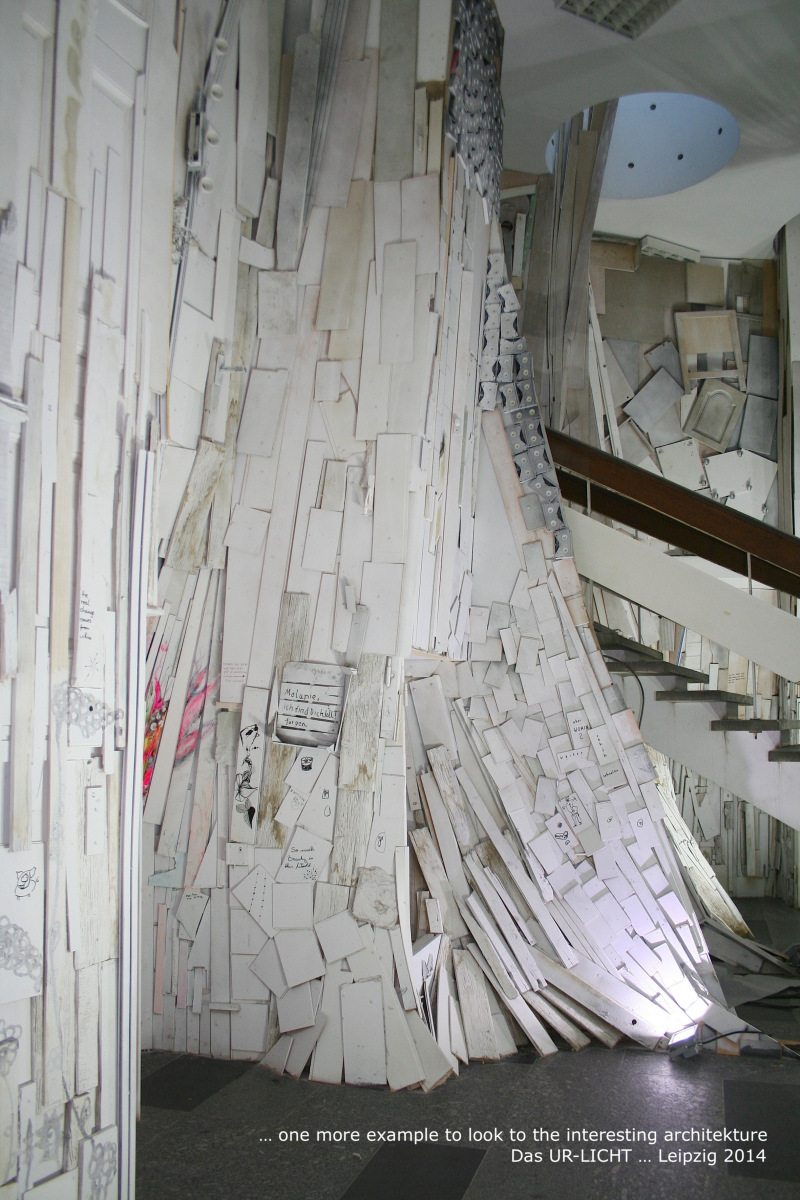
multifaceted dialogue with the Nikolai-Kirche (St. Nicholas Church). The artistic
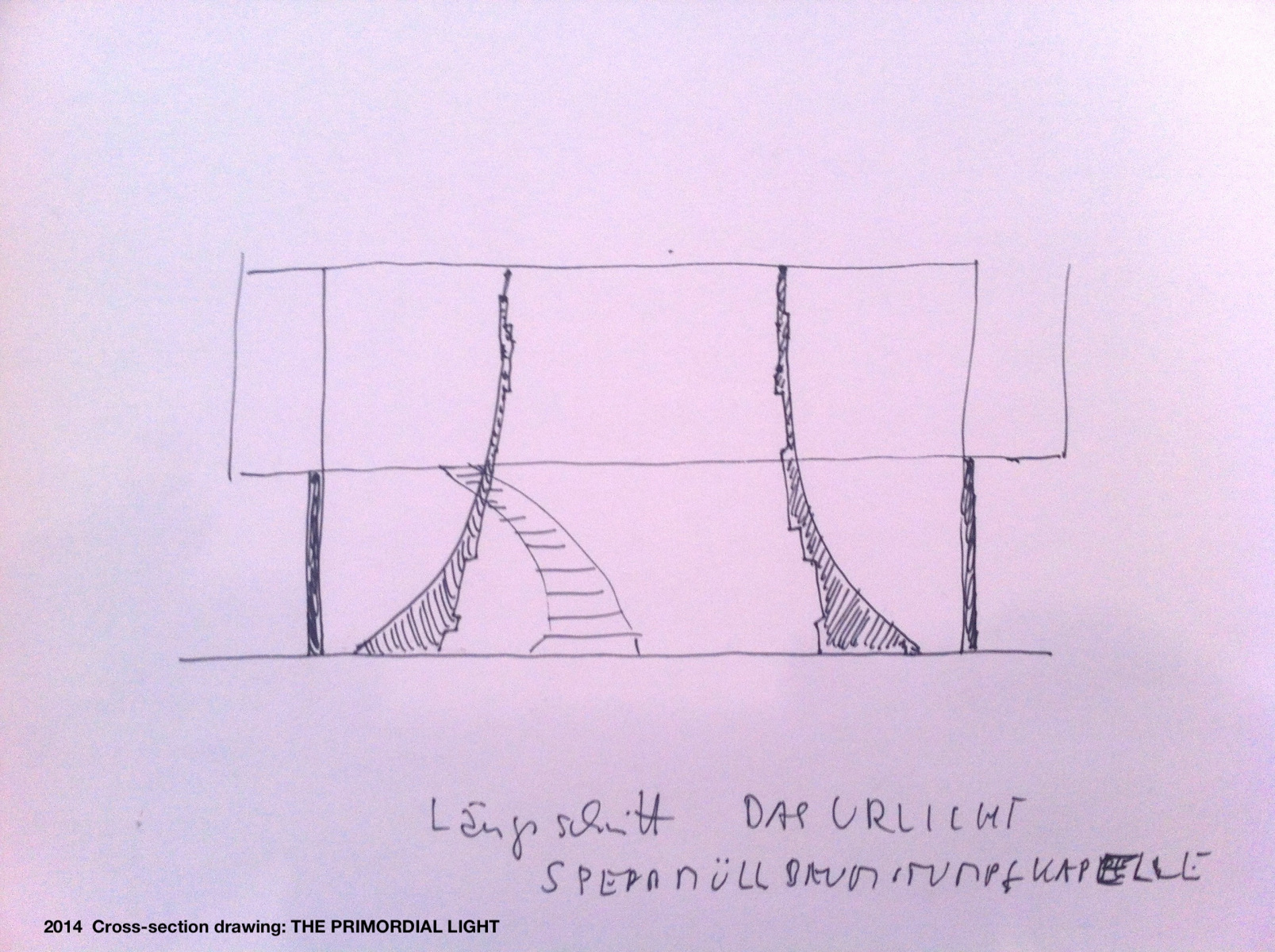
structure was designed to take the form of a colossal, imaginary, hollow tree stump;
bulky waste served as the building material, first dismantled, then reassembled into a
new architecture of life growing from within, with the tree standing in my art as a symbol
for all life. Every participant, caught up in the “turbo-capitalism” that has dominated here
for years, a system that respects no boundaries and possesses what one might call a
lethal DNA, prioritizing mass consumption, buying, discarding, and buying a new,
over quality, inevitably produces bulky waste: the kind of things people are all too happy
to move from their basements or attics out onto the street. Thus, it was an ideal building
material, one that connected people both directly and indirectly, infecting everyone with
the question of what the artist actually intended to do with it, while also allowing them

to participate themselves … Such a concept opens minds and, to varying degrees,
readies people to reflect, engage with the ideas, and even join the discussion here
and there … about the problems of the present … and, looking back, to contemplate
the problems, fears, and conditions that existed prior to 1989 …
The CRADLE TO CRADLE project, conceived by Prof. Michael Braungart, represents a
goal for the future. The physical architecture of the artwork illustrates the shift from the
conventional handling of waste and bulky refuse to viewing these materials as building
resources; it encourages us to question established norms, a crucial step forward.
The architecture of life, in our own existence, in our interactions with one another and
in our relationship with animals and plants, calls for a new, contemporary evolution.
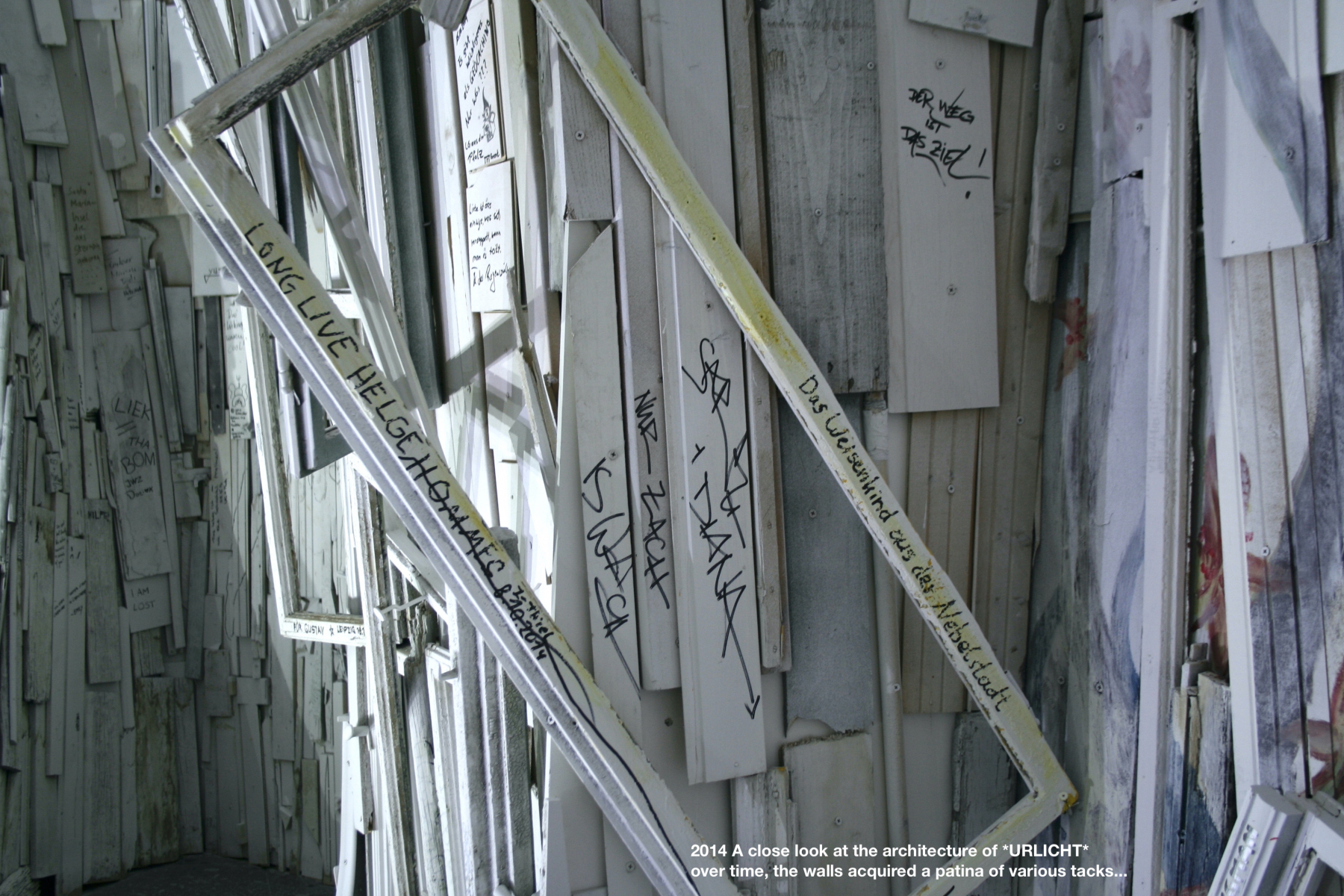
Below, you can watch the MDR television report on URLICHT from the
cultural program artour. To gain further insight into the project,
a photo gallery is provided underneath, offering detailed views …