MANHEIM – LORIEN / THE LONELY OAK
Drizzle. The sky is grey. Hesitantly, the clouds begin to break, revealing a reluctant glimpse of pale blue. This is not a day for brilliant blue skies.
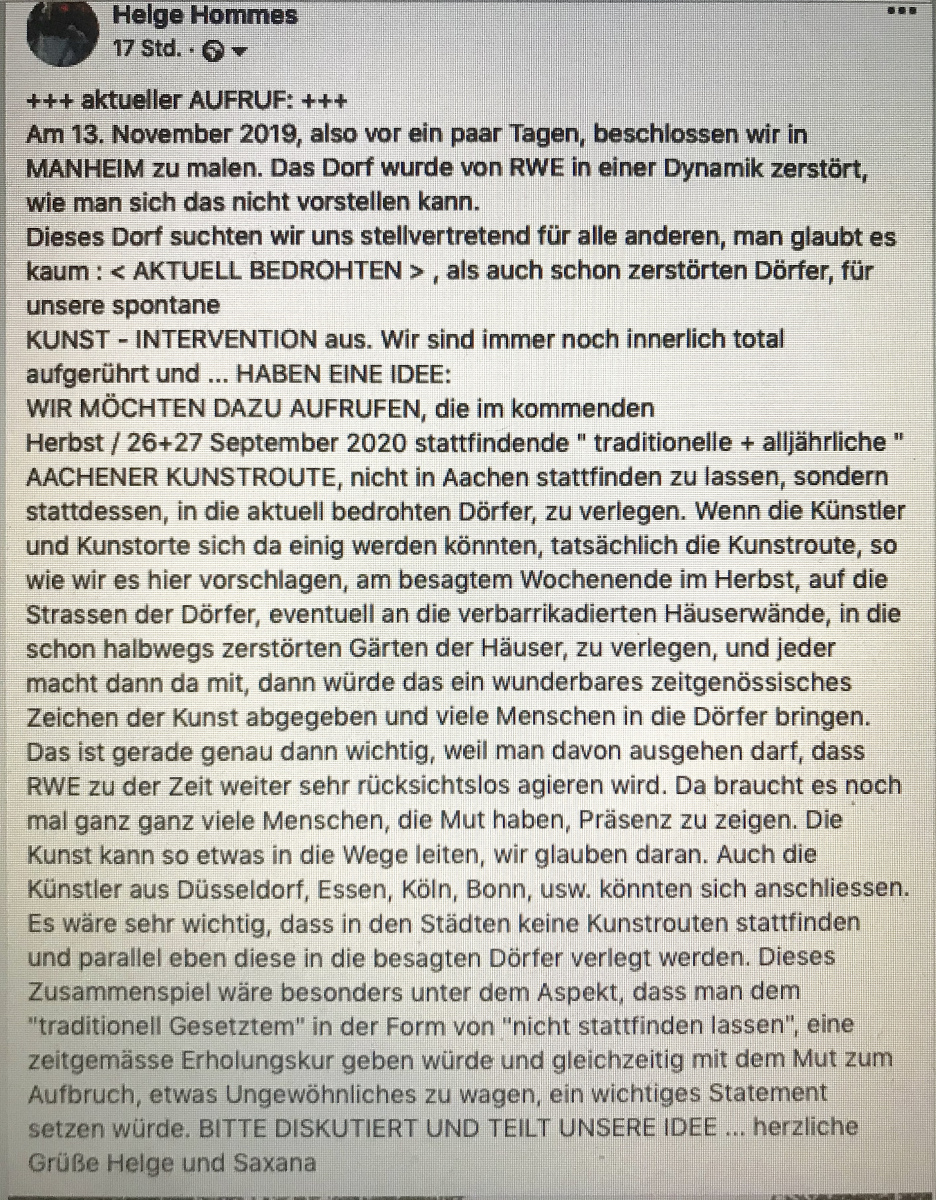
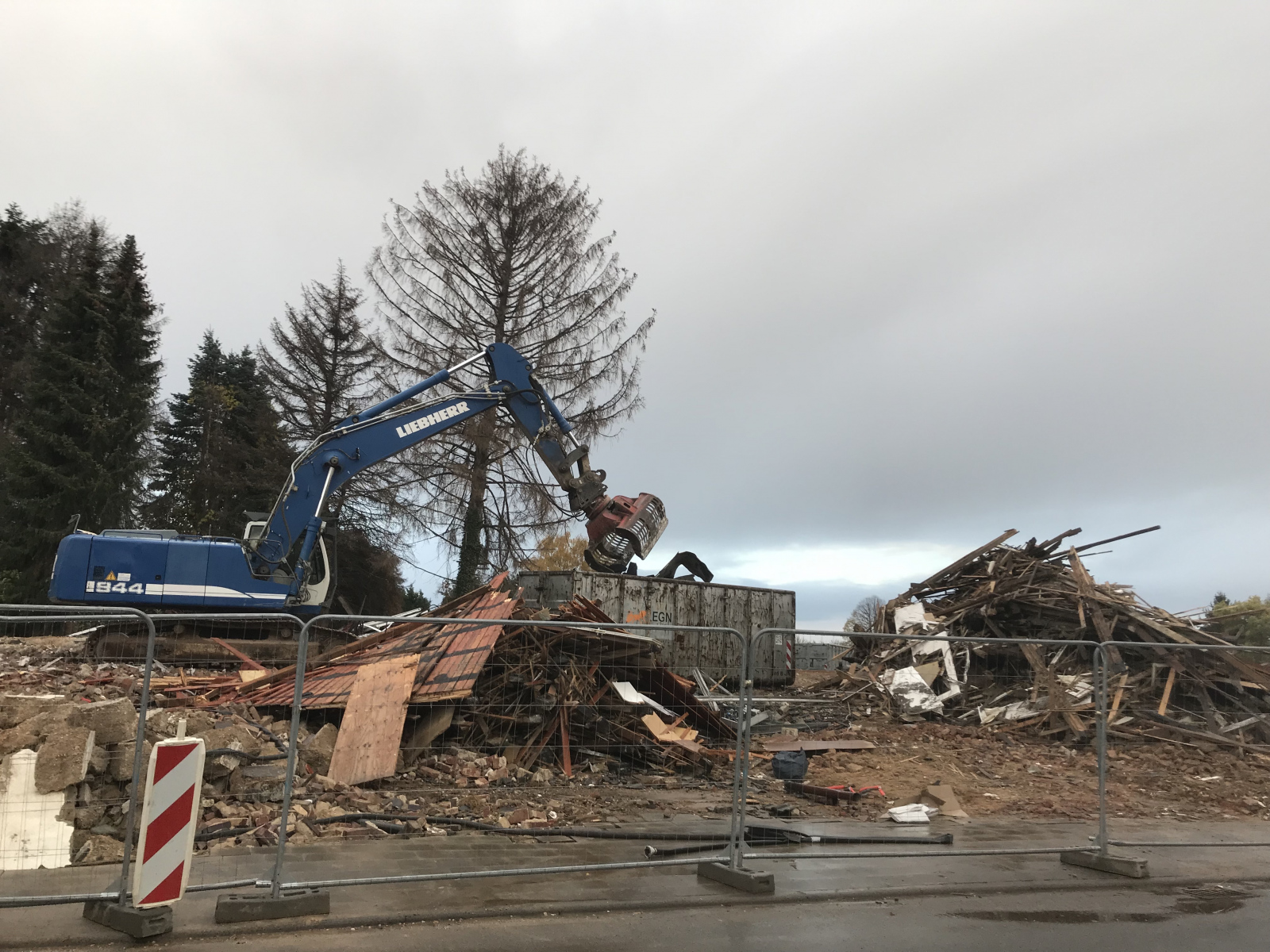
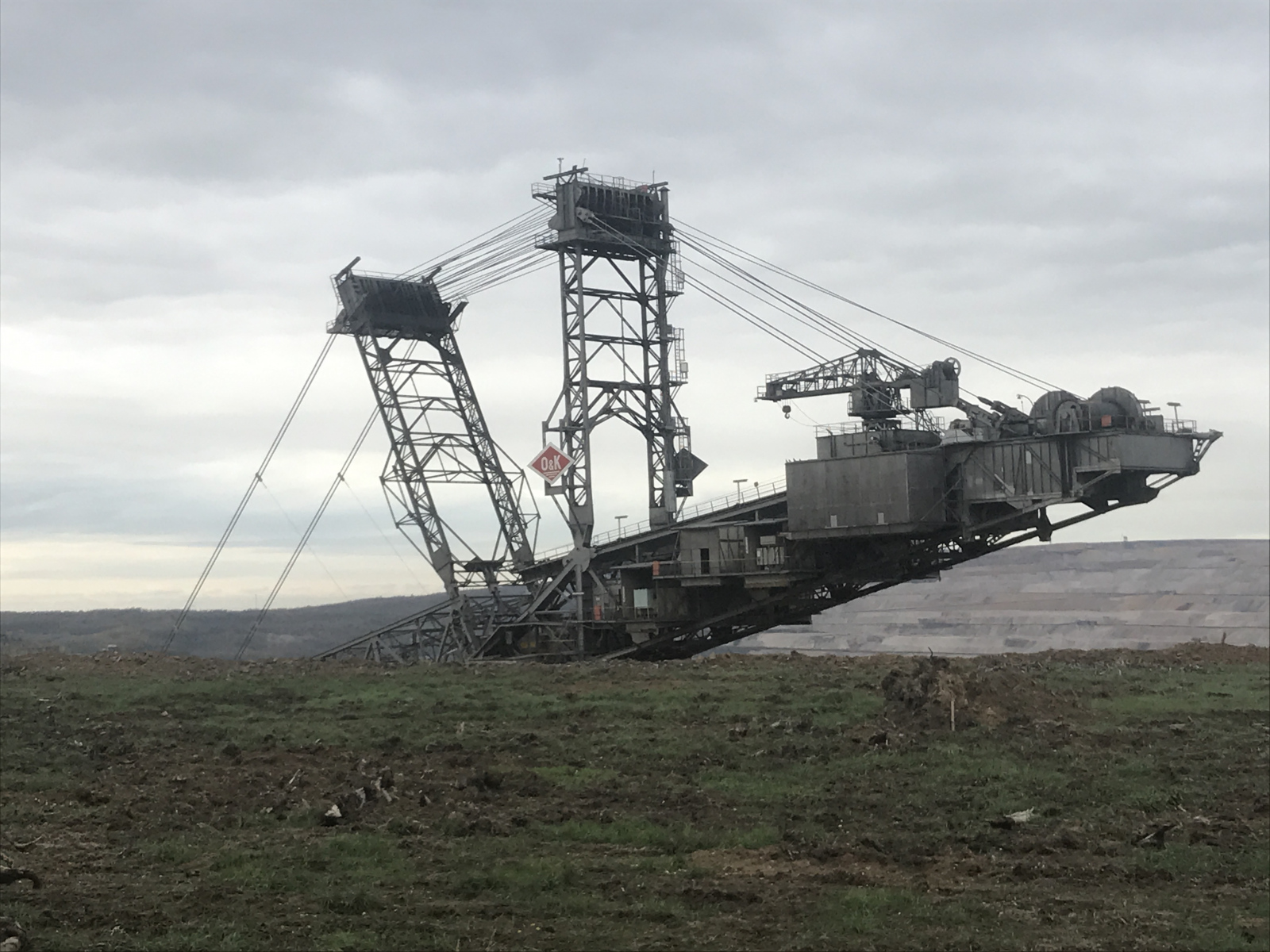
It is November 2019, and the relentless sound of excavators can be heard. Ordered by RWE, they are tearing everything down—DESTROYERS OF HOMES AND HOMELANDS.
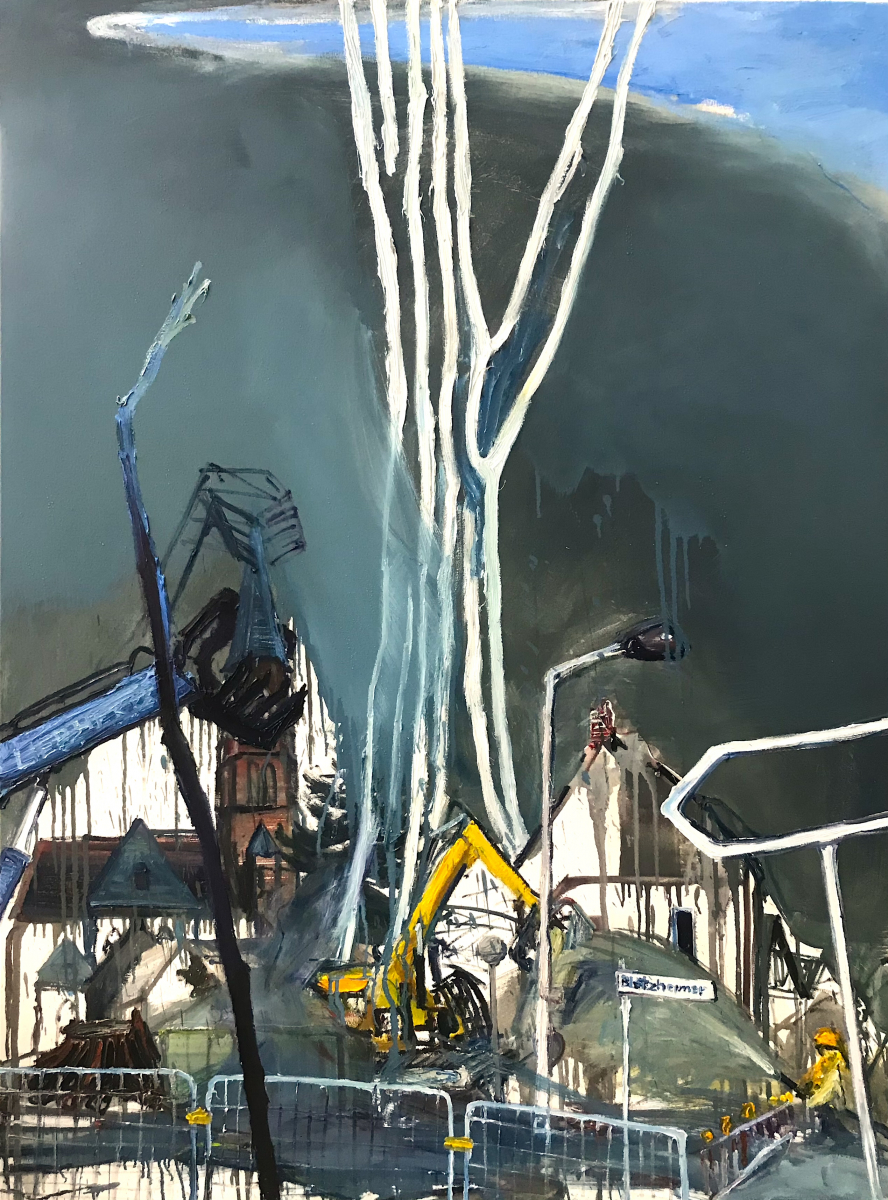
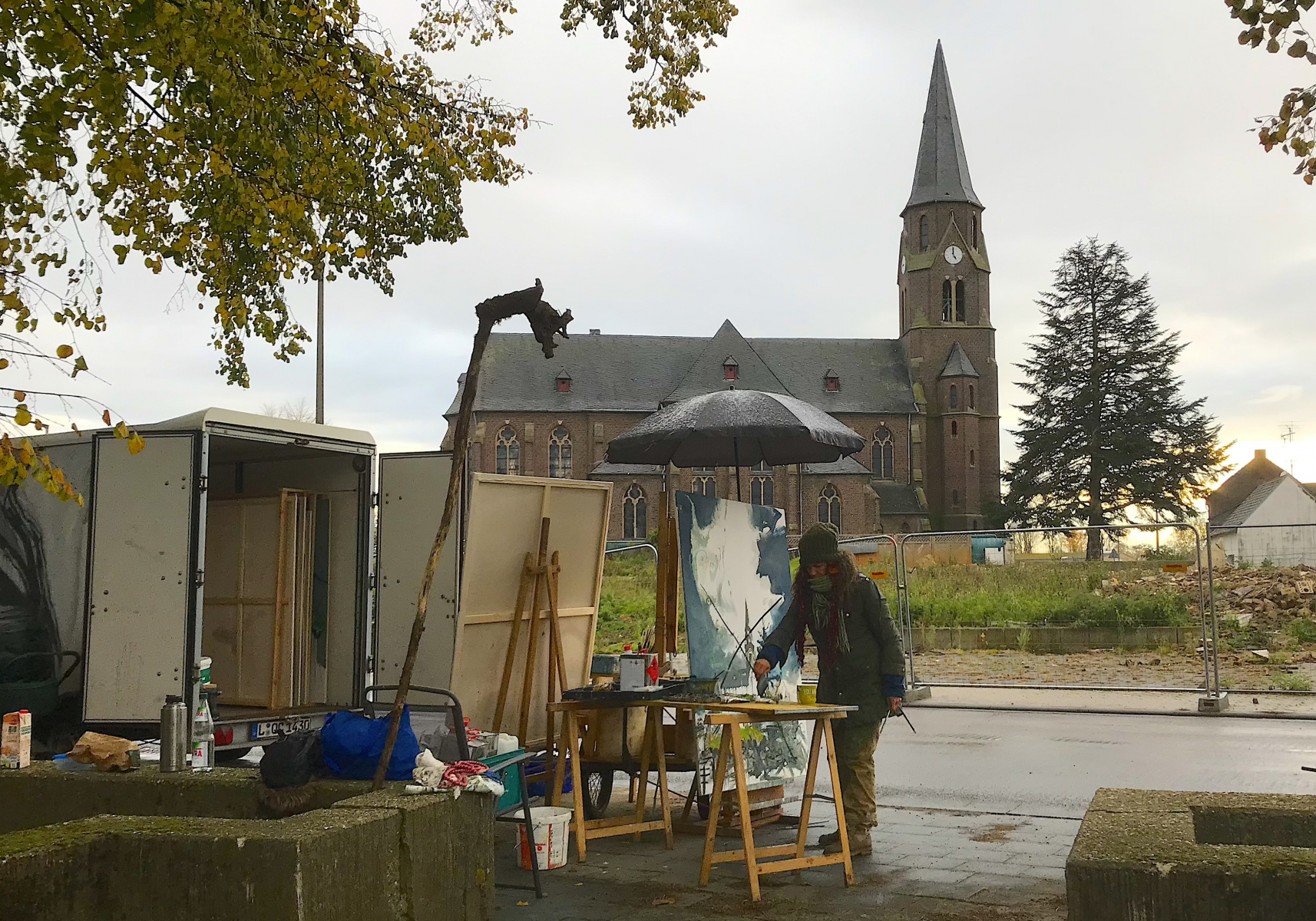
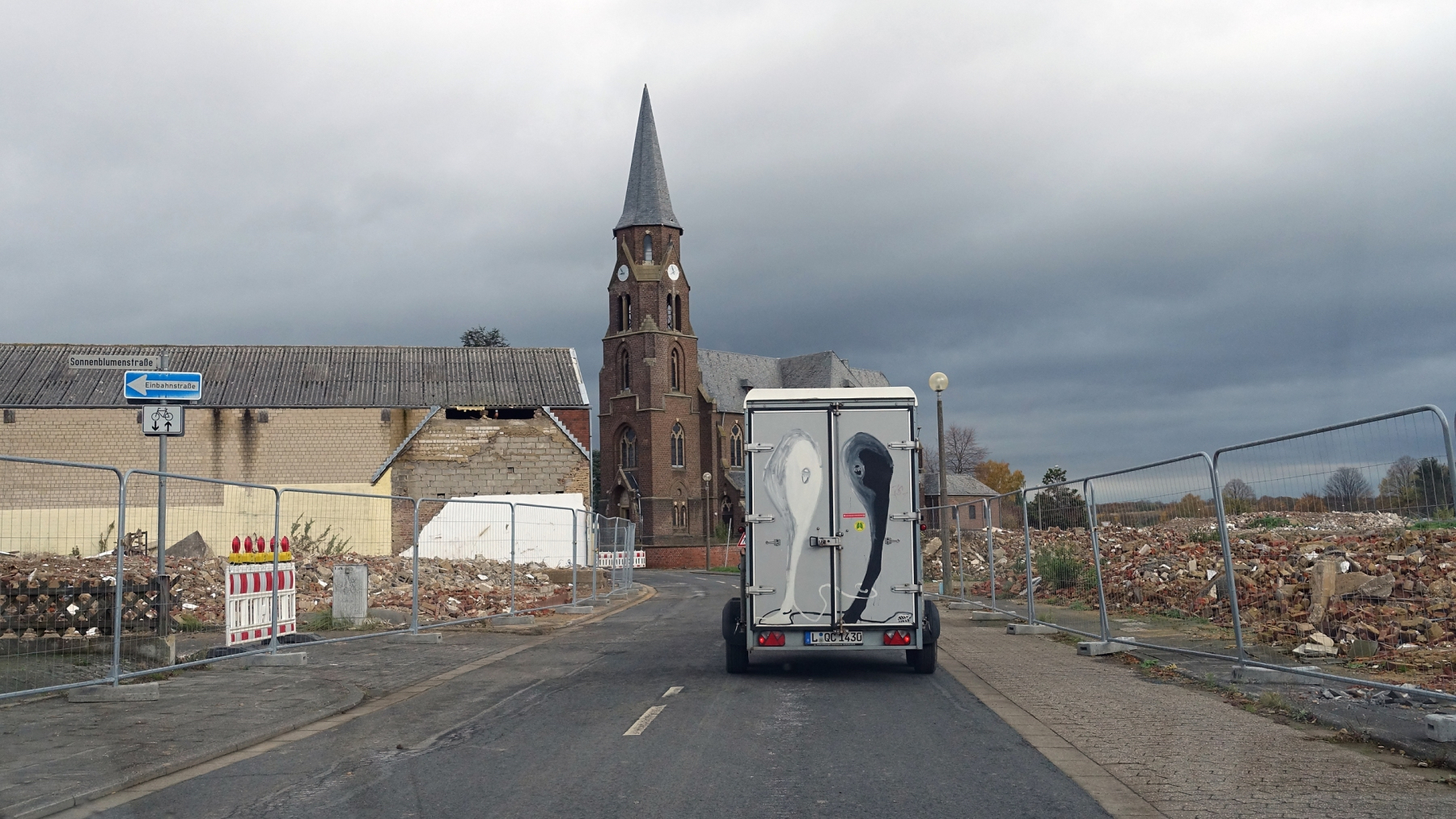
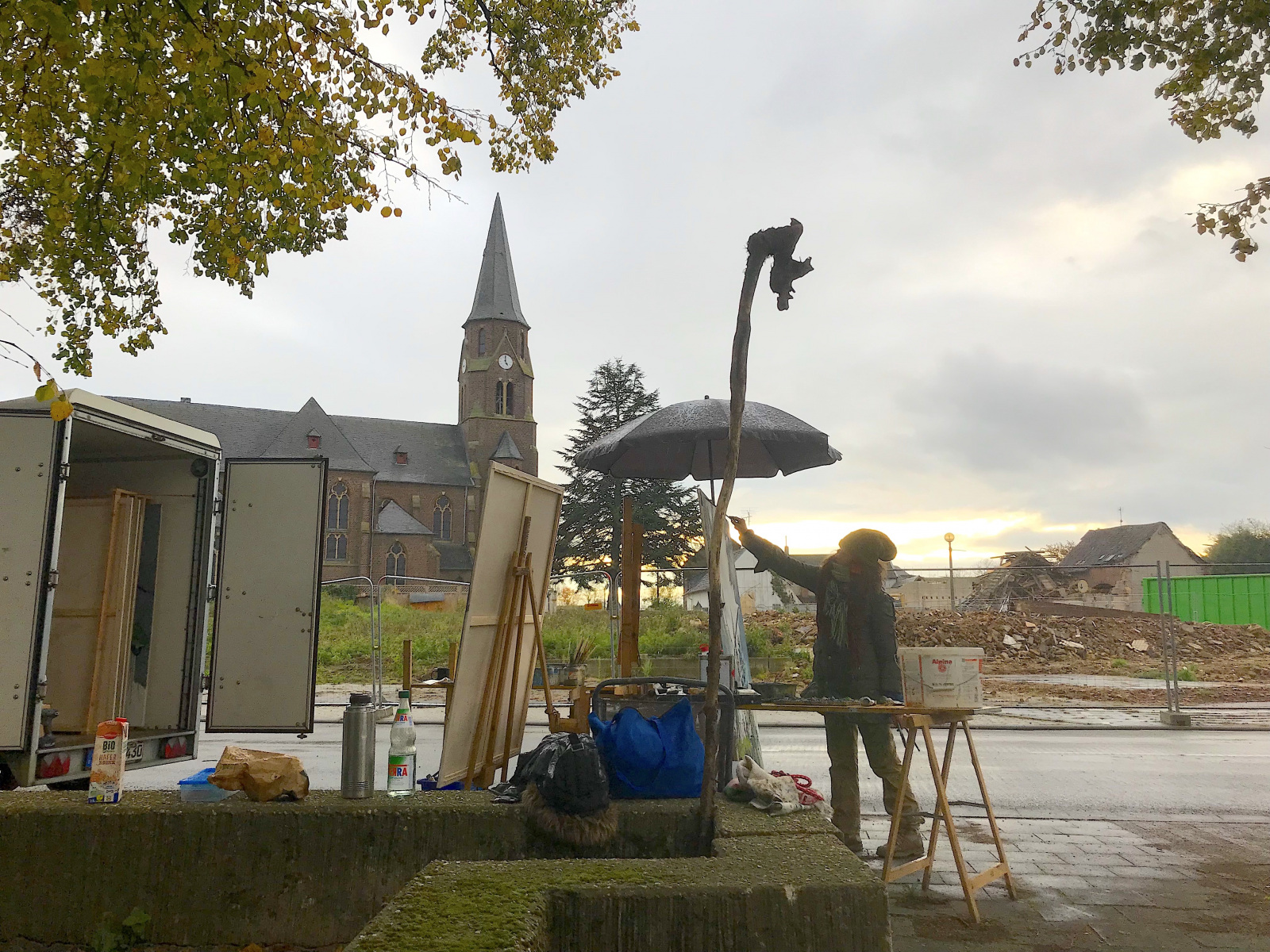
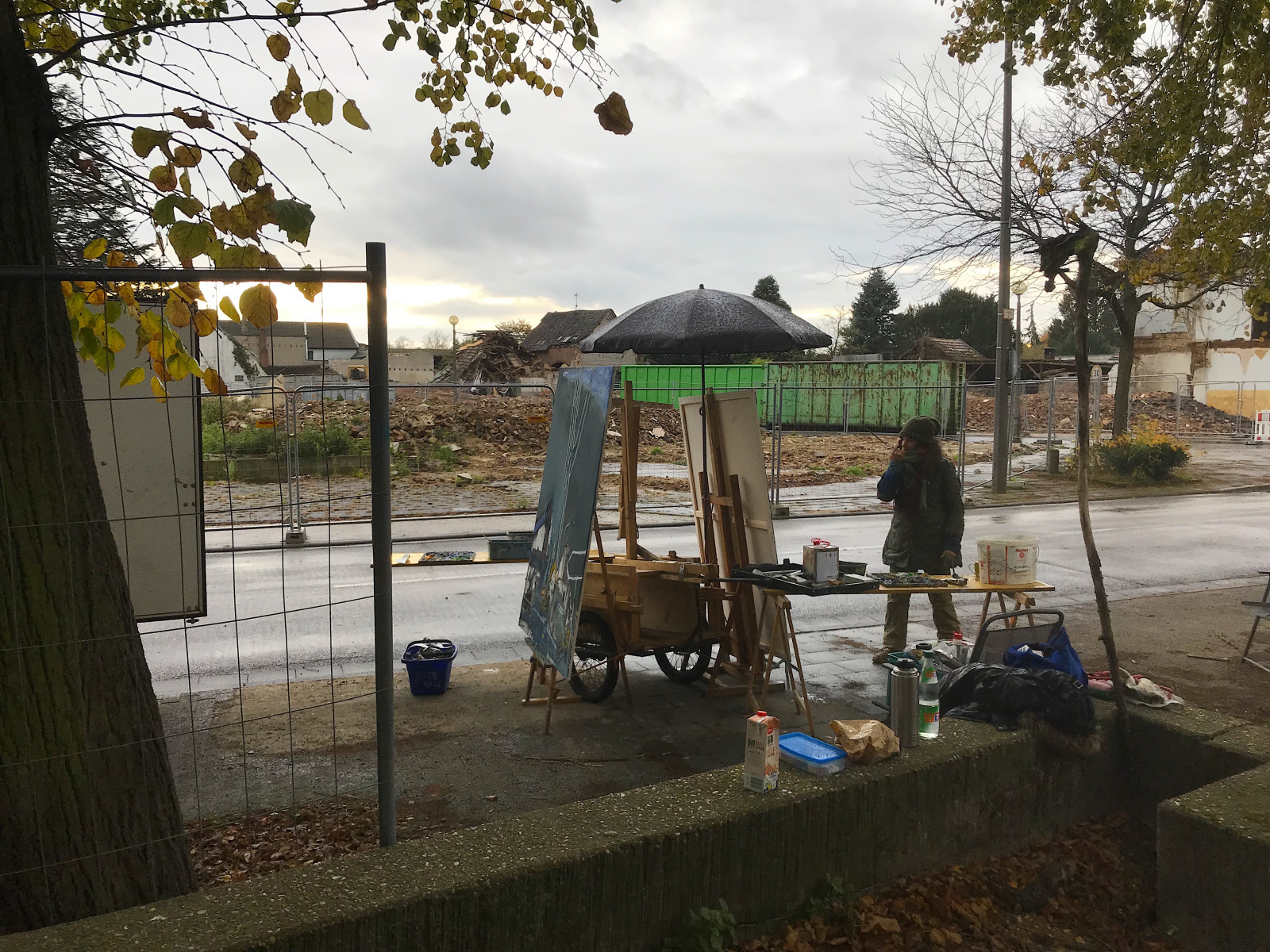
We reach MANHEIM as part of our intervention tour. We drive into the village with our trailer, along a village street flanked on both sides by a devastated landscape. Near the former village centre, close to the church—which is still standing, its windows boarded up with laminated wooden panels—we stop and position ourselves directly among the roaring excavators.
It does not take long before an RWE security SUV aggressively pulls up directly in front of us, blocking our way.
We do not speak to him.
Our eyes meet.
He decides to drive on.
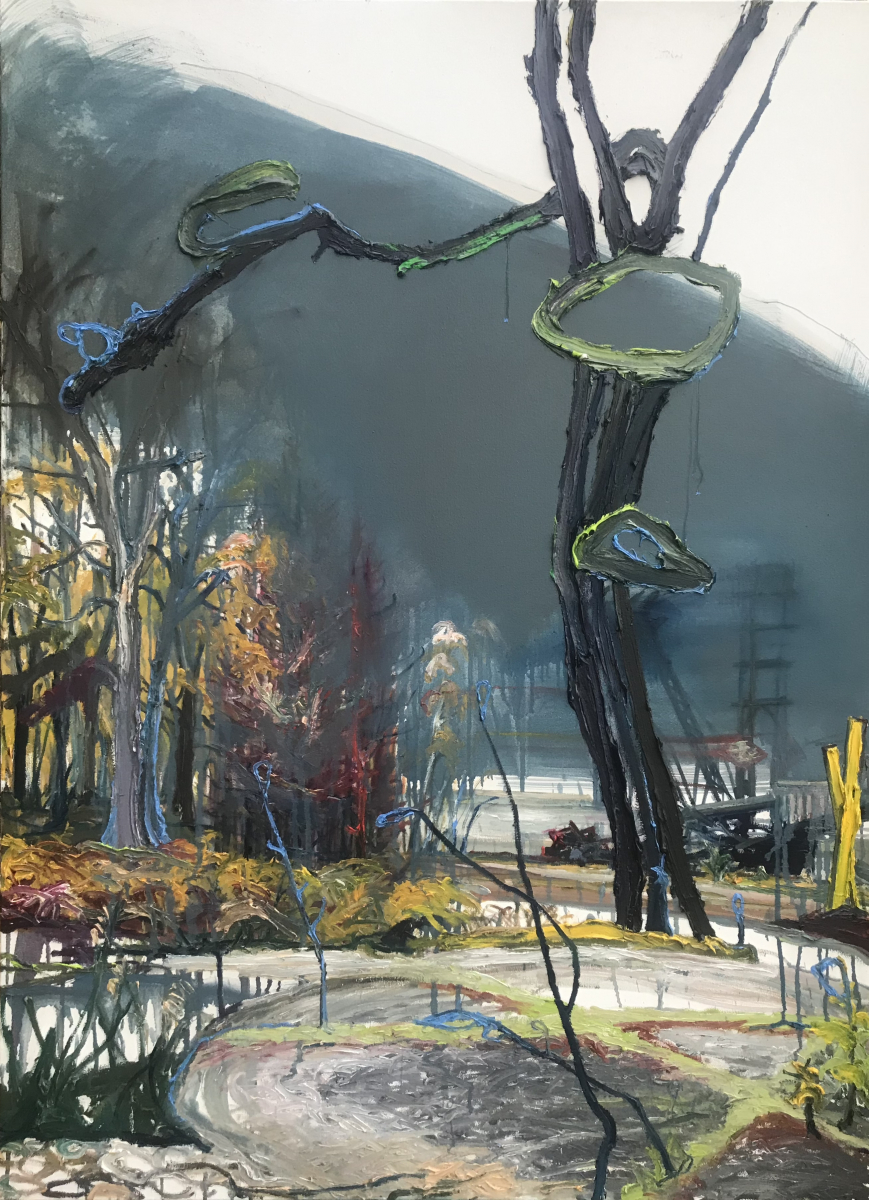
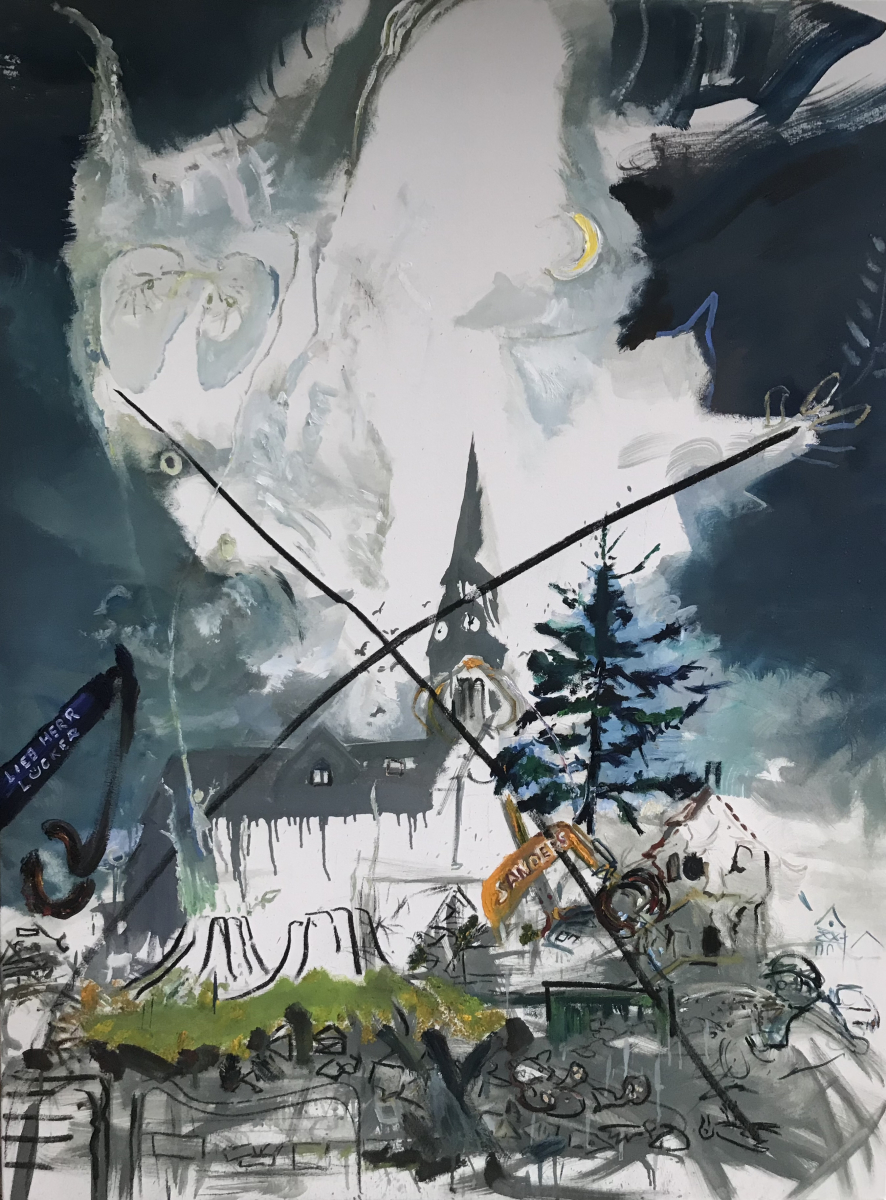
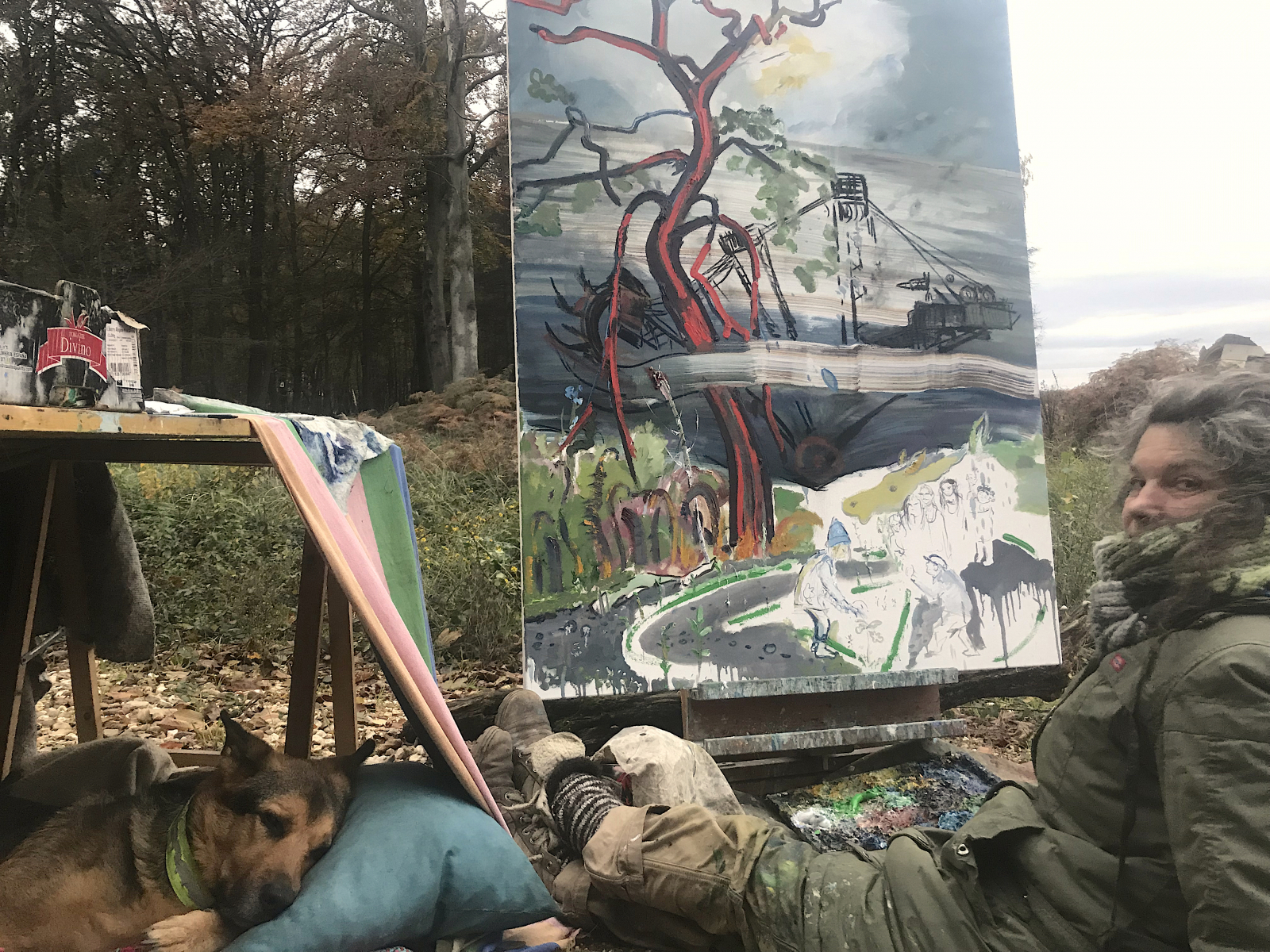
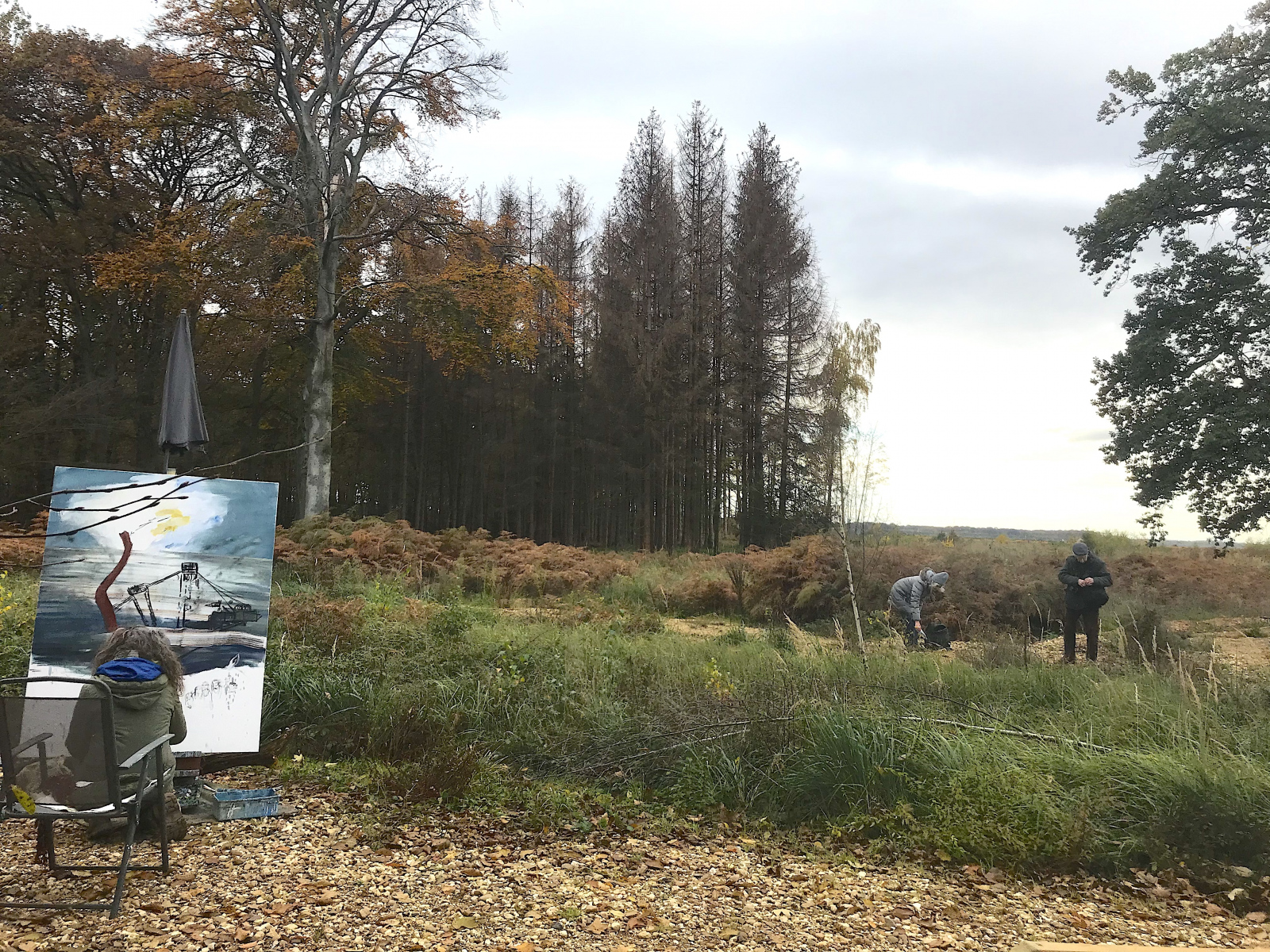
We continue painting. Two large-scale paintings emerge amid the dust of the excavators, accompanied by the persistent drizzle—works that bear witness to these events for a very long time.
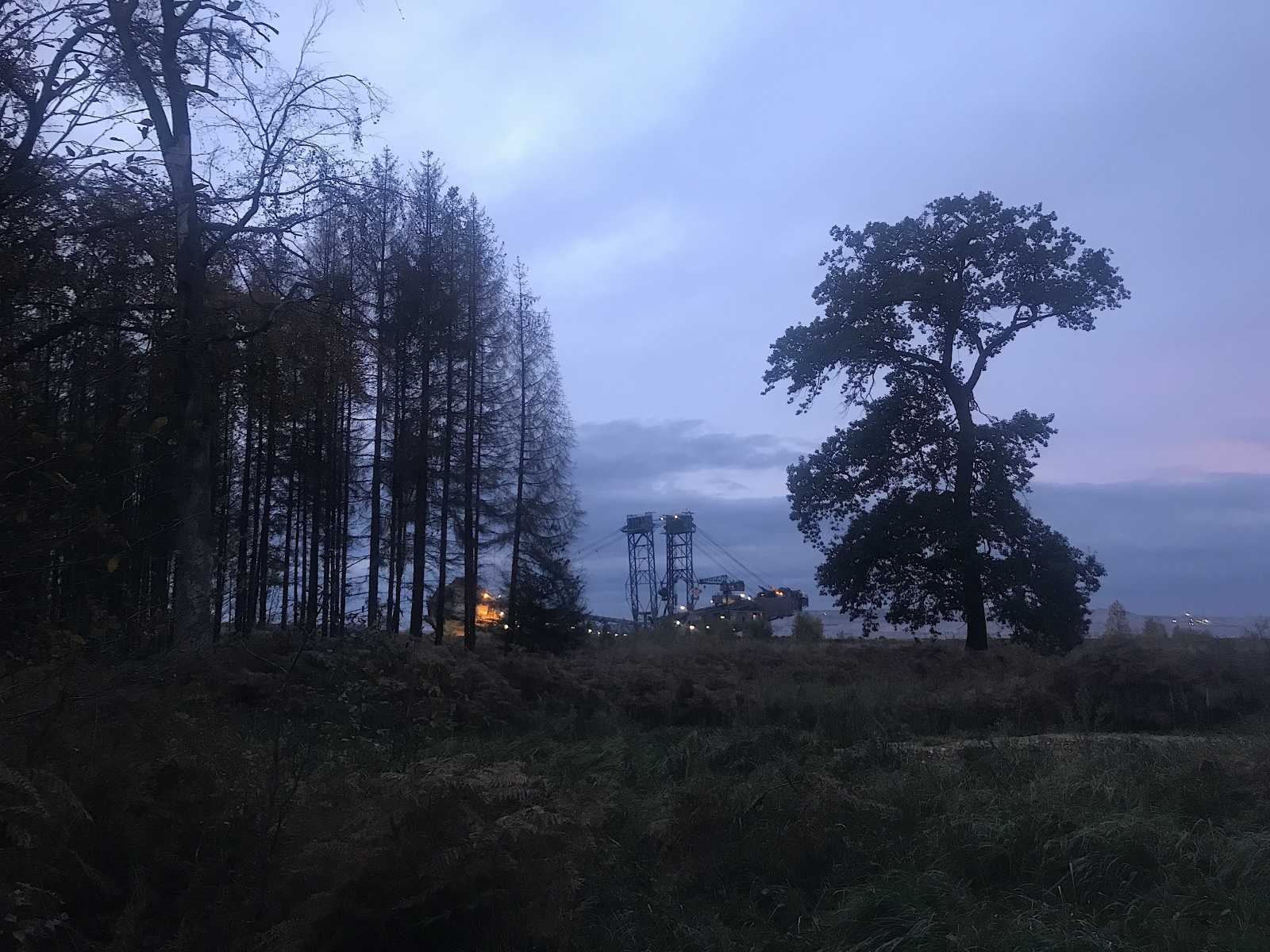
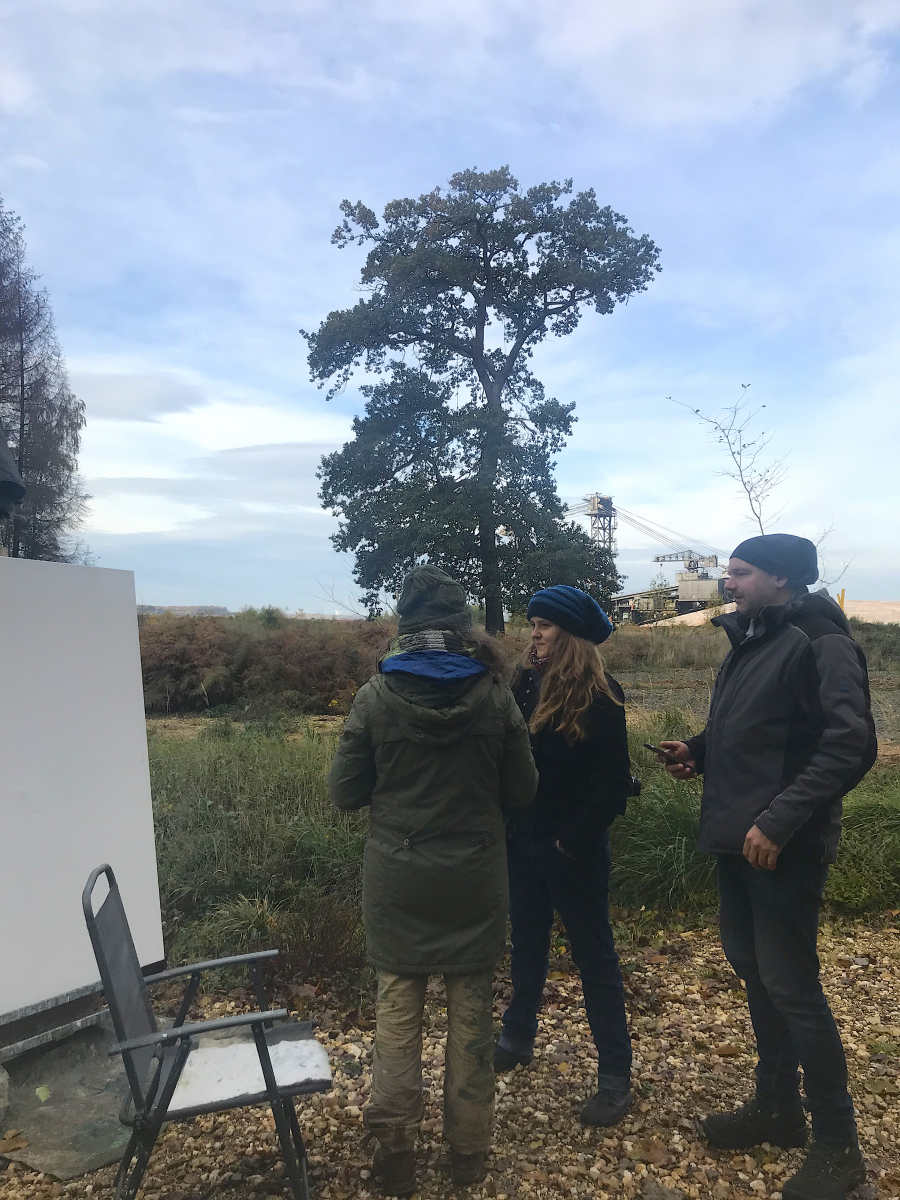
We continue on to Lorien, to the LONELY OAK.
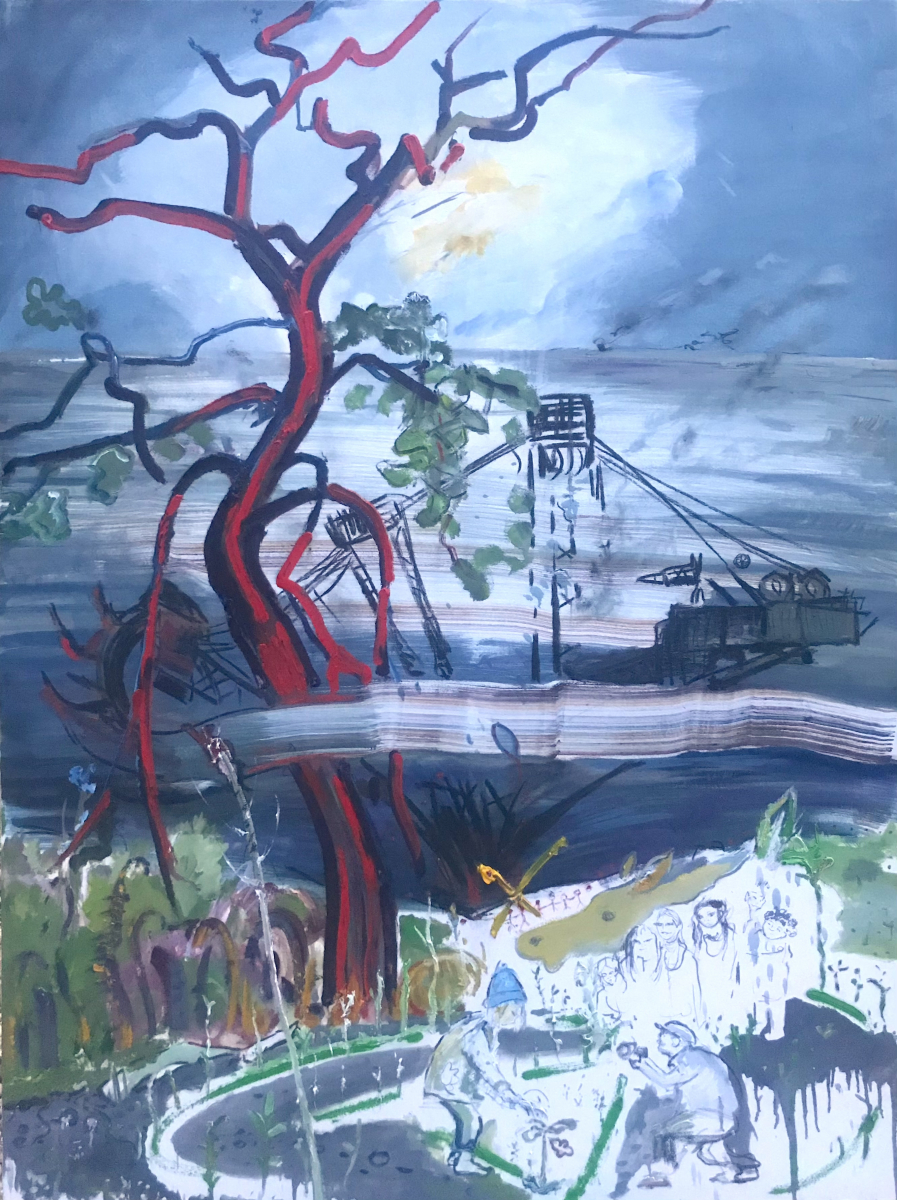
It is encouraging to see that people—activists and local residents—are taking care of this place. The area that had been gravelled by RWE in preparation for the clearing and removal of the forest, once a biotope surrounding the old tree, has been broken open again by hand, using pickaxes.
With topsoil, a huge “A” has been created within a circle approximately 20 metres in diameter, and young trees have been planted inside it.
This statement is a peaceful expression of contemporary resistance, situated directly on the edge of Europe’s largest open-cast mine.
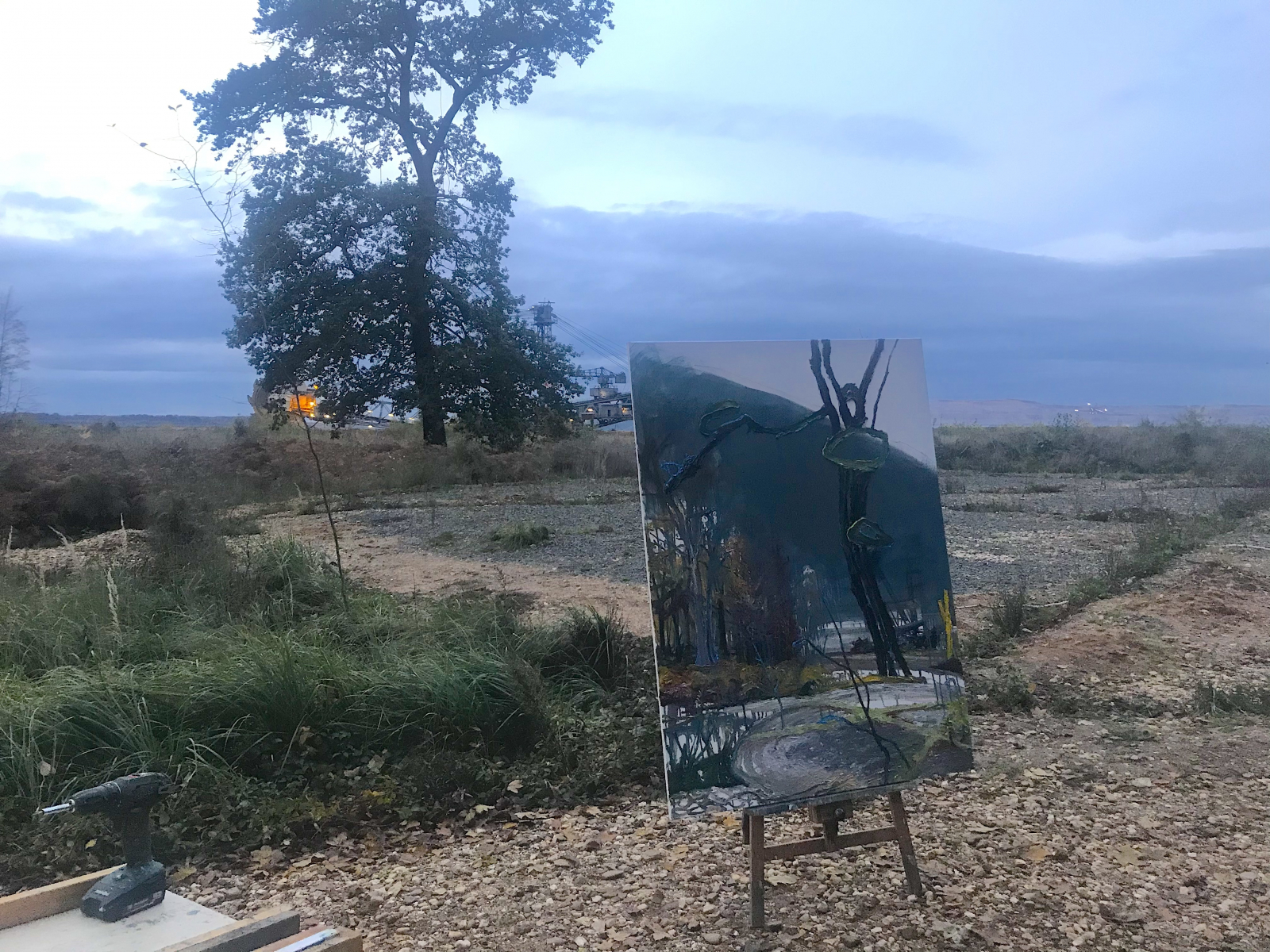
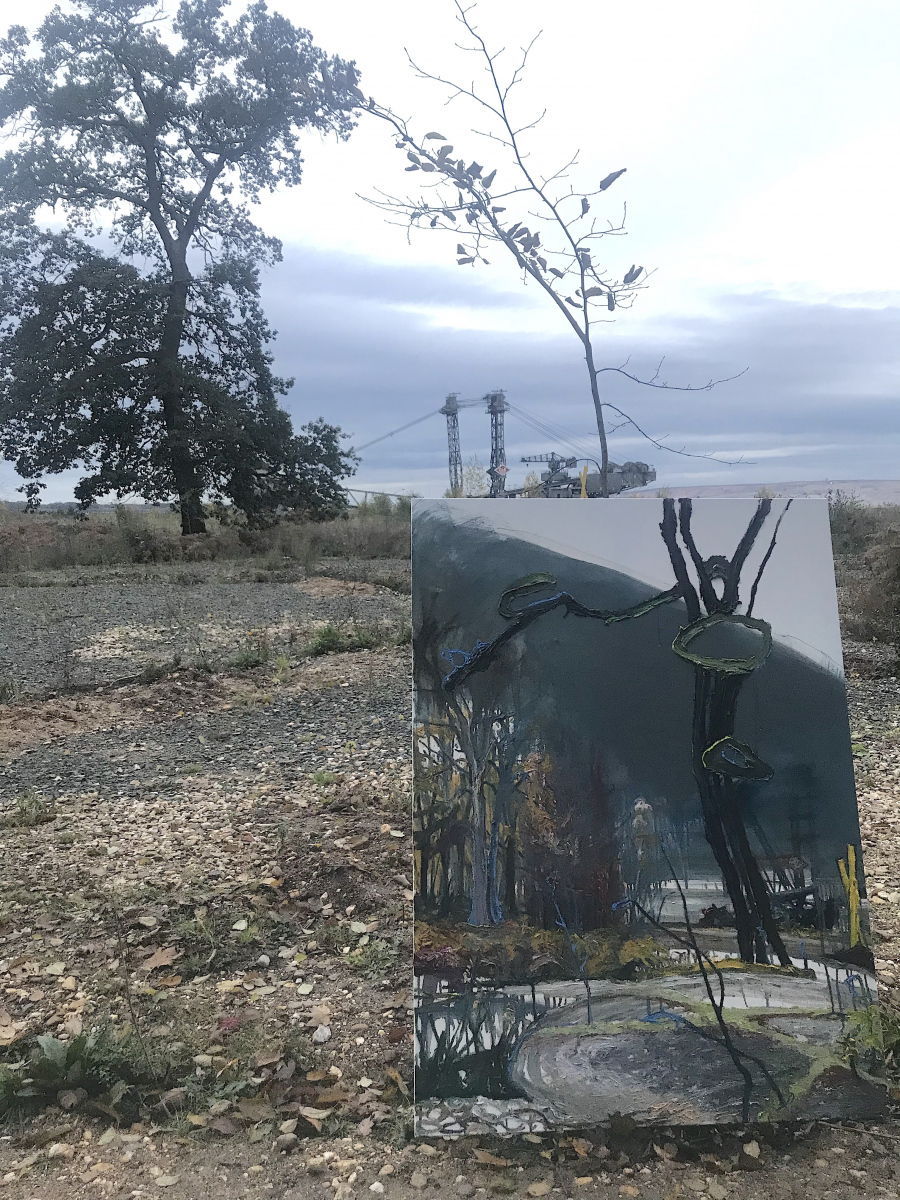
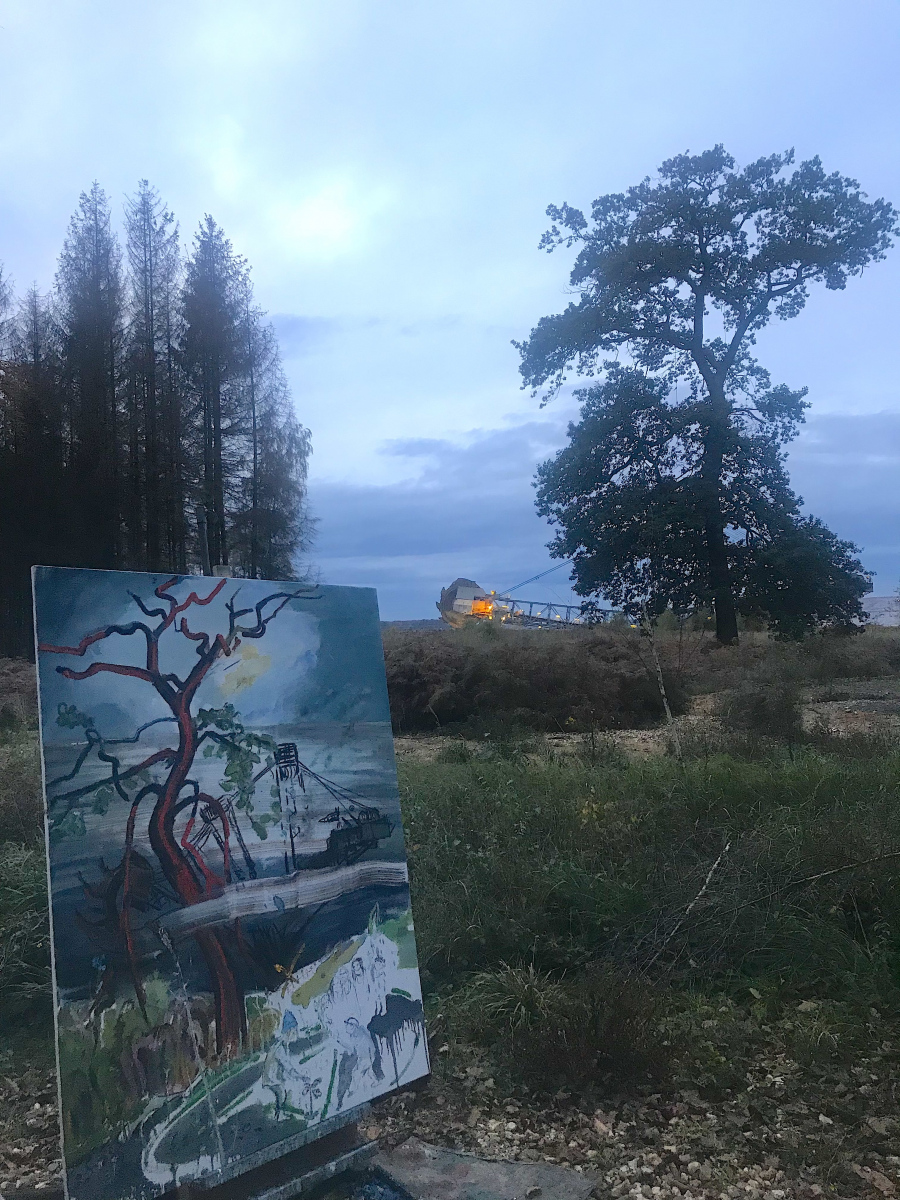
The LONELY OAK keeps watch day and night, facing the excavators, so that its children may now grow again.
Our paintings, created there that evening, bear witness to this moment.
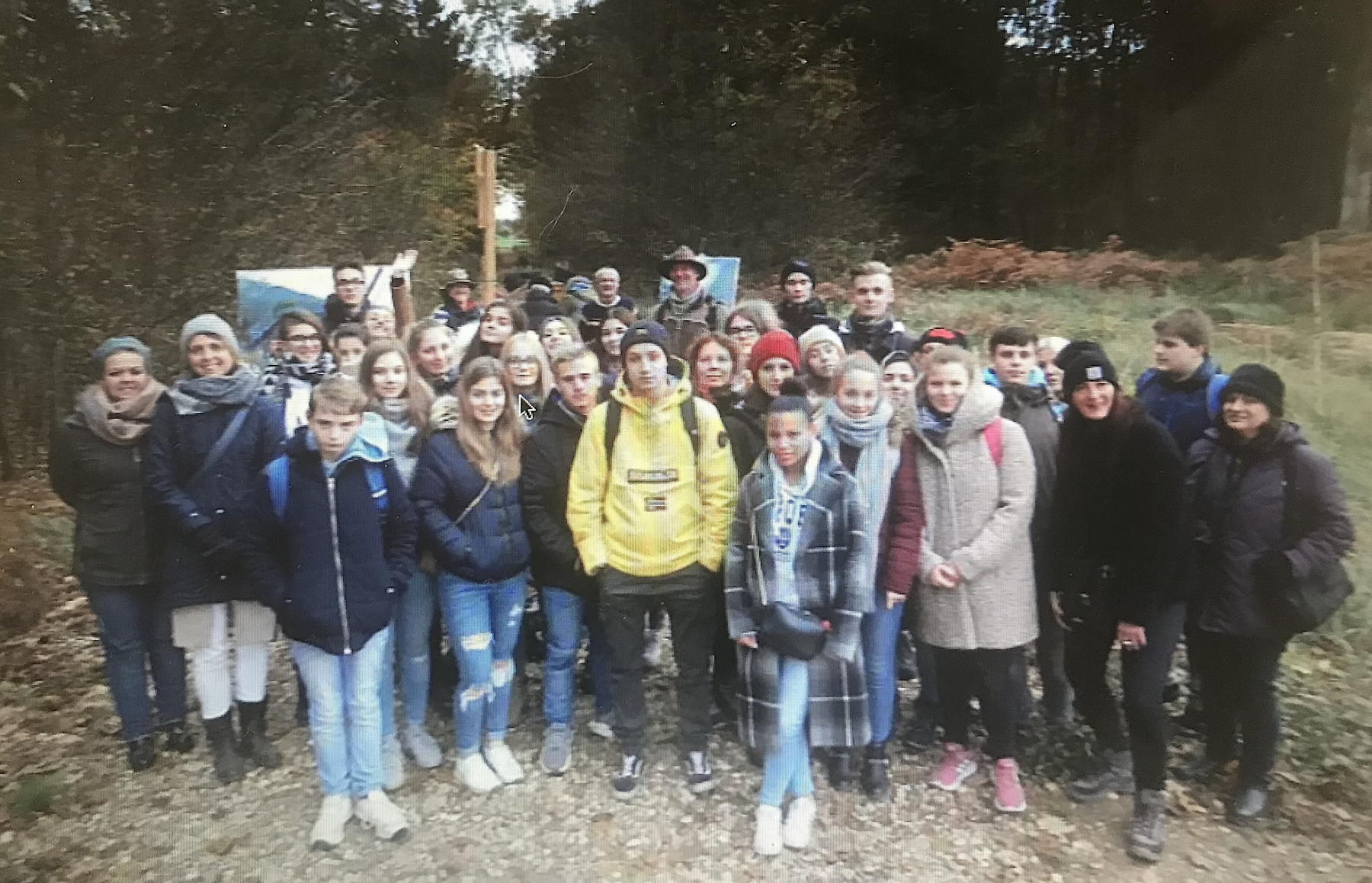
A school class from Belgium was visiting and watched us paint.
The children are forming their own picture of the world—and they will stand up for it.