21–24 November 2024 – Solidarity Art Action
WE ARE UNSTOPPABLE – ANOTHER WORLD IS POSSIBLE
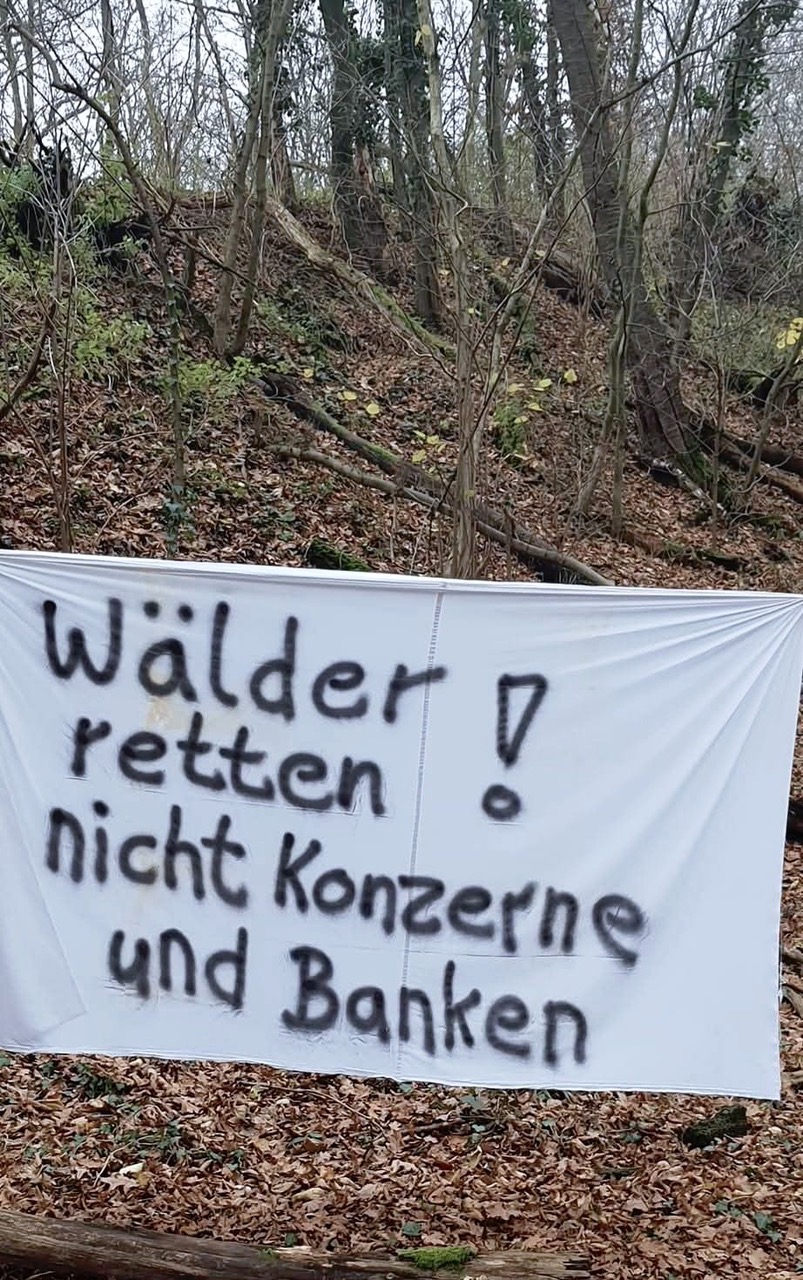
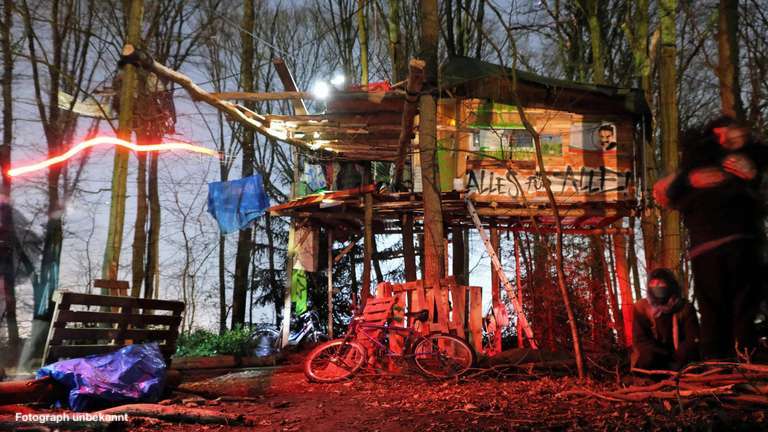
For the Preservation of the SÜNDENWÄLDCHEN
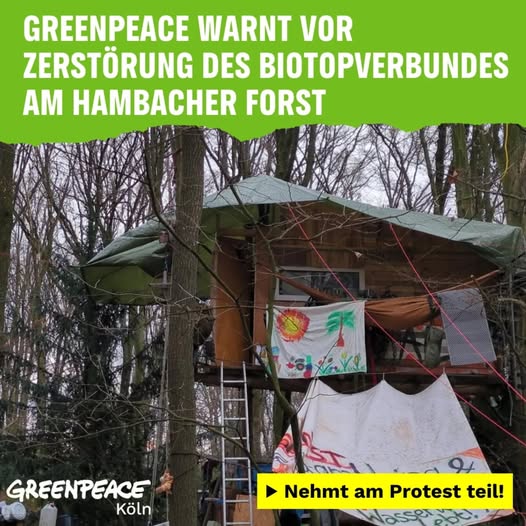
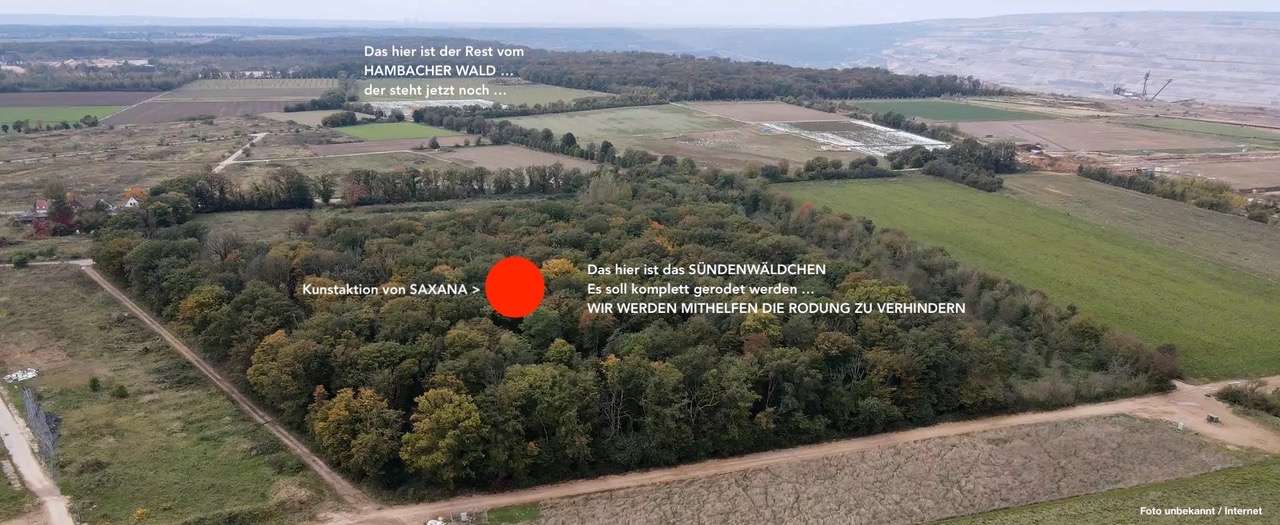
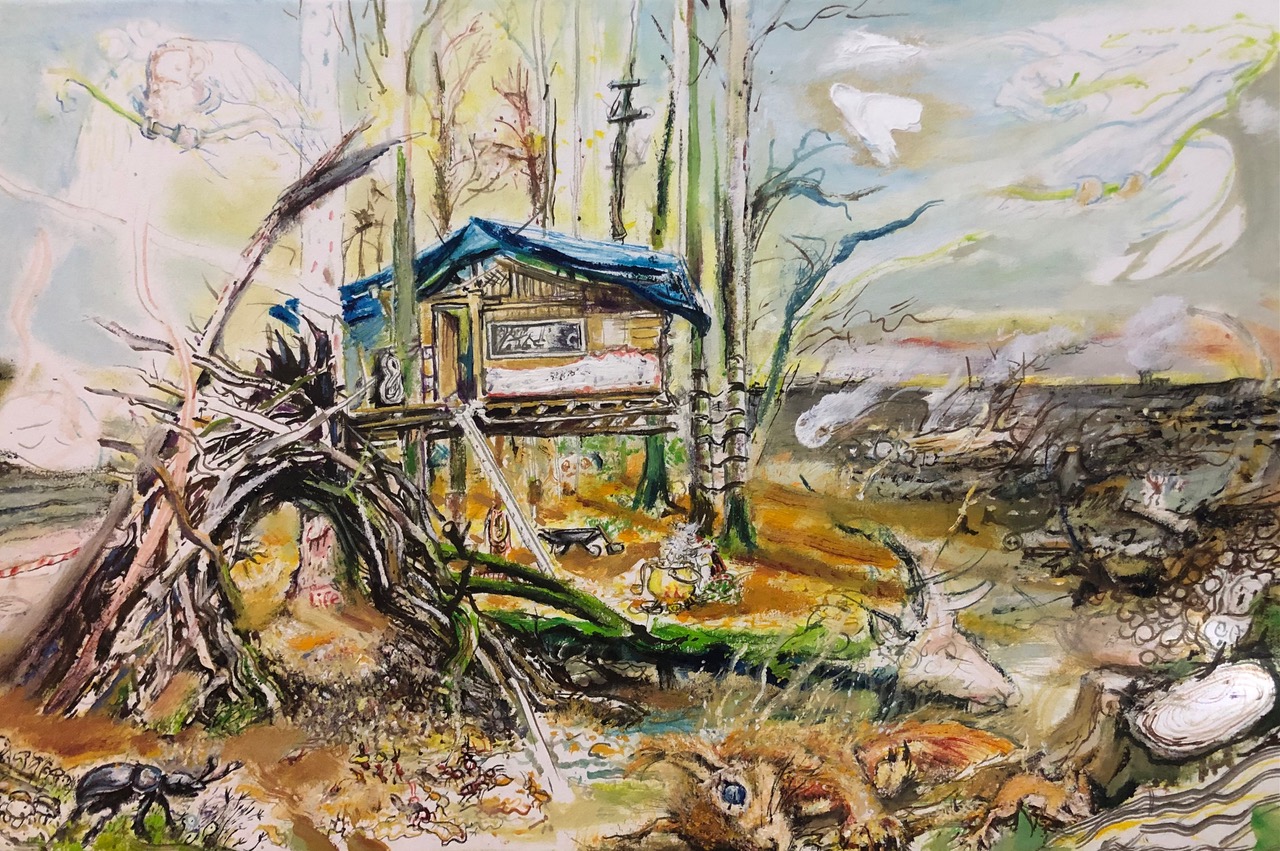
A precious woodland area within sight of the Hambach Forest, located near Manheim (old), Kerpen.
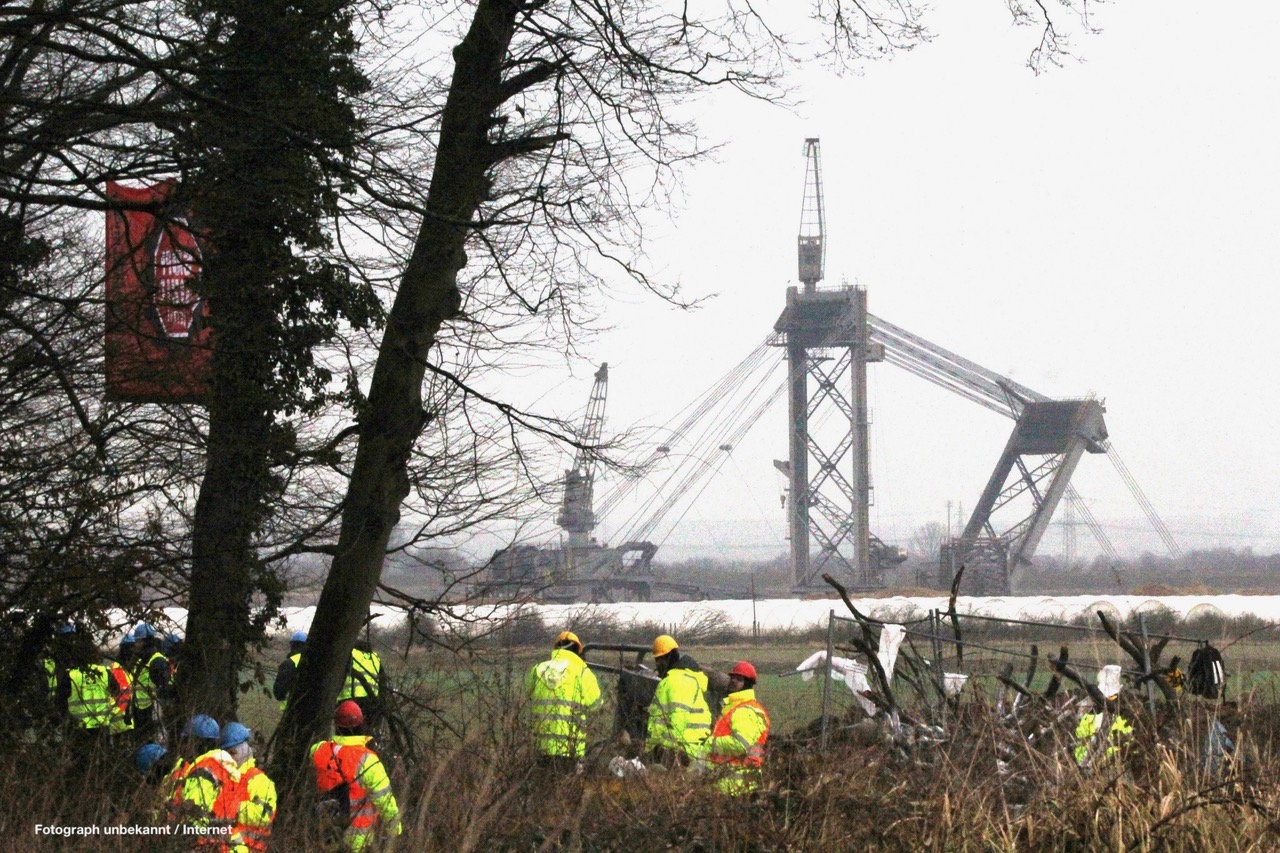
The question of how to shape the future living environment surrounding Europe’s largest open-cast mine, the Hambach–Garzweiler II lignite mine, is highly complex. The plans of the company RWE regarding the transformation and future design of the Hambach mining landscape have been progressing for years and continued in 2024/25 with actions that appear increasingly outdated in view of current ecological knowledge.
The method is simple: create irreversible facts.
A small forest area with the significant name SÜNDENWÄLDCHEN (Little Forest of Sins) was threatened by already planned clearance. This woodland represented an important connecting element within a broader concept of ecological regeneration—a “bridge module” of considerable significance.
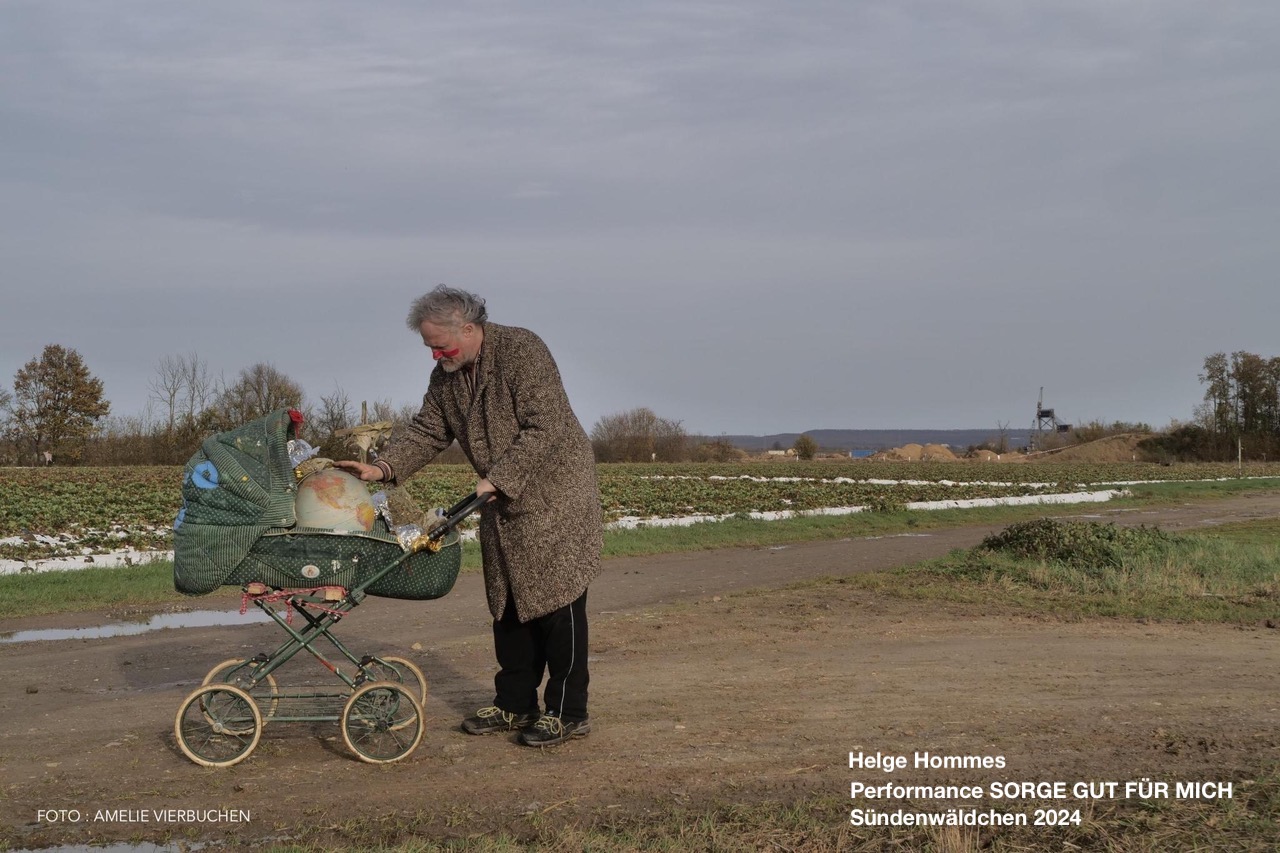
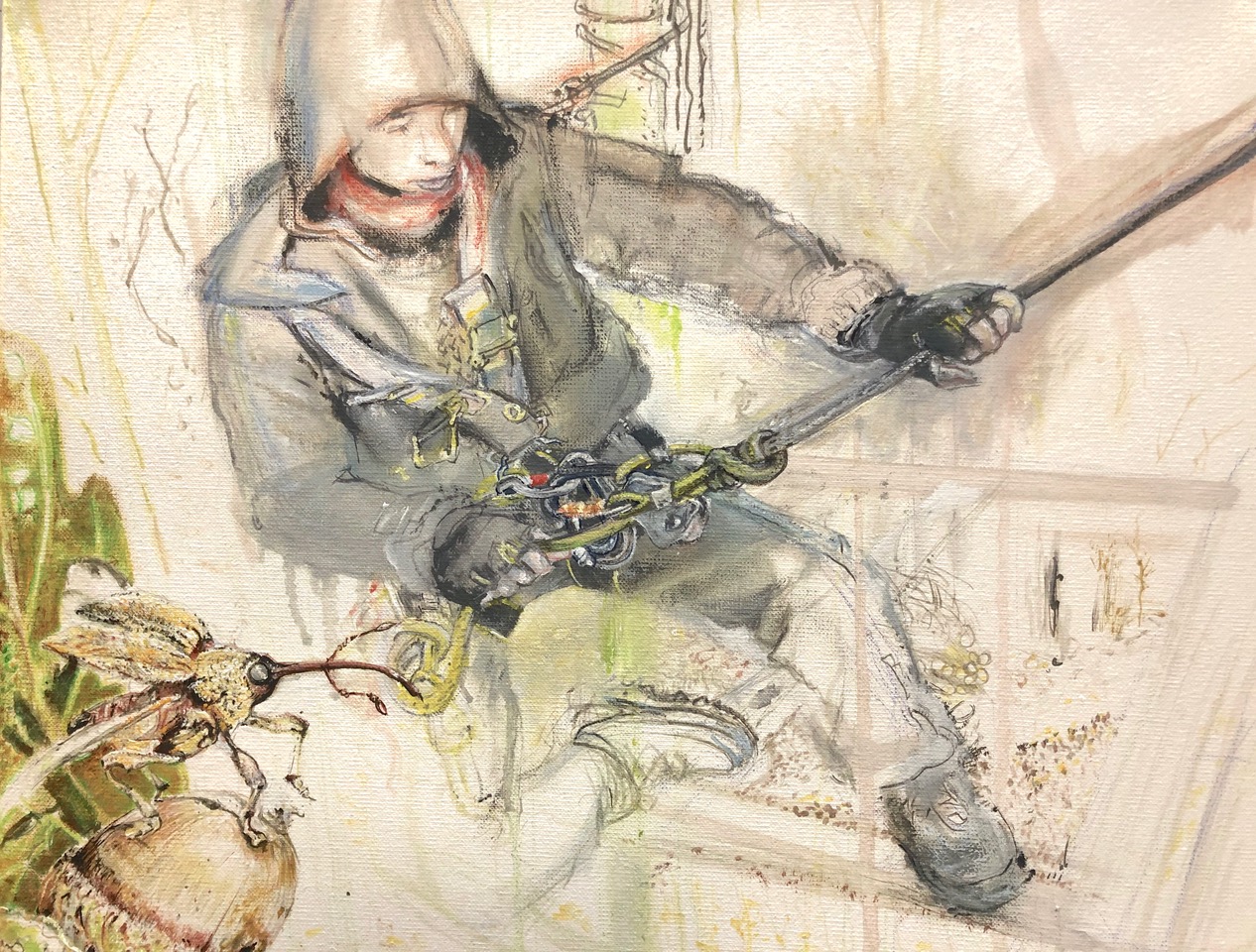
As so often happens, the wider public paid little attention, as the issue did not receive the necessary visibility. We believe that art can contribute to changing this perception. With this conviction, and following our previous interventions since 2018 at various ecological and political hotspots, we once again entered a threatened landscape with a spectacular artistic action.
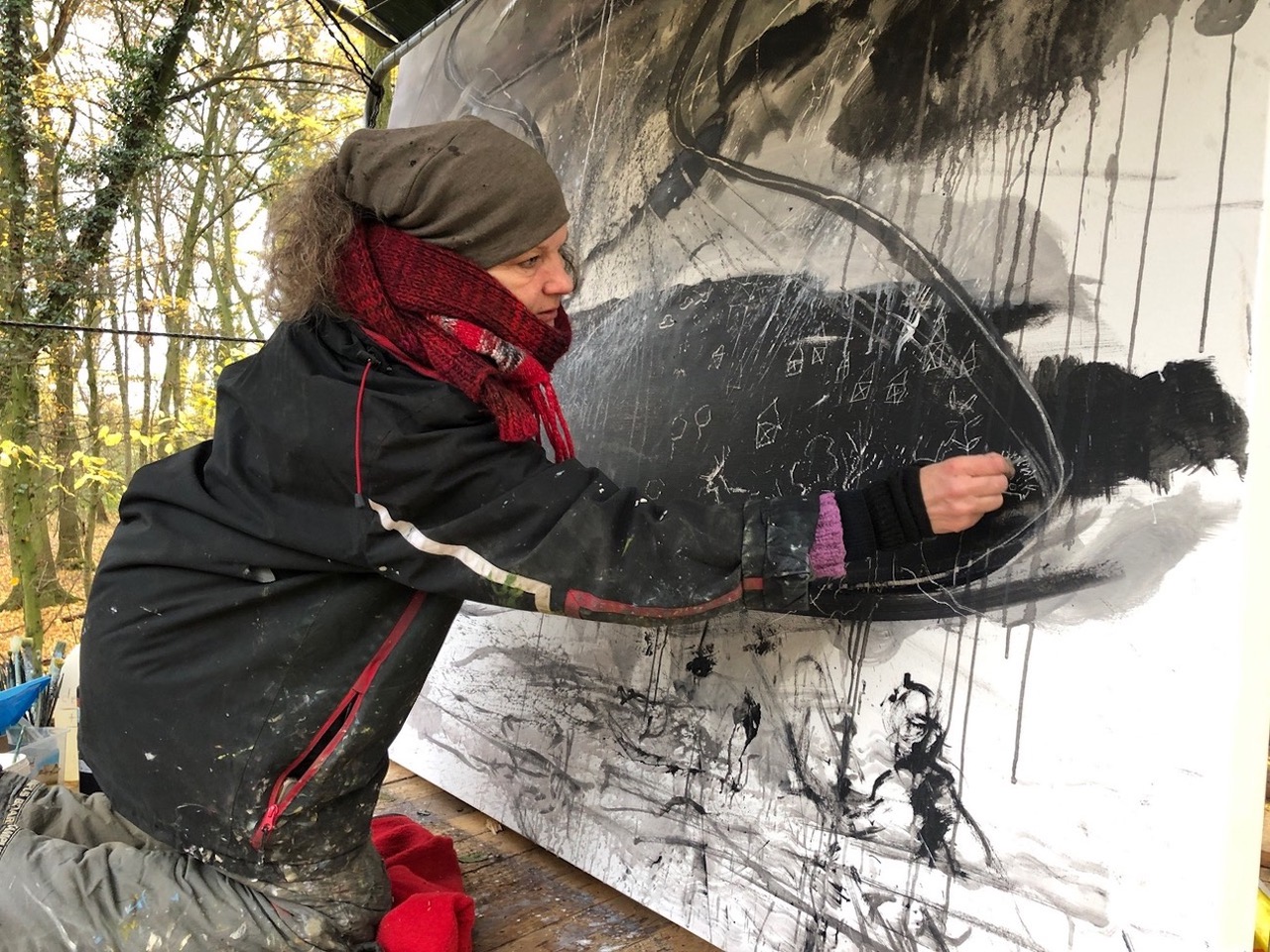
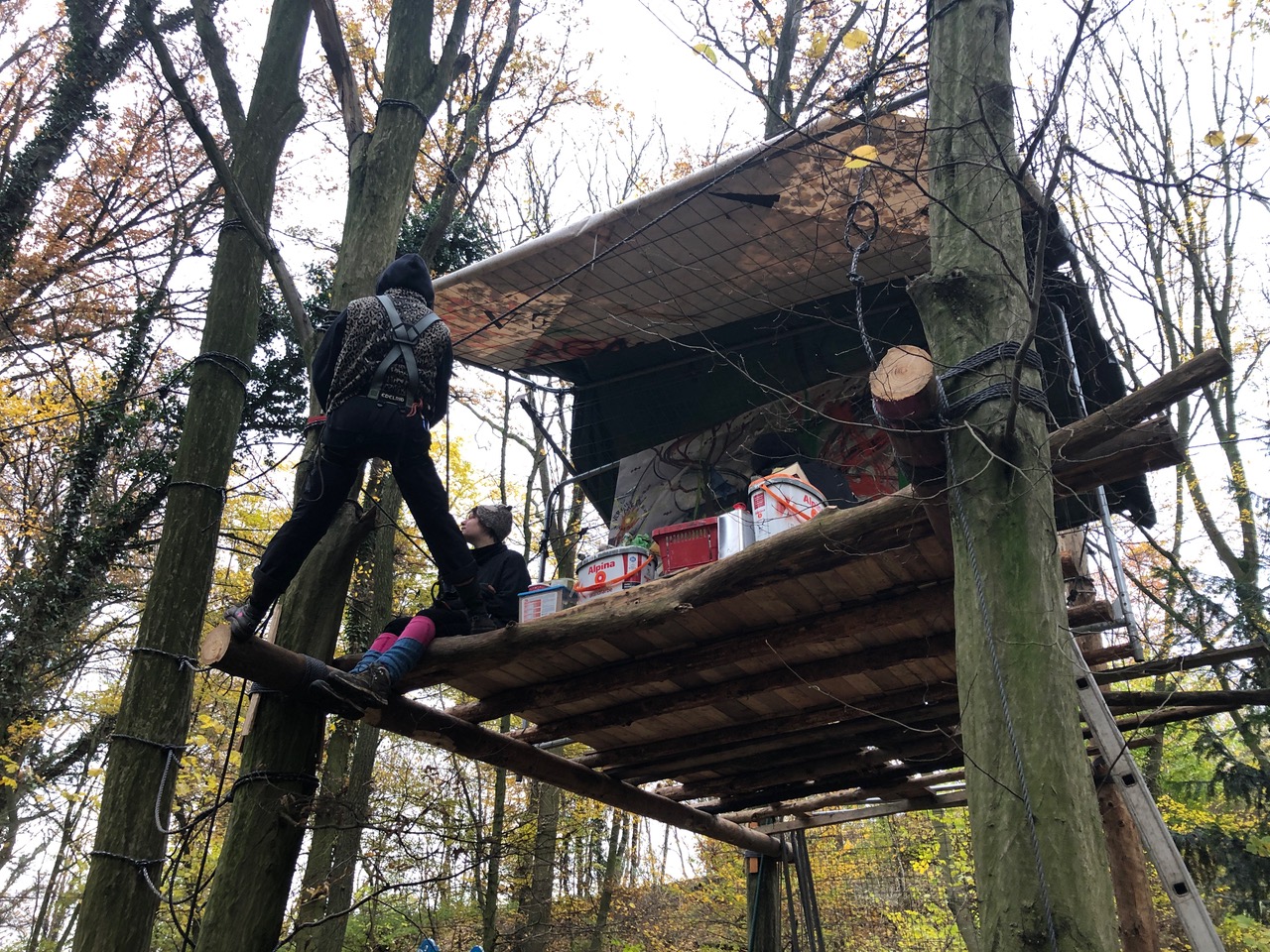
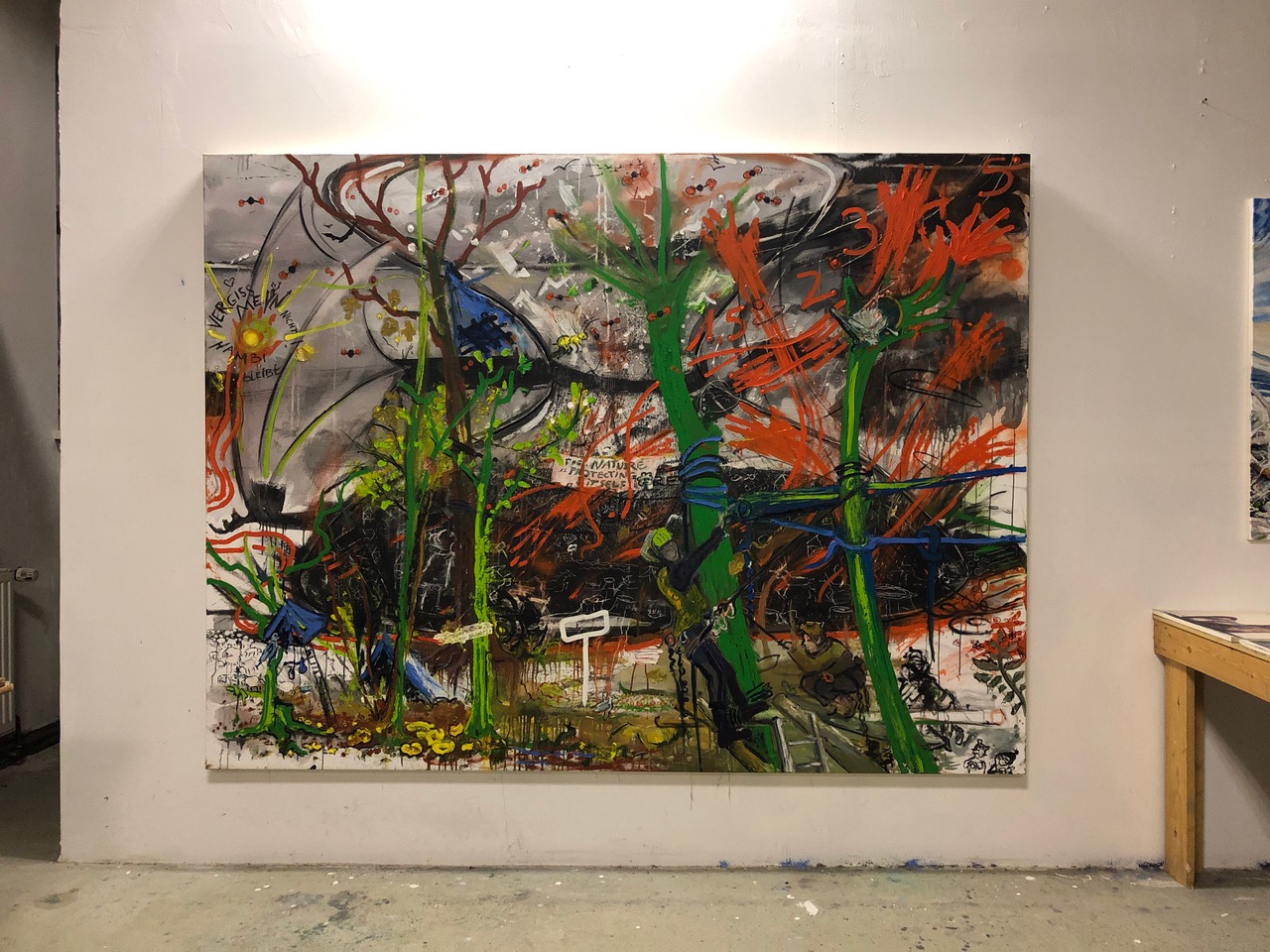
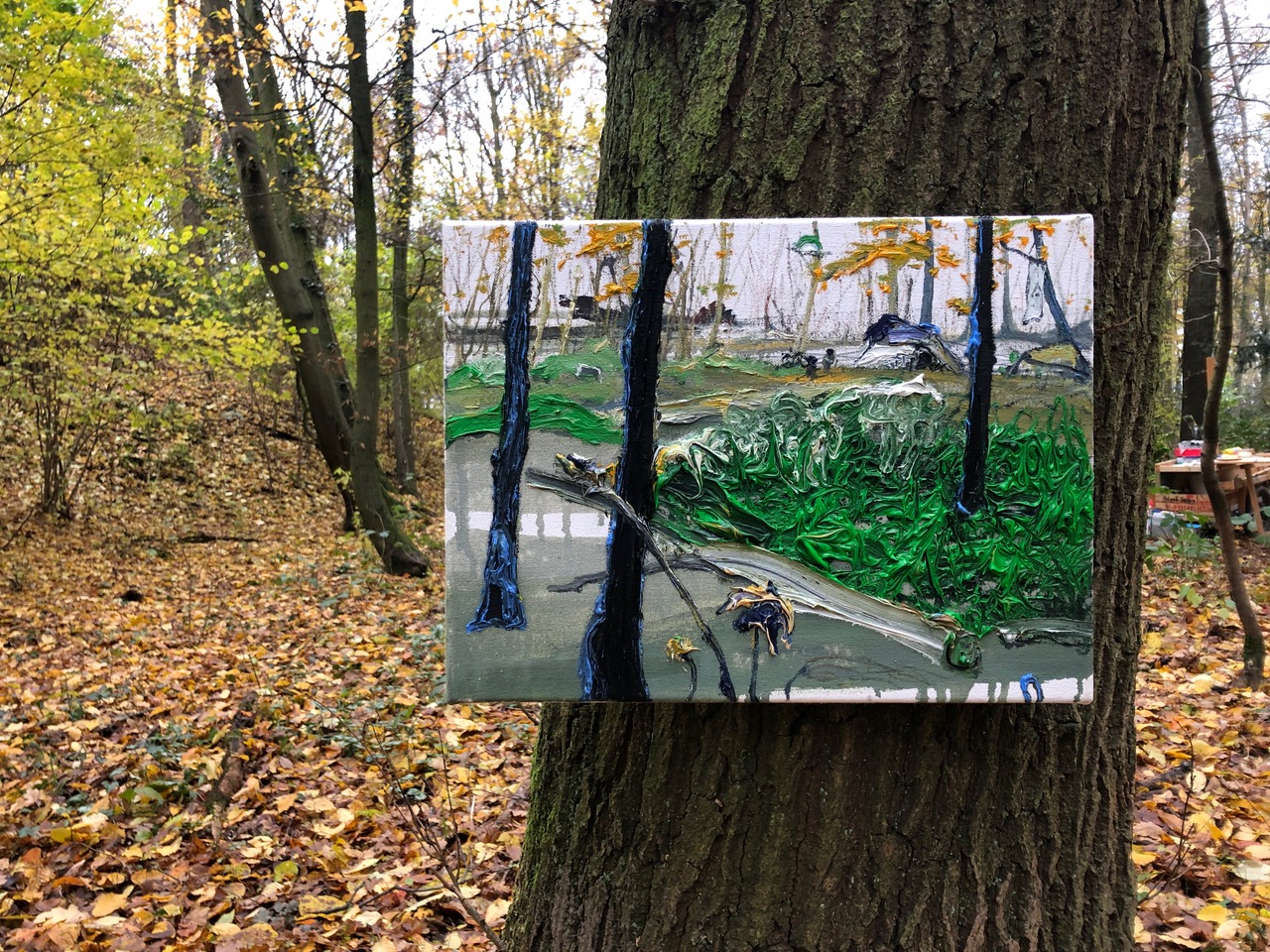
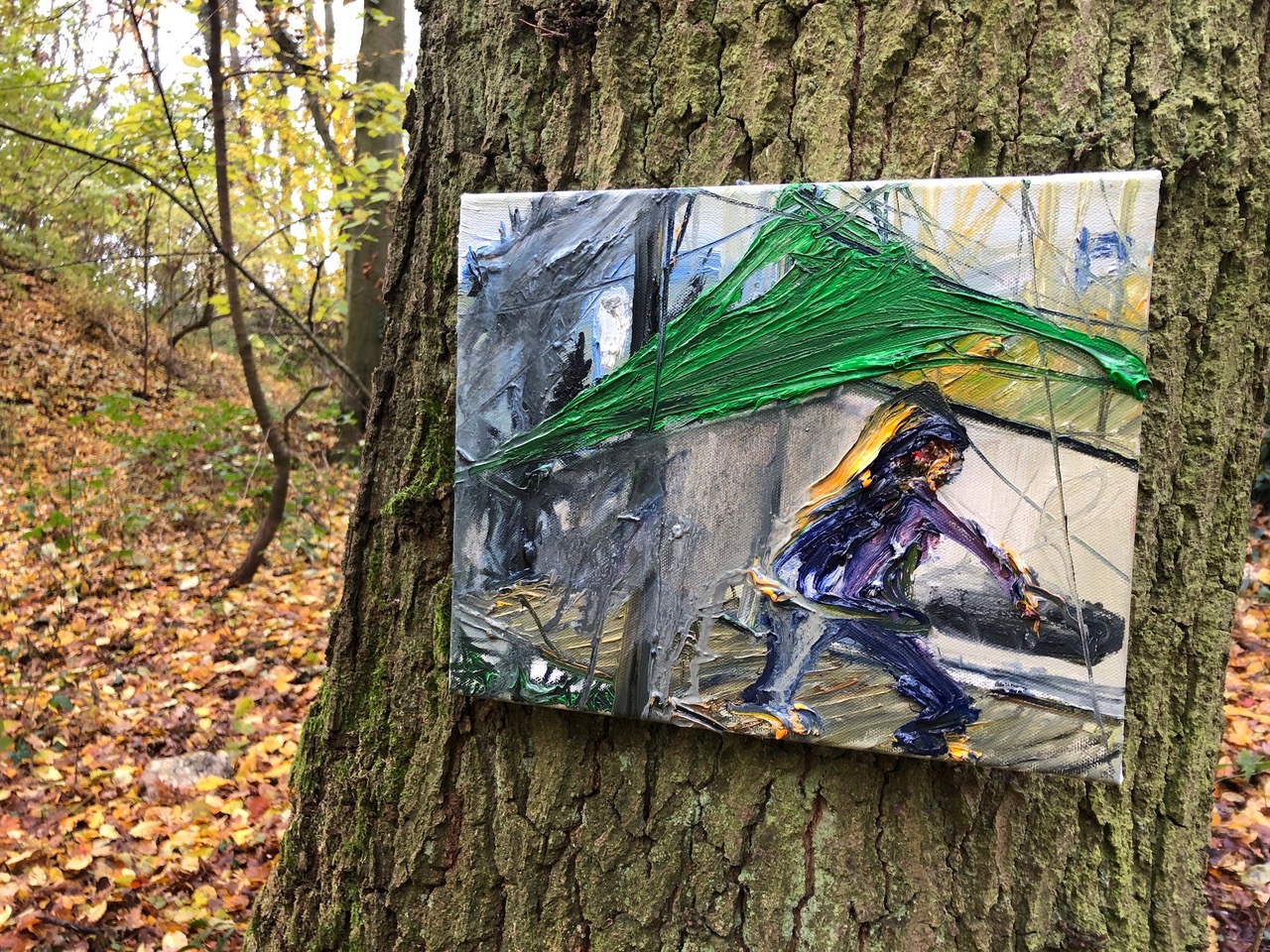
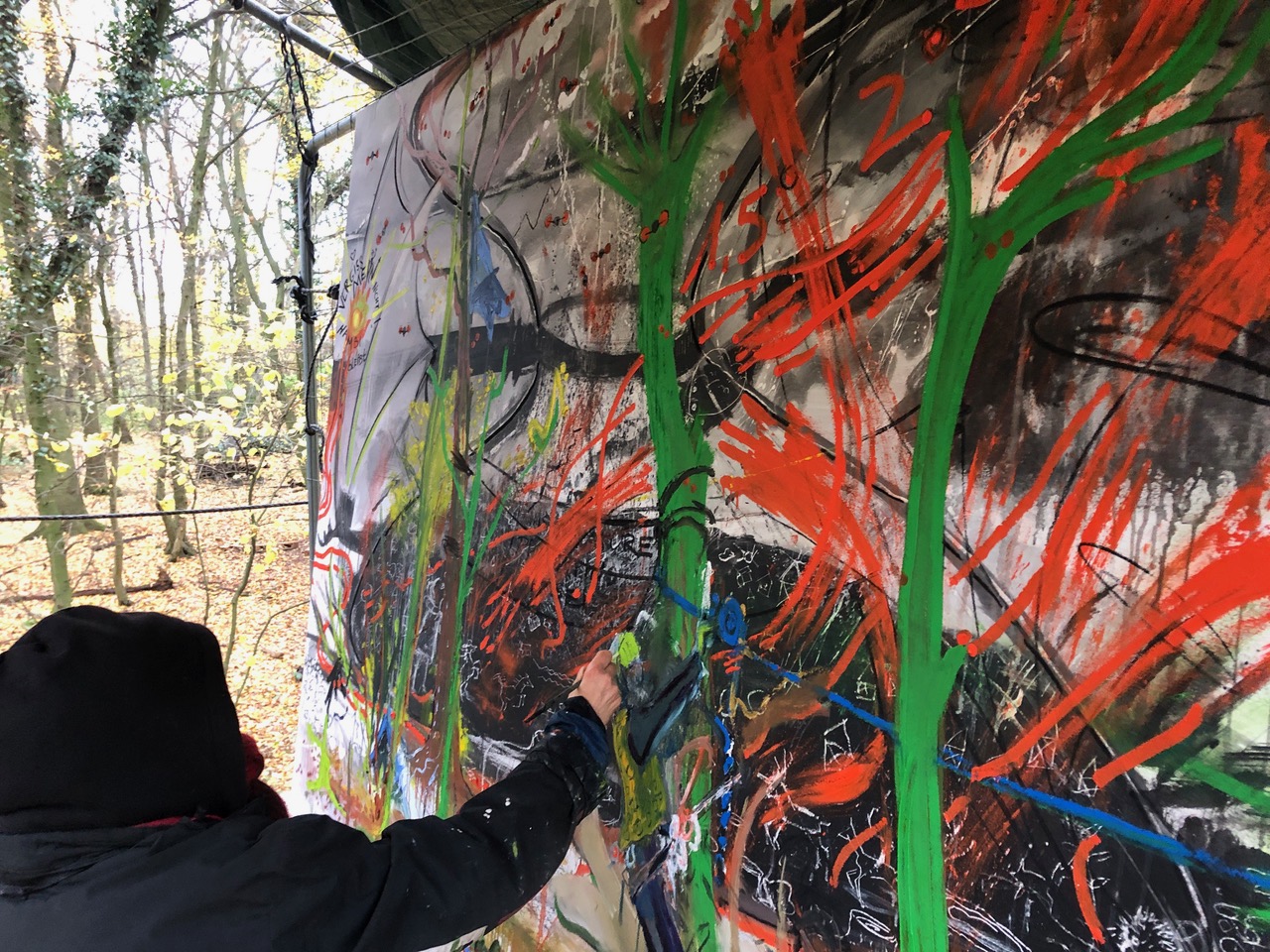
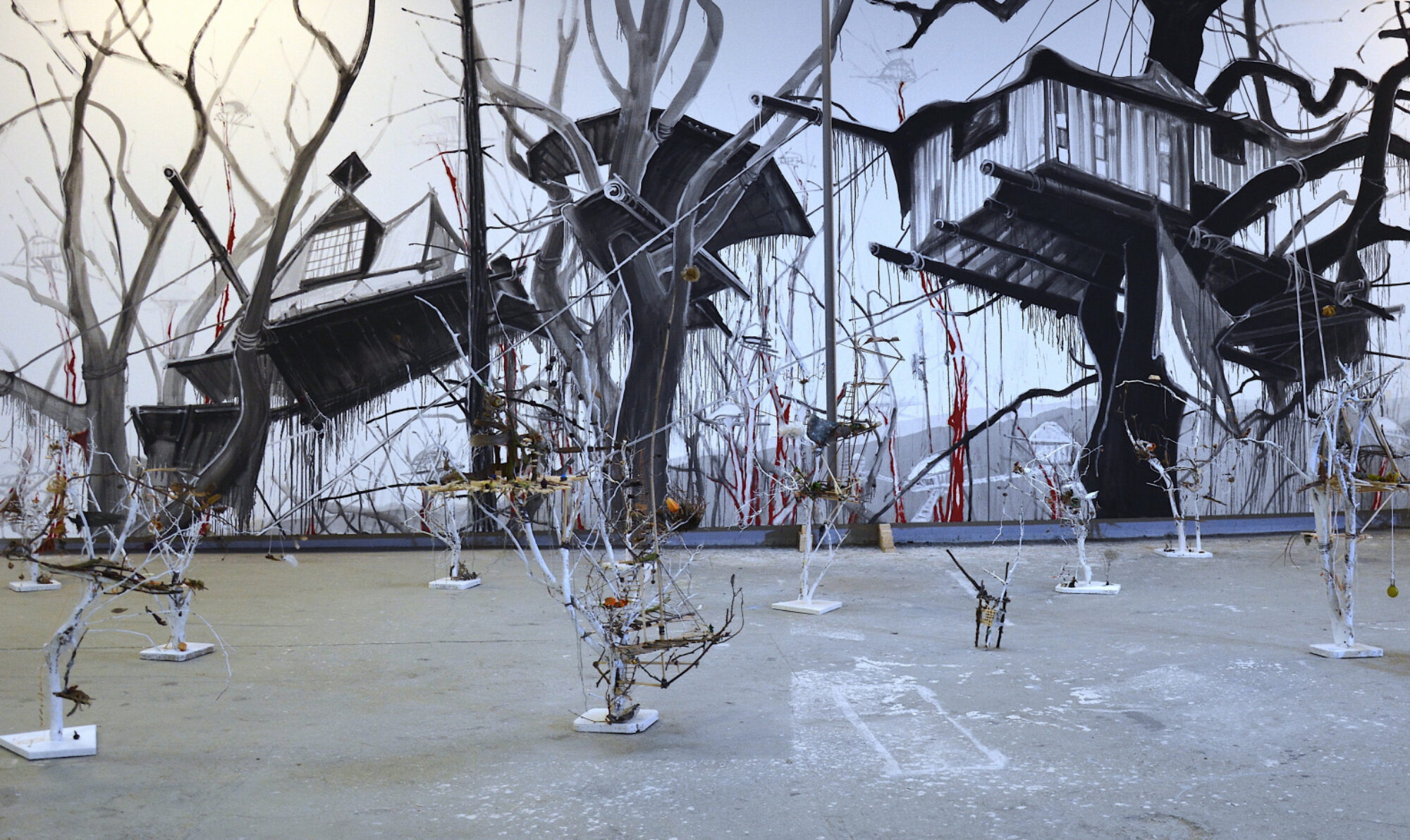
In the SÜNDENWÄLDCHEN, located within sight of the Hambach Forest on the outskirts of the almost completely destroyed village of Manheim (old), Saxana created a large-scale painting en plein air over two days. Working from a platform three to four metres above the ground within the forest, she developed a work addressing the complex issues surrounding the threatened woodland.
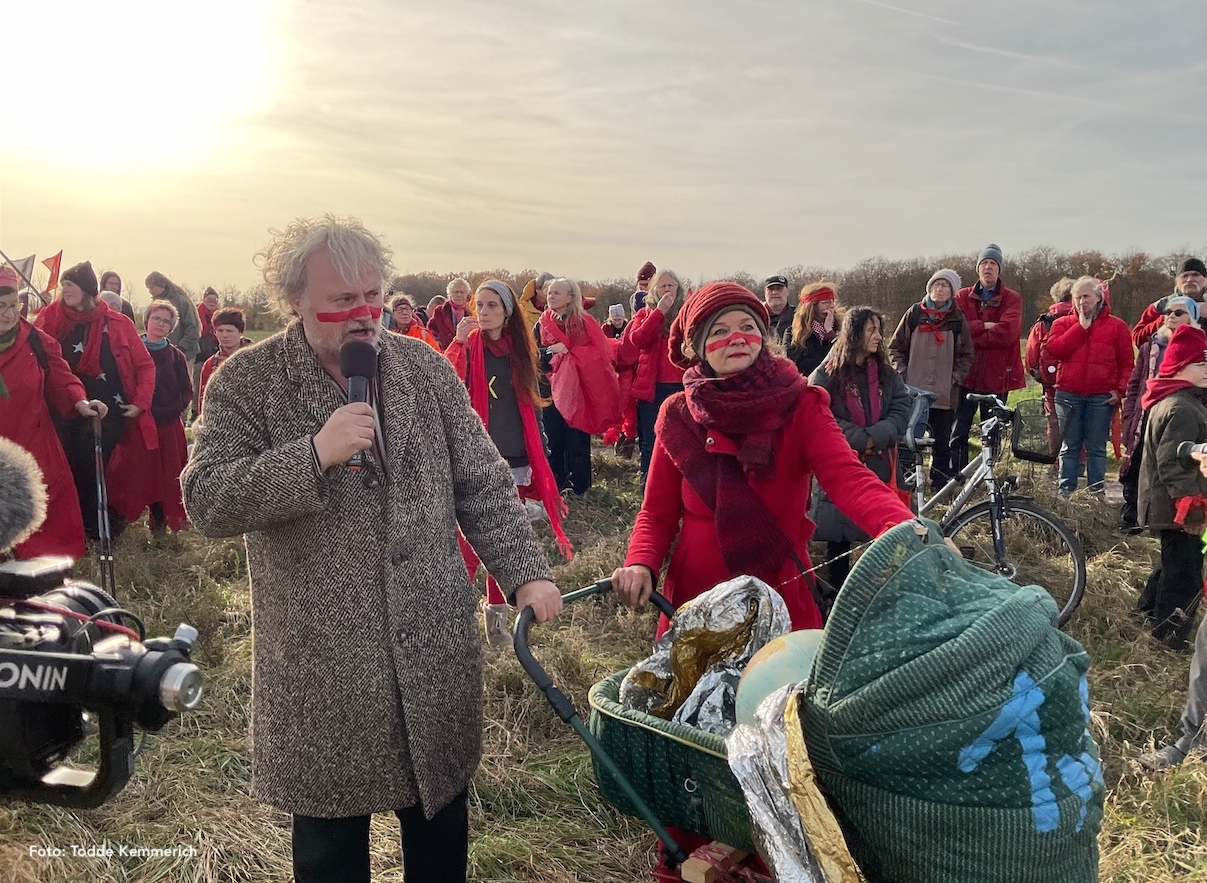
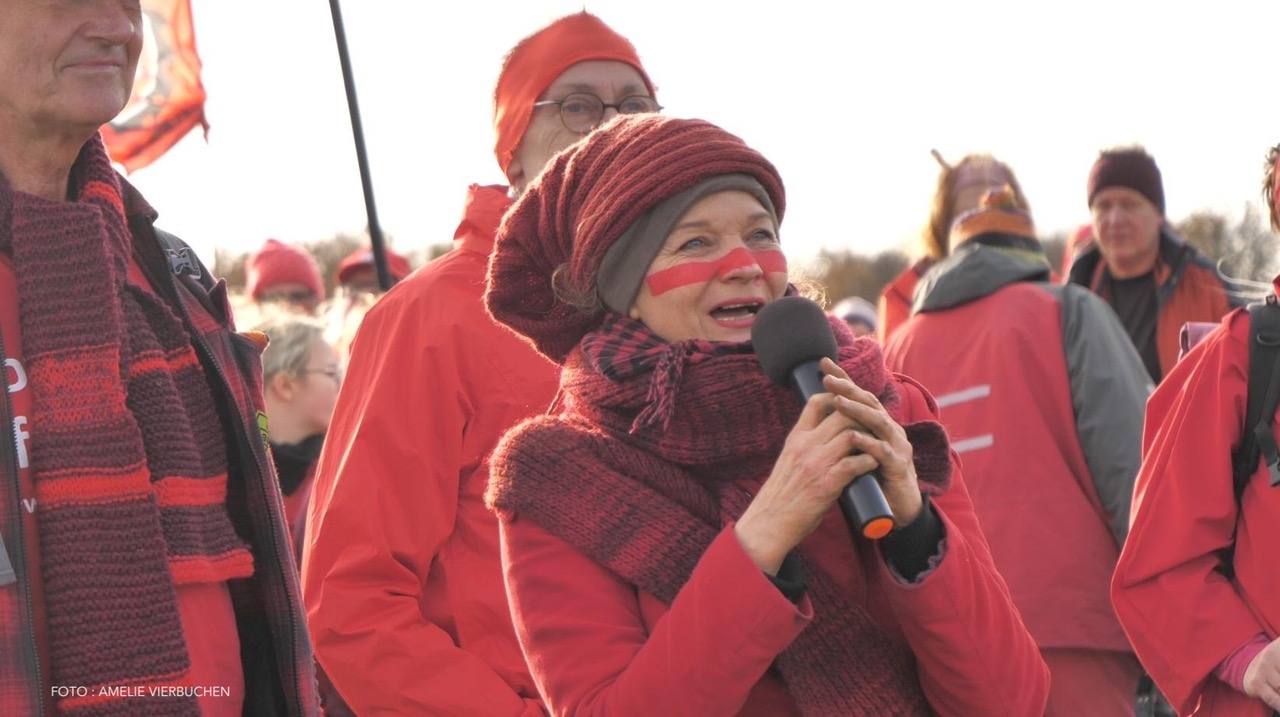
The painting was conceived as a solidarity artwork in support of the preservation of the forest and became part of the RED LINE action on 24 November 2024.
At the end of January 2025, the Higher Administrative Court of Münster (OVG Münster) imposed a temporary halt on the planned clearance. At the same time, with the upcoming federal election approaching, the German government had little interest in images reminiscent of the powerful resistance movement surrounding the Hambach Forest in 2018.
In 2025, we presented the painting in the exhibition !ß UNSERE WELT IST SCHÖN ß! at the Kunstverein Kunststation Kleinsassen, north of Frankfurt. We attempted to draw attention through supra-regional media to the continued threat of a merely postponed clearance. However, there was little response.
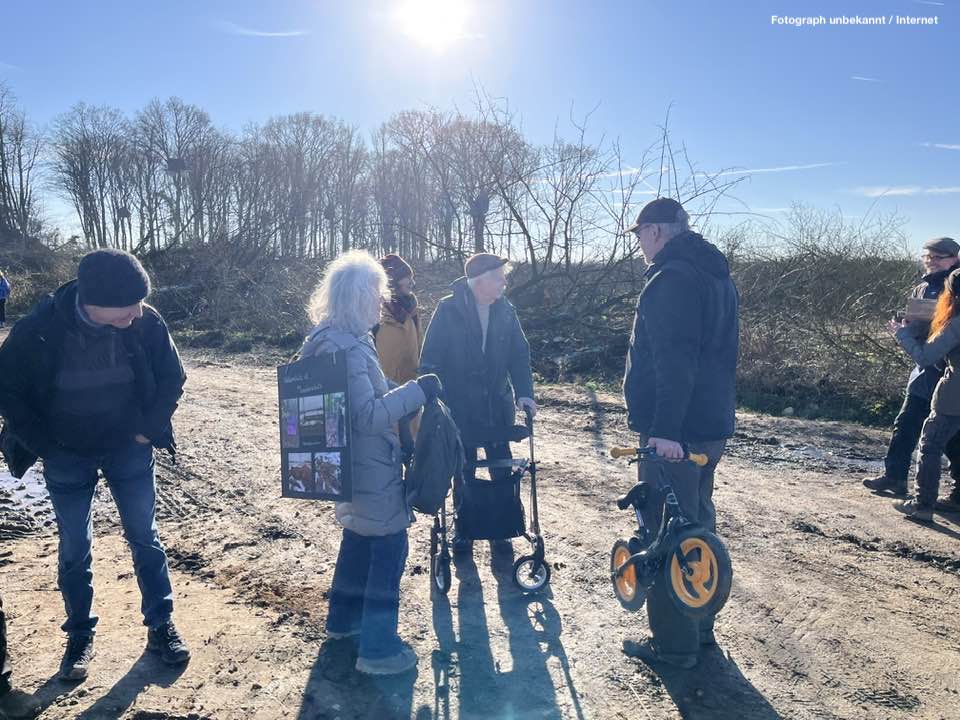
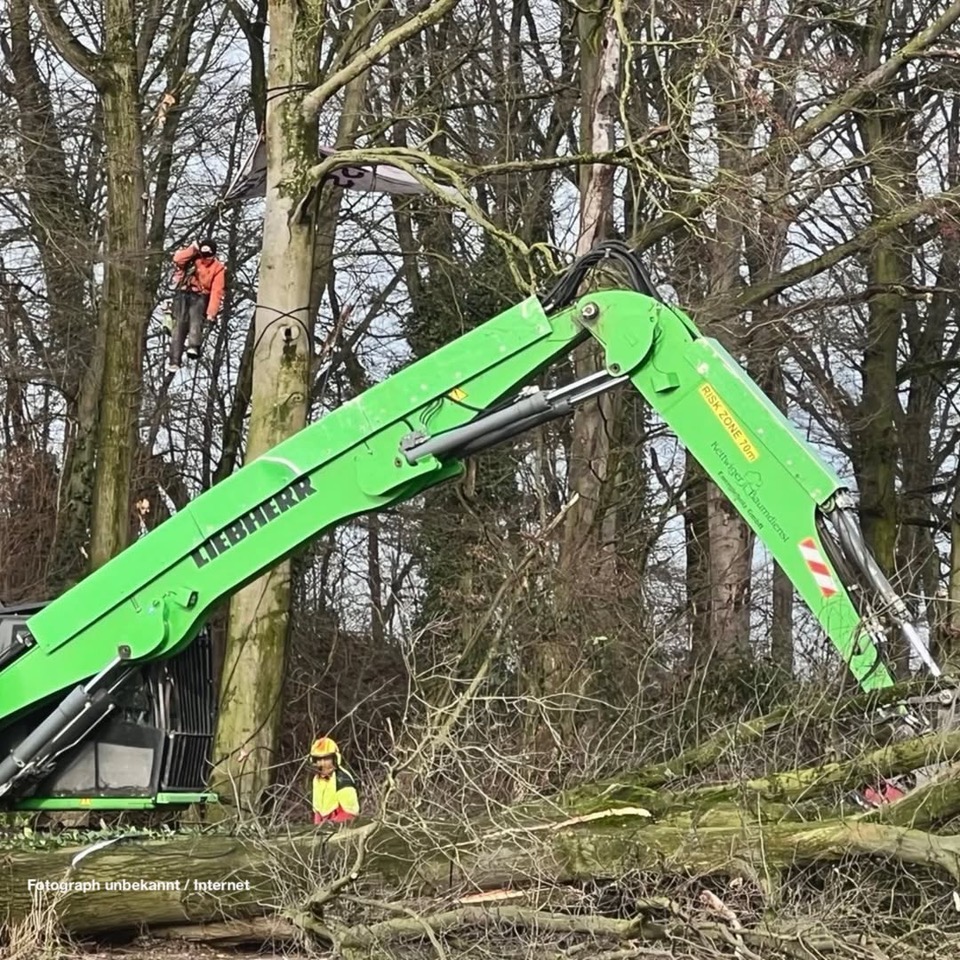
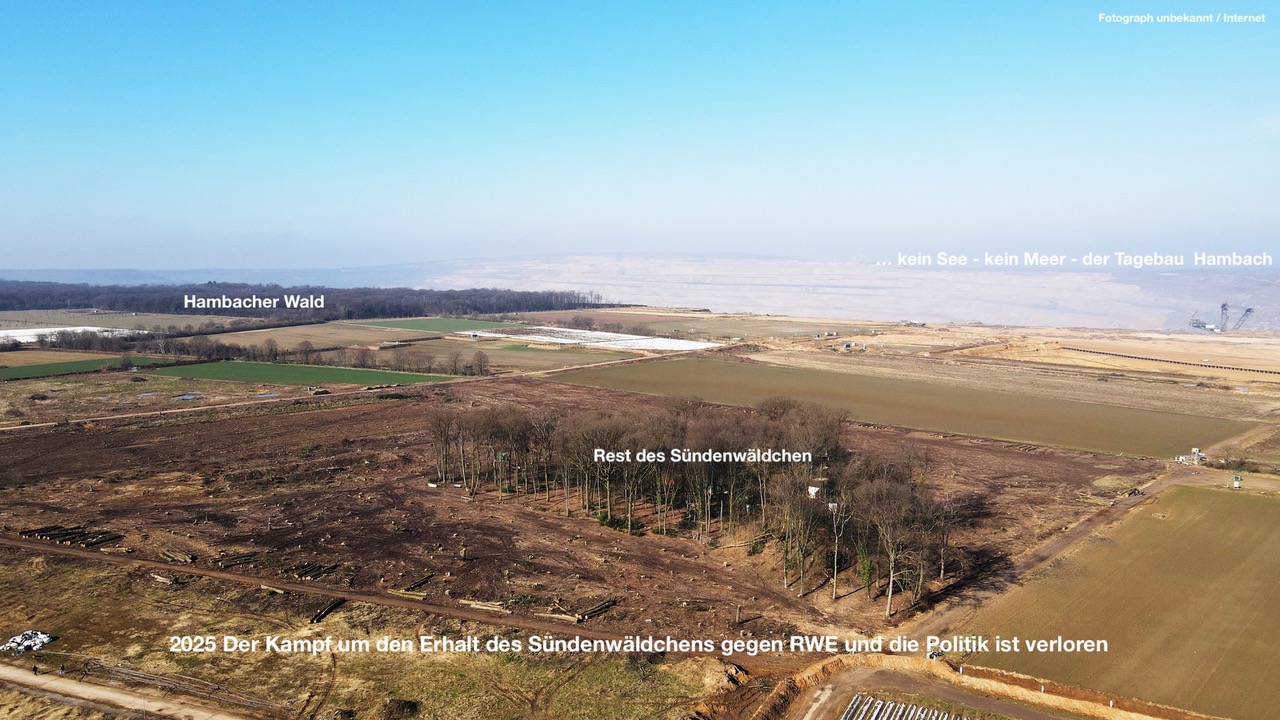
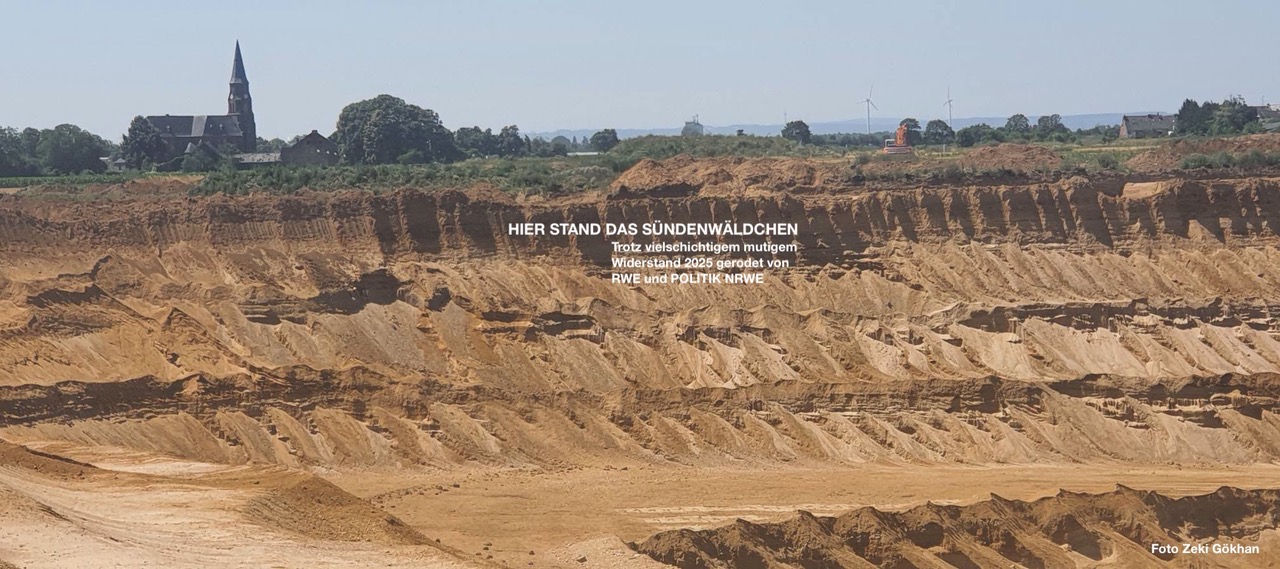
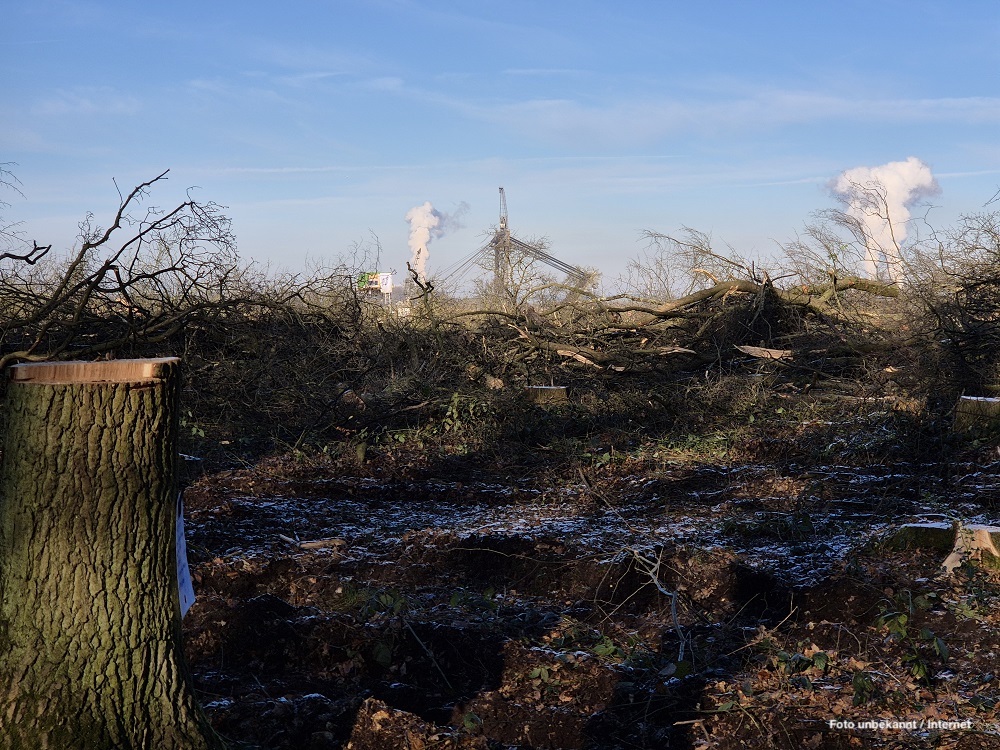
And so events unfolded as feared: in autumn, supported by the state government of North Rhine-Westphalia, RWE proceeded with the clearance and destroyed the forest.
Where the forest once stood, there is now an unimaginable emptiness—the expanding void of Europe’s largest lignite mine, the Hambach open-cast mine.
The company Hambach Neuland GmbH, commissioned by RWE and the state government of North Rhine-Westphalia, envisions a future lake landscape similar to those known from the Lusatian mining region. Through idyllic conventional 3D animations and glossy brochures, it projects a fictional, almost surreal vision of this future landscape into the public imagination: a lake surrounded by beaches, residential areas, leisure facilities, and a romantic focal point—a bucket-wheel excavator illuminated at night, transformed into a nostalgic symbol of an industrial past.
According to current projections, this landscape is expected to emerge in approximately 70 years.
Yet this vision contradicts the increasingly urgent warnings of science, which consider such scenarios unrealistic in view of the accelerating signs of climate change: ever more frequent and extreme heat records, intensifying drought summers, growing water scarcity, increasingly frequent and prolonged periods of low water levels in the Rhine, melting glaciers in the Alps, and many other ecological transformations.
In light of these realities, this projected image appears almost absurd.
Or does it?